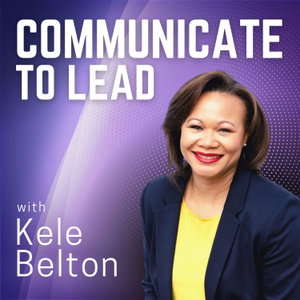
Getting talked over in meetings? You do not need to raise your voice or become someone you are not to make your point heard. In this episode, Kele Belton shares a three-part practice: claim your time before the meeting, lead with your conclusion, and use a calm boundary when someone interrupts you.
In this Thursday Deep-Dive episode of Communicate to Lead, communication and leadership coach Kele Belton explains how repeated interruptions can affect workplace visibility—and how to respond without turning every meeting into a confrontation.
Through the story of Dana, a senior HR director whose warnings were repeatedly cut short, Kele explores the cost of important information going unheard. She shows why adding more background can delay your message, how to prepare a headline-first opening, and what to say when a colleague or senior leader cuts you off.
You will also hear how to adapt the practice for virtual meetings, address a recurring pattern privately with your boss, and use a brief written follow-up to keep crucial information on the record.
Join Kele Live: Speak to Be Seen Summit - October 13
On Tuesday, October 13, Kele joins speaking-confidence coach Lilach Mendelovich for the free live online summit, Speak to Be Seen: Master the Conversations That Build Trust, Influence Decisions, and Open Doors. Six experts share strategies for being heard when the stakes are high. Kele’s session covers communication tools that help others see you as a leader and staying irreplaceable in the age of AI. Live Q&A is included.
Register free for Speak to Be Seen
In This Episode, You'll Learn
- How repeated interruptions can weaken your visibility and keep important information from reaching decision-makers.
- How to request agenda time before a meeting instead of competing for airtime.
- Why leading with your conclusion helps your main point land before the background.
- The exact phrase to use when someone talks over you, without raising your voice.
- How a short post-meeting follow-up helps document crucial points and next steps.
- How to handle interruptions on video calls and discuss a recurring pattern privately with your boss.
Who This Episode Is For
This episode is for high-performing women in middle and senior management who keep getting interrupted by peers, bosses, or senior leaders. It is especially relevant if you have important information to share, but leave meetings feeling that your judgment, recommendations, or concerns were not heard.
Your Action Step: Prepare for ONE Meeting
Choose your next meeting where you need to make a crucial point. Before it starts, request a few minutes on the agenda and write one opening sentence that states your conclusion, decision, or request. Put the point first—not the background.
If you are interrupted, use Kele’s line:
“Let me make this one point, it will take thirty seconds, and then I will hand it back to you.”
Say it evenly, finish your point, and honor the time you named. If crucial information still needs to be captured, follow up with a brief written note.
Adaptable agenda request: “Could we reserve three minutes in tomorrow’s meeting for the staffing risk and the decision we need?”
Adaptable follow-up: “I raised a staffing risk affecting the launch team. My recommendation is to confirm additional support before the next milestone. Please confirm who will own the decision and when we can resolve it.”
AI Prompt: Write a Headline-First Meeting Opening
Copy this prompt into your preferred AI assistant. Use only information you are permitted to share; anonymize names and sensitive workplace details.
You are my executive communication coach. I have something I need to raise in a meeting, and I tend to give too much background before getting to my point.
Before writing anything, ask these three questions one at a time and wait for my answer:
- What point, decision, or request do I need to get across?
- Who is in the room, and what do they care about?
- What background have I been starting with instead?
Then write three versions of my opening sentence. Each must state my conclusion first, in plain spoken language, in no more than twenty words.
Keep my voice warm and professional. Avoid corporate jargon and unnecessary softening such as “just,” “maybe,” and “I was wondering if.” Write only the opening line, not the background. Do not invent facts or exaggerate the risk. Do not make me sound aggressive.
Example: “This team needs additional support this quarter to reduce the risk of losing a key employee.”
Common Questions About Being Interrupted at Work
What should I say when someone interrupts me in a meeting?
Use a calm, specific boundary: “Let me make this one point, it will take thirty seconds, and then I will hand it back to you.” The phrase names what you need, limits the time, and signals that you will return the floor. It is a practical response—not a guarantee that every person will cooperate.
How can I reduce the chance of getting talked over in meetings?
Kele recommends requesting agenda time in advance and opening with your main point rather than a long explanation. These steps give your contribution a defined place and make your conclusion easier to hear. They do not make you responsible for another person’s interruptions.
Why might more preparation make my message easier to interrupt?
Preparation is valuable, but delivering all your background before your conclusion can leave your point unheard if someone cuts in. Prepare the evidence, then present the headline first and add supporting context afterward.
How do I handle a boss who constantly interrupts me?
If it is appropriate and safe to do so, discuss the pattern privately and focus on the cost to the work. Kele suggests: “I have information you need, and it is not reaching you in those meetings. I would like to fix that.” Ask for an agreed way to finish crucial points. A communication technique alone may not resolve an entrenched pattern.
How do I avoid getting talked over on a video call?
Request time on the agenda before the call and use the raise-hand feature during it. Lead with your conclusion. When re-entering after overlapping audio, use the person’s name first so it is clear who you are addressing, then state the point you need to finish.
What should I do after an important point goes unheard?
Send a short factual follow-up identifying the issue you raised, your recommendation, and the decision or next step needed. Kele describes a four-minute post-meeting habit to keep crucial information visible. Written follow-up supports the conversation; it does not replace addressing a repeated interruption pattern.
Ready to Go Deeper?
If recurring interruptions, a status gap, or high-stakes conversations are making it harder for your leadership to be heard, book a free 30-minute Leadership Strategy Call with Kele. Discuss your situation, where your voice is getting through, and what would help you communicate your value more clearly.
Book your free Leadership Strategy Call
About Kele Belton
Kele Belton is a communication and leadership facilitator, coach, and consultant, and the host of Communicate to Lead. She helps high-performing women in middle and senior management move from being essential but invisible to being seen, sponsored, and promoted. Through The Tailored Approach, she helps leaders build communication skills and executive presence so their contributions are recognized.
Connect with Kele
PodMatch
PodMatch Automatically Matches Ideal Podcast Guests and Hosts For Interviews