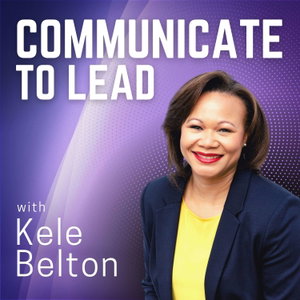
Using AI to write emails, presentations, or client messages—but worried the result sounds polished and not like you? The most effective leaders do not use AI to replace their thinking or voice. They use it to stress-test a message, clarify an ask, and identify weaknesses before a real person receives it.
In this episode of Communicate to Lead, leadership coach Kele Belton shares how to use AI for workplace communication without sounding generic, losing trust, or handing over your judgment. You will learn how to use AI as a second reader instead of a ghostwriter—so your writing becomes clearer, more strategic, and still unmistakably yours.
This practical approach works whether you are writing to your team, asking another department for support, preparing a senior-leadership presentation, responding to a client, or making a high-stakes recommendation. The core practice is simple: write the message yourself first, then ask AI to identify what is unclear, overly soft, buried, or likely to miss with the specific person receiving it.
This episode builds on Episode 166, What AI Can Never Do: Why Human Leadership Still Wins, and Episode 144, Why Your Leadership Brand Matters More in the Age of AI.
In This Episode, You'll Learn
- Why AI-generated writing can sound polished while still reducing clarity, credibility, or trust.
- The difference between using AI to produce more content and using it to improve your thinking.
- How to use AI as a second reader to stress-test emails, presentations, requests, and client communication.
- How to find a buried ask, unclear message, weak sentence, or unnecessary softening before you send.
- How to protect your authentic voice and leadership judgment when using AI at work.
- What communication should remain human, including confidential, sensitive, relationship-centered, and high-stakes messages.
Your Action Step
Before you send your next message that carries weight—an update to your team, a cross-functional request, a senior-leadership slide deck, or a client email—write the first draft yourself.
Then use AI to stress-test the draft, not rewrite it. Give the tool context about the recipient’s role, priorities, and pressures. Ask it to point to the specific sentences that are unclear, overly soft, or likely to create resistance. Decide what feedback is useful, then make revisions in your own words.
“Read this as my VP of Operations, who is focused on reducing delivery risk this quarter. Do not rewrite it. Tell me where the main request is unclear, where I sound unsure, and which sentence is least likely to persuade her.”
This approach keeps the thinking, judgment, and final voice with you—while helping you improve the message before it reaches the person who matters.
AI Prompts From This Episode
Copy and paste these prompts to stress-test a message you have already written. Replace the bracketed text with details about the person receiving it.
Stress-test a message
I am going to share a message I wrote. Read it as [the recipient: their role, what is on their plate, and what they care about]. Do not rewrite anything. Tell me what is unclear, where I sound unsure, and what would make this person stop reading or say no. Point me to the specific sentences.
Find the ask
Where is my main point or request in this message? How long does it take the reader to reach it? What information, if any, is getting in the way? Do not rewrite the message.
Check for softening
List every place I softened or hedged this message. For each one, explain what it may signal to the reader. Do not rewrite anything.
Identify the weakest part
What is the weakest part of this message, and why? Point to the specific sentence. Explain how it might land with [recipient]. Do not rewrite anything.
Who This Episode Is For
This episode is for high-performing women in middle management and senior management who:
- Use AI tools such as ChatGPT, Claude, Gemini, or workplace-approved AI assistants for communication.
- Want to write faster without sounding generic or losing their authentic voice.
- Need to make clearer requests, recommendations, and leadership messages.
- Want to protect trust, confidentiality, and human connection while using AI responsibly.
- Are preparing messages for a team, peer, senior leader, client, or other important stakeholder.
Frequently Asked Questions
How should leaders use AI for communication?
Use AI to sharpen your thinking, not replace your voice. Draft the message yourself first, then ask AI to read it as the intended recipient and identify unclear wording, weak logic, buried requests, or softening language. Keep the judgment, decisions, and final wording with you. AI works best as a second reader, not a ghostwriter.
Does using AI to write work emails hurt trust?
It can when the tool does most of the writing and the message no longer sounds like the person sending it. AI can be useful for grammar, structure, clarity checks, and feedback. The risk rises when leaders send polished but generic messages that feel disconnected from their real voice, relationship, or responsibility.
How do I keep my own voice when using AI?
Write the first draft yourself. Give AI a focused feedback role rather than asking it to generate the message from scratch. Tell it not to rewrite; ask it to point to sentences that are unclear, vague, overly soft, or misaligned with the recipient. Then revise in your own language, using your own judgment.
What should I never use AI to write at work?
Do not place confidential, proprietary, employee, customer, or client information into an AI tool unless your organization has approved that tool and use case. For relationship-centered or highly sensitive communication—such as performance concerns, layoffs, personal loss, conflict, or a values-based stand—AI can help you prepare, but the final message should come directly from you.
How can AI help me prepare an important presentation or request?
Write your core message first, name the person or audience who will receive it, and ask AI to stress-test the draft from that perspective. Ask where the main point appears, what objections or concerns the recipient may have, where the ask is weak, and which sentences might cause confusion. Use that feedback to strengthen the message in your own words.
Is it unprofessional to use AI at work?
No—when it is used responsibly and within your organization’s policies. Professional use means protecting confidentiality, applying your own judgment, checking accuracy, and remaining accountable for the final message. AI should support your communication and decision-making, not disguise authorship or replace necessary human leadership.
Mentioned in This Episode
Ready to Go Deeper?
If you want help applying this approach to the way you lead, write, present, or navigate high-stakes conversations, a Leadership Strategy Call can help.
In this complimentary 30-minute conversation, Kele will help you identify what is working in your communication, what may be weakening your message, and the practical shifts that will help you communicate with greater clarity, trust, and influence.
Book your free Leadership Strategy Call
About Kele Belton
Kele Belton is a communication and leadership coach, facilitator, and consultant, as well as the host of Communicate to Lead. She helps high-performing women in middle and senior management move from being essential but invisible to being seen, sponsored, and promoted.
Through The Tailored Approach, Kele helps women leaders build executive presence, communicate their value, navigate workplace dynamics, and develop the visibility and influence needed for sustainable career advancement.
Connect With Kele
PodMatch
PodMatch Automatically Matches Ideal Podcast Guests and Hosts For Interviews