Dela
Crying After Stroke: What Bobby Chaggar’s Recovery Taught Him About Grief and Strength
The night his stroke happened, Ramandeep “Bobby” Chaggar didn’t feel what he expected to feel. No pins and needles. No dramatic collapse. Just a left arm that wouldn’t answer him anymore.
He limped to the kitchen anyway, poured a glass of water, and brought one back for his wife because that’s what you do, even when your body has just stopped taking instructions from half of itself. It wasn’t until the ambulance service ran him through the BFAST test over the phone that the word “stroke” entered the room. A right ischaemic pontine stroke, in December 2023. He was, by his own account, in the best health of his life at the time: no blood pressure issues, no diabetes, cycling a hundred kilometres most weekends.
Growing Up Believing a Stroke Meant You Were Gone
Bobby grew up in an era and a family where a stroke wasn’t something you researched; it was something you heard about secondhand. “That particular cousin’s father’s grandfather had a stroke, and he’s gone,” is how the news used to travel. Nobody around him distinguished a stroke in the brain from a stroke in the heart. There was no internet to check, only the flat, final verdict that passed between relatives: he’s done for.
It’s a belief he carried into his own stroke, even as his medical training Bobby spent years as a veterinary surgeon in India before qualifying in Australia told him something else was happening. That veterinary background is exactly why he recognised what was going on in his own body faster than most people would. It didn’t make the belief disappear. It just meant he was fighting it from the inside while everyone around him was still catching up.
Why His Arm Seemed to Move Then Stopped
In those first disorienting hours, Bobby was convinced his arm had started moving again. He filmed it and sent the video to his sister as proof, he thought, that he was already turning a corner. By morning, the movement was gone. “It was like a bad dream,” he says. “I was like, what was that?”
What he was seeing wasn’t recovery. Doctors later explained that in the earliest hours after a stroke, the body can still fire off remnant spinal reflexes old movement patterns held in the spinal cord that can briefly activate on their own, independent of the brain damage that’s actually occurred. It’s a strange, almost cruel mechanism: the body offering a flicker of hope before the real work of recovery has even started.
The Physio Who Promised Him He’d Walk Again
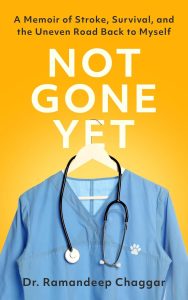
Bobby spent 45 days in rehabilitation at Parkville, six months in a wheelchair overall, and credits one moment above almost everything else: his first physiotherapist he calls her Hannah sitting on the floor, moving his foot, and telling him he would walk again. It mattered enough that his book was originally going to be titled Walking with Hannah, before privacy considerations changed the plan. His son, who narrates the audiobook, still opens the acknowledgements by thanking her directly.
Learning to Cry Again
This is the part of Bobby’s story that speaks most directly to what so many stroke survivors go through and rarely say out loud. In his culture, and in his family, showing emotion, especially for the men expected to be providers and caretakers, wasn’t really an option. When his father died in 1997, he was told to be strong for his mother and sister. When his mother died in 2013, he was told the same thing again.
“I’ve been told that stroke is a part of grief, and you should not suppress your feelings.”
It took his brother-in-law showing up every day to help him with basic care showering, dressing, the things that felt hardest to accept before something shifted. His own psychologist eventually gave him the instruction that reframed everything: put on your own life jacket first, before you try to save anyone else. It’s advice Bobby now extends to every caregiver he talks to: the person supporting a stroke survivor needs their own support too, or they burn out trying to hold everything together.
He isn’t alone in this. Bill has spoken openly on the podcast about his own experience with unexpected, involuntary crying after a neurological injury, and how much energy goes into reassuring the people around you that the tears don’t mean something is wrong. For Bobby, permission to cry didn’t erase the culture he was raised in. It just meant he stopped fighting it.
A New Normal, On His Own Terms
Bobby’s recovery is full of small, deliberate acts of reclaiming identity. He got his first tattoo not long after his stroke, partly, he says, because people notice ink before they notice a limp. He’s spent years slowly making peace with not tying a turban the way he used to, calling himself, with real affection, a recovering “turbanator.” He built his own incline-and-decline walking circuit near his home and quietly upped the difficulty every fortnight, the same instinct that now has him choosing stairs over the lift at the allied health course he’s completing.
Running, he says flatly, is overrated. He can’t do it anymore, and he’s decided that’s fine. It’s the same acceptance that let him and his family move to Perth just one month after his stroke, and then move back again when isolation made the recovery harder than the geography ever was.
None of it looks like the version of recovery he grew up believing in, the one where a stroke simply meant a story was over. Bobby’s version has a motorbike with a sidecar he now rides himself, a book he wrote one voice note at a time because typing with one hand wasn’t fast enough, and a fairly simple message for anyone who asked him to just think positively: some things are still hard, and that’s allowed to be true at the same time as everything else.
If you’re navigating your own recovery or supporting someone who is, Bill’s book, The Unexpected Way That A Stroke Became The Best Thing That Happened (recoveryafterstroke.com/book), walks through ten practical tools for rebuilding after a stroke. And if trauma has made your world feel smaller than it used to be, Bill’s newest book, Your World Doesn’t Have to Stay This Small, is written for exactly that.
If this episode helped you, you can support the show directly at patreon.com/recoveryafterstroke.
This blog is for informational purposes only and does not constitute medical advice. Please consult your doctor before making any changes to your health or recovery plan.
Bobby Chaggar: Learning to Cry After Stroke (Interview)
He was taught a stroke meant you were gone. Bobby Chaggar’s story proves otherwise and shows why crying after a stroke is nothing to hide.
Highlights:
00:00 Introduction
02:00 Life Before the Stroke
09:28 Rehabilitation Journey
12:00 Crying After Stroke
14:52 Reflections on Recovery and Growth
26:33 The Promise of Recovery and Writing a Book
29:37 Cultural Identity and Personal Beliefs
37:28 Relocation and Its Challenges
41:44 The Importance of Caregiver Self-Care
44:10 Adjusting to a New Normal
51:09 The Journey of Riding Again
57:09 Bobby’s Journey of Unlearning and Grief
Transcript:
Introduction – Crying after stroke
Ramandeep (bobby) chaggar (00:00)
I realized that I was having a stroke. because it was not their usual pins and needles and there was no sensation. I couldn’t move my arm. I managed to limp. I went all the way to the kitchen. I trudged a little to the kitchen. I had a glass of water, brought a glass for my wife.
in the hospital, I thought my arm started moving.
And the doctors, and when I got up in the morning, it was like a bad dream. No, it was not moving again. So I was like, what was that?
Bill Gasiamis (00:19)
Welcome back to Recovery After Stroke. I’m Bill Gasiamis and today I’m talking with Bobby Chaggar, a veterinary surgeon originally from India, now living in Melbourne, who survived a right ischemic pontain stroke in December 2023. Bobby’s story covers a lot of ground, the cultural belief he grew up with, that a stroke simply meant you were gone. The strange confusion of a spinal reflex that made his arm move before it didn’t.
Physiotherapist whose promise
changed the course of recovery and what it actually took for him as a man raised to be the strong one to let himself cry.
Before we get into it, if trauma has made your world feel smaller than it used to be, my new book, Your World Doesn’t Have to Stay This Small, is exactly what it’s about. Search for it on Amazon or tap the link in the show notes to grab your copy today.
And one more thing, this show exists because listeners decide it’s worth keeping going. There’s no other funding behind it. If an episode like this one has ever helped you or helped someone you love, even a few dollars a month on Patreon is what keeps these conversations free for the next person who finds themselves Googling this stuff alone at two in the morning, scared, looking for someone who’s actually been through it. That’s all.
patreon.com/recoveryafterstroke.. A small amount every month makes a massive difference.
But now let’s get into it. Here’s my conversation with Bobby.
Bill Gasiamis (01:56)
Bobby Chaggar. Welcome to the podcast.
Ramandeep (bobby) chaggar (01:58)
Thank you very much. Thank you. Thank you, Bill.
Life Before the Stroke
Bill Gasiamis (02:00)
So you grew up in a house with 22 dogs, three cats and a trilingual parrot as well, right? So what’s the situation there? You’re living with pets. Were you important in your family or
Ramandeep (bobby) chaggar (02:10)
Ha ha.
Bill Gasiamis (02:11)
did the animals come first?
Ramandeep (bobby) chaggar (02:14)
the animals definitely did come first. my mother was also a teacher, but she decided to stay at home and be a stay you know, stay a worker from home mom for for the for the kids. And my parents never used to say no to any patient. So they used to admit everything and anything. And in India also it’s quite common to rehome pets and a lot of times they don’t get proper homes. So we used to say yes to everything.
So I I specifically remember this number because my mom had fallen and broken her shoulder once while walking in Labrador. So that day we counted the animals and we said, okay, no, after this, no more. That’s it. And the parrot was trilingual because the kids would play with him, so he wouldn’t know nursery rhymes, he would know the whistles, and then my grandmom’s dialect was Punjabi, so he could he could swear in Punjabi, and he could swear in Hindi because my mom was Hindi. So that’s why trilingual.
Bill Gasiamis (03:08)
I
love that. That’s an awesome way to grow up.
Ramandeep (bobby) chaggar (03:09)
Yep. Yep, yep.
Bill Gasiamis (03:12)
Tell me about this bike though. So this Royal Enfield motorbike, what was the deal with that? Why was it coming to Australia? Why was it a big deal on that day?
Ramandeep (bobby) chaggar (03:22)
it was gifted to me by it was restored and gifted to me by my wife on my fortieth. And this time on my fiftieth, the guy who had restored it, he’s a friend of mine, he decided to build this sidecar and ship it to me. And it’s a vintage, it’s a nineteen seventy three. So I’ve literally grown up on motorcycles, drive riding them, and I was quite excited about the whole thing.
And I was so excited because my son’s school was only five minutes away. So I was always looking forward that I’m gonna drop him off in school in the sidecar. It’s gonna be such a big thing for him. So it was quite cool. So that’s the reason we were expecting it. It took almost two months for it to come via ship. And you know, once a ship leaves the country, there’s no way of live tracking it. There they must must be ways for the guys who are doing it, but for the clients, they have no way. They have no clue. They just talk to the customer care.
And you have no idea what’s happening. And suddenly one day it just pops up and they say, Yeah, it’s in customs. Here you go and you have to do this, this and this and come and pick it up. So that’s the excitement.
Bill Gasiamis (04:23)
So you get that phone call and that’s it. You’re on the bikes here. We’re going to go and get it.
Ramandeep (bobby) chaggar (04:26)
Yep, yep, yep.
We were just looking forward for the bike. Yep.
Bill Gasiamis (04:29)
I love it.
In your book, you wrote about your culture that when somebody
Ramandeep (bobby) chaggar (04:34)
Mm-hmm.
Bill Gasiamis (04:35)
has a stroke, most people believe that you’re gone, right? And it seems like you also believe that where does a belief like that come from? And what did you do in the first few hours?
Ramandeep (bobby) chaggar (04:47)
You know the first because it’s it’s it’s not I mean in the era I’ve grown up there was not a lot of internet. They were only encyclopedias. So getting information was a little challenge. So as as kids when we were growing up, we were just here that that particular cousin’s father’s grandfather had a stroke and he’s gone. That particular person’s family member has has had a stroke and he’s done for.
So you know a few things like that. But there are families who’ve been through stroke. Now I’ve realized and also met them. So they know stroke one could recover from the stroke and one also forgets about it over time. I’ve heard that. But mostly the thought process was because it was not too kind of a disease. And we also did not know what is a stroke in the heart. Some would someone would say he had a stroke in the heart, someone would say he had a stroke in the brain. So we had no idea what that meant.
We could just as kids, as growing up people, we just knew that he had a stroke and he’s done for, he’s gone. That’s one. And because of my medical background, my veterinary background, I realized that I was having a stroke. because it was not their usual pins and needles and there was no sensation. I couldn’t move my arm. I managed to limp. I went all the way to the kitchen. I trudged a little to the kitchen. I had a glass of water, brought a glass for my wife.
And I’ve also realized, learnt from doctors here that there are remnant spinal reflexes which work for some time. So those reflexes help you I think, navigate the initial few hours. It’s just that’s how we are made. Because I, you know, in the hospital, I thought my arm started moving. And the doctors, and when I got up in the morning, it was like a bad dream. No, it was not moving again. So I was like, what was that? And I have a video of that. I was sending it to my sister.
Look, my arm is started to move. Wow, I’m so happy. So they told me that was just a part of the spinal reflex. So maybe that’s what made me go to the kitchen and back. So we called the Ambos and they did the BFAST test. It was FAST initially, but now the acronym has changed to BFAST. so they did that over the phone and they confirmed it was a stroke. And they were they said they’ll be at my place in two minutes. And then we made the second phone call to my brother in law who
works with neurointerventional surgeons all over Australia. He’s also vet by education. So I thought he might be the best person to give me advice. And he always used to share his stories of patients, aneurysms, brain things, strokes. So I thought that, you know, he he will fix me, man.
So we called
Bill Gasiamis (07:10)
Yeah.
Ramandeep (bobby) chaggar (07:11)
him and he said, Come straight to Royal Melbourne and th that’s where I was. And and the Amus asked me, he they said, Your catchment is northern, but where do you want to go? I said, Please take me to Northern because my brother’s gonna be there.
So they drove me to Royal Melbourne and that’s where my journey started. Yep.
Bill Gasiamis (07:27)
Yeah.
My journey started at the Austin hospital, ended up at the Royal Melbourne as well. And I had my surgery there and I learned to walk again at the Royal Melbourne hospital and at their Parkville facility where the rehab was done.
Ramandeep (bobby) chaggar (07:42)
Yeah, that’s where I was. Yep.
Bill Gasiamis (07:43)
Yeah, good
experience. Really helpful. So you are also a vet. Okay. A surgeon as well. Are all
Ramandeep (bobby) chaggar (07:52)
Yes.
Bill Gasiamis (07:53)
vets surgeons? Do they all operate on animals?
Ramandeep (bobby) chaggar (07:56)
So in primitive times, the veterin surgery education is made around five types of animals, which is a canine, which is dogs, that that species, filine, which is cats, equines, which is horses, bovines, which is cattle, and one animal from wildlife, and one random fish, including birds. So we have to compare them in all aspects. So when we technically pass out, or rather I would say,
When we used to technically pass out in those years, we were supposed to take take care of everything surgeries, medicine, prevention for all these species throughout. And obviously it was a it was a big experience learning practically as we went. Because when my father became a vet, my my grandparents were like, I don’t know whether anybody’s gonna get married to him or not. They they got worried. It was looked so down upon though that profession, you know. So he bought clamor to it. He showed everybody that passion.
Can happen. It can happen in bed science also. In India. It must be good in other countries, but that’s all I know about India. Only the rich class had the dogs. The Britishers, they’re the people who were connected to the Britishers when they had gone, when they had left the country. Only that rich class was able to afford dogs because you know it was a poor country. So that’s where he started. Yep, yep. Yep. And now you have specializations
Bill Gasiamis (09:05)
Yeah, understood. Understood.
Ramandeep (bobby) chaggar (09:08)
on around everything. Now you can be a surgeon, you can be a bone surgeon. There’s a friend of mine, he’s a he’s a animal onko oncologist.
So things like that. Yep.
Bill Gasiamis (09:17)
amazing how far things have come. So
Ramandeep (bobby) chaggar (09:19)
yes, definitely. Yeah.
Rehabilitation Journey
Bill Gasiamis (09:20)
the fact that you were kind of a surgeon, even if it was in veterinary surgery,
Ramandeep (bobby) chaggar (09:28)
Yep, yep, yep.
Bill Gasiamis (09:30)
does that kind of medical knowledge that you have make it harder to face what you’re going through? Do you apply those kind of medical skills onto your own condition?
Ramandeep (bobby) chaggar (09:42)
I would say it definitely helps in doing research and digging out evidence based study because that’s how we’ve been trained, right? So we have to we have been trained to look for specific information in a specific way. So I thought I think that is what probably helps a little bit extra when someone is from that background. So most of the medical jargon we understand because it’s same. Every all animals are same, mostly, except the ruminants which have four stomachs. So
Bill Gasiamis (10:06)
Mm-hmm.
Ramandeep (bobby) chaggar (10:07)
so
So the single stomach animals are mostly similar, and how the physiology of the body works, how the brain works, how the conduction works, all the diseases, they have things like MS, they have things like diabetes. We used to treat them all the time. So yeah, yes, it helps. It does. Yeah.
Bill Gasiamis (10:22)
Yeah, that’s fascinating. I love it.
so give me a little bit of an idea of you’ve gone to hospital. you realize that your arm is moving and now it’s no longer moving. And then how long were you in hospital for? And what was that, experience like what, what was your hospital stay like?
Ramandeep (bobby) chaggar (10:43)
I remember I was very emotional. Even now I’m very emotional. If I talk about nice things, I end up crying sometimes. Or I laugh more, I cry more. But I was really worried at that point. I didn’t know what’s gonna happen. My cousins used to call me, my friends used to call me, doctors used to go past and they would tell me that you’ll be fine, man. And you know, that was you’ll be fine was was kind of unbelievable because nothing’s moving. I mean I I don’t know how that’s gonna happen.
Bill Gasiamis (11:09)
your
left side your whole left side was gone.
Ramandeep (bobby) chaggar (11:11)
Yeah, I was on the wheelchair for about six months and I was in the same rehab as you just mentioned at Parkwell for 45 days.
Bill Gasiamis (11:18)
Hmm.
Ramandeep (bobby) chaggar (11:18)
And if we must have been to the chapel, which is just behind the Parkville camp campus. So I used to go there every day. My son used to wheel me there. Yeah. So it was it was quite overwhelming for me because I didn’t know what was going on. I had heard that there are these injections which which are given within the golden period.
Crying After Stroke
And they can just reverse the stroke instantly. But I did not know the concept. So those injections basically work and dissolve the clot which is in the brain. But if if if the stroke is of a bleeder’s type, it can also kill the person. So we were waiting for the MRI. We are waiting for the MRI when’s that gonna happen. And it was unfortunately a Saturday night, Sunday morning. So everything were lined up. You know how the systems are in Melbourne. So all the emergency patients who are dying are first, people who are not dying are second, people who just
Got normal things, they’re third. So things like that. So probably that took a little while. So I had my MRI on Monday. So I was in the hospital till Monday. I just had nurses coming in assessing me if I could stand, if I could step forward, step backwards. I mean, obviously they were doing my cognition tests and everything. I got tested for a drug which was is which is called clopedrogel, I think. that is the one which dissolves clots.
So they give that as an oral thing to you and they test the blood in the body that whether it responds to that or not. So they are ready for it. As soon as they have the result, they just shoot you with injections. But it was unfortunate that I got diagnosed only in about twenty four hours. And then they moved me to the rehab. I was lucky to get a room and this amazing partner in my room, and that’s that’s when my rehab started.
Bill Gasiamis (12:47)
What was the cause of the stroke?
Ramandeep (bobby) chaggar (12:48)
Nobody knows. I was pr absolutely healthy. I don’t have blood pressure. I don’t have diabetes. I don’t have anything with I was cycling hundred kilometers on the weekend. I was walking my dog twice a day. I was very, very active. Even now I’m very active. I was I was when I was in rehab, obviously I started eating I was eating the same and I was obviously not exercising. So my weight went up to 120 kilos, for example, because my activity was so high.
People were literally telling me that you’re eating like a Labrador, man. What happened? What’s happening? I was just like this. And the food in Royal Melbourne rehab is really good. They come to you with a menu and they ask you what you want. And so I was ordering everything I loved. So and I was hearing in one of your podcasts before, it it was literally like that. I had the I’ve had the best time of life in the last two years.
Different realization, it’s changed me, and I’ve just had the best time. I always liked exercising. I’ve exercised
Bill Gasiamis (13:39)
Yeah.
Ramandeep (bobby) chaggar (13:42)
exercised so much at the last two years, it’s not even funny. I think he must be listening that I want to exercise. He said, Okay, go for it, man.
Bill Gasiamis (13:51)
You got to, you, you sounds like you were given, this like massive learning opportunity, but also a scary learning opportunity. Things were really difficult. at one point, but things have kind of progressed. Well, things are going well and that’s awesome. you’ve taken it, you’ve taken it away where this is an opportunity to grow, to learn, to try new things. but what was it like on your
on the day that you noticed some movement, like in rehab, I think was that on day 28 or something like that, there was a little bit of, first
Ramandeep (bobby) chaggar (14:26)
I think it was twenty five it was I think.
Bill Gasiamis (14:28)
voluntary voluntary movement first, first, yeah.
Ramandeep (bobby) chaggar (14:30)
Yeah, correct, correct.
I still have that video. I remember there was this friend of mine who used to come to the hospital and she used to massage my arm. So that is also called I think it’s called passive passive stretching. And she would really press my arm and she will caught cause me pain. And I’ve been told that I’ve got a good pain threshold. Maybe that’s because of my martial arts training when I was younger.
Reflections on Recovery and Growth
Bill Gasiamis (14:52)
Okay.
Ramandeep (bobby) chaggar (14:53)
So she used to press my arm and it was really painful.
And I remember my roommate, he he had a problem with his arm, and they had to give him Botox injections to paralyze those muscles. So he could move and the muscles could be pain free. So that’s a that’s a routine thing which they do. So Botox is basically bottleneum toxin, which causes paralysis. and they give it in the muscle which is spas spas which is spasming for the person and it it releases the muscle and they feel better. So I was fortunate that she was there and I remember after her
Three, four weeks of massaging my hand, and my wife used to be sitting beside my bed and she used to be pressing on my left leg, I remember. So that particular day I could see my foot move a little like this, b which I could. So that was that was a big one for me. I just cried and I didn’t know what to what to expect. my God. Yep.
Bill Gasiamis (15:41)
tears of relief. Yeah.
that is all often a very good sign. And then, a lot of people kind of built from that.
Ramandeep (bobby) chaggar (15:52)
Yeah.
Bill Gasiamis (15:53)
but were you, were you near the diabetic ward as well? Were you watching people, have amputations walking out after a few days and getting down about that, that they, why are they getting out so quick?
Ramandeep (bobby) chaggar (16:06)
So, you know, the the building which is opposite to the rehab facility on Parkville Road on the other side is the diabetic ward.
Bill Gasiamis (16:11)
Yep. Right.
Ramandeep (bobby) chaggar (16:13)
So those patients after their surgeries, after their treatments are shifted into rehab. And I could see that these guys are coming in and because initially I was a little curious that what’s happening here. This guy, you know, he’s he’s got an amputation and he’s just gone. After three days, four days, they would go away. So then they would new new patients come in, they would learn how to walk, then three, four, five days they’ll go away again.
So I had no clue what was going on. But then over time I realized there was a diabetic ward. So those were guys was ob obviously coming in because of their neuropathies. They’ve lost some limbs. Some people were lucky, they only lost fingers, some people unlucky, they lost legs, arms sometimes. But it can be it can be quite challenging for them also, you know, certainly because it’s too quick. I I think stroke is still slow. It gets you ready, it gets you going, but it’s it’s slow paced. And now I’m an expert, I know what is gonna work. So I’m still completing three years in December. So
With an exercise, I I know the stress and I know the difficulty and and and I can feel it. I can feel it that this will work. So in their in their case they don’t have time. They just lose a limb and they just have to learn in three, four days. Fortunately their brain is okay, so they are more you know, neuroplastic, I would say, but as compared to us.
Bill Gasiamis (17:17)
So was playing on your mind a little bit, seeing this difference in the way people were rehabilitating after an amputation compared to a stroke survivor.
Ramandeep (bobby) chaggar (17:26)
Yes, hundred percent. And considering that one of my family people, my uncles, cousins, far cousin, he had passed on because of this particular problem. And it because of the way the medicines and the medical system is in India, so I saw that he ha also had to be his one of his toes had to be amputated. and he had a neuropathy and then he lost his foot and he eventually died because of kidney problems.
So this does happen in diabetic patients, very common. So it I kept thinking of those those days, you know, when I would I would hear of him, we would go and visit him in hospital. So it’s very different. They are
Bill Gasiamis (18:02)
Hmm.
Ramandeep (bobby) chaggar (18:03)
more conservative, they try to save the limb. Here they are more aggressive. They say that we if there’s a the there’s gangrene here, we want to cut from here and we want to make sure that you’re safe. Your life is safe. So they they are more aggressive here. Over there, they say, We’ll try to save this, we’ll try to save this, we’ll try to save this. So it’s it’s different. We have
Bill Gasiamis (18:18)
Yeah. So
I’m to make a few huge assumptions. You’re a male, you’re Indian and your culture probably makes it difficult to accept care, especially when it comes to physical care. you know, being treated as stroke survivor in a rehabilitation hospital, when your left side’s not working means that people have to shower you and, help you at the bathroom and all that kind of stuff. What was that like for you?
Ramandeep (bobby) chaggar (18:47)
It was hard. Then that was another time when I was really crying. Maybe it happens to everyone, you know. I’m not special. But I I was I was quite emotional and it took me a couple of days to get used to my brother in law coming in, and he said, I’ll do it for you, man. And he’s he’s a champ. And he would come every day. So it’s in our culture, it’s it’s I think it’s maybe egoistic or maybe it’s how we are.
That the elder people or the boys are more looked from a perspective of as providers and caretakers. So I remember when my father passed on in 97, I was told that be strong for your mom, be strong for your sister. And then when my mom passed on in 2013, I was told the same thing: be strong for your sister. But there was one of my friends, one of my uncles, who told me that, you know, you need to do something, you need to have a couple of drinks, go to a corner and just cry it out, man. It’s important.
So now I know that grief is important. and I was I’ve been told that stroke is a part of a grief and you should not suppress your feelings. Like I can do with that box of tissues right now. I can go all out. No problem. Yeah, yeah, yeah.
Bill Gasiamis (19:50)
Yeah, man. I’m the same.
was just talking about my situation a few days ago. This happened to me in 2013. Brain surgery was in 2014 and I cry all the time. It’s not really like it’s strange. Have you heard of the super pseudo bulb affect?
Ramandeep (bobby) chaggar (20:06)
Which one is that? No, so no, I’ve
Bill Gasiamis (20:07)
It’s a
condition. It’s a condition where people who with neurological injuries tend to cry, or laugh
Ramandeep (bobby) chaggar (20:14)
More.
Bill Gasiamis (20:15)
more and out of the blue suddenly. And often at the beginning, it’s a very difficult to control. And then later it gets better. But then for me, I, you know, a couple of years ago, I was told to go and do a presentation for the Royal Melbourne hospital neurosciences, gala ball to, to tell them what stroke,
sorry, what neurosurgery meant to me, you know, like, I’m only standing there because of neurosurgery without it, I wouldn’t be standing there. My surgeon was in the room. It was 400 people in the room. And I got up and I didn’t make it to the front lectern before I started crying. And then when I got up to say the speech, I was holding on to the lectern, just waiting for the crying to stop just so that I can start the speech. And then through the speech, I had to stop a couple of times.
Now I wasn’t upset. I wasn’t sad. was, I was excited, but the 400 people and the, situation talking about me, my family, et cetera, and having to describe what neurosurgery meant to me made it impossible to get through that speech. I got through it, but it was,
Ramandeep (bobby) chaggar (21:16)
Yep, yep, yep, yep.
Bill Gasiamis (21:20)
but it was interesting to go through that, you know, 13 years, you know, 12, 13 years later, like it was, yeah, crazy. So,
Ramandeep (bobby) chaggar (21:25)
Two thirty news, huh? So
Bill Gasiamis (21:28)
It’s not uncommon, very, very common.
Ramandeep (bobby) chaggar (21:30)
So tell me something, is it easy for you to have a poker face?
Bill Gasiamis (21:34)
If the,
not in a, not in a situation where I have to talk about something that’s emotional, that’s about me, my experience. And if my family involved, forget about it. can’t stay out kind of the poker face. No way. Yeah. But I can in a poker game when we’re trying to take somebody else’s money.
Ramandeep (bobby) chaggar (21:52)
I think same, same. So it’s similar. I can I can cry on animations also. And my son says that he’s crying, you it’s on animation also. It’s a good movie. Good movie story. And that’s you’re done.
Bill Gasiamis (21:59)
Yeah. Yeah, I
used to cry with the cat tripping over or something
Ramandeep (bobby) chaggar (22:05)
Ha ha ha.
Bill Gasiamis (22:06)
silly, know, crazy stuff. And my wife would be going, what are you crying about now? I don’t know. I’m just crying.
Ramandeep (bobby) chaggar (22:12)
Short short.
Bill Gasiamis (22:15)
And the difficult part is not me. It’s the people around me thinking that I’m sad or thinking that there’s something wrong. And that’s reeducating them so that they know that’s not what’s happening.
what’s today today we’re recording on Saturday on Thursday night. I was in Melbourne at Marvel stadium. there was an electronic dance music festival, 60,000 people in a stadium for a DJ. It
Ramandeep (bobby) chaggar (22:39)
wow.
Bill Gasiamis (22:39)
was a most amazing electronic dance laser show. It was sensational. Now my wife didn’t see because it was too dark and she was focusing on the show, but you know, I had about three or four moments where I cried.
But it wasn’t big cries, it was just tears and excitement and something else happening that made me cry. And I was moved by the fact that I was A, at the event, B, it was such an amazing event that all the people there were having a great time. Like, it was moving rather than sad or upsetting or,
Ramandeep (bobby) chaggar (23:14)
I understand.
Bill Gasiamis (23:16)
and telling, kind of trying to bring people into understanding that
that’s what’s happening. That was the hard part because you know, we’re from a Greek family. They see you cry. Everything’s terrible. Everything’s bad. You know, they don’t know. They don’t know how to deal with it. You know, so you’ve got to reeducate people. That was the hardest part of that experience for me. That’s all it was.
Ramandeep (bobby) chaggar (23:37)
No, because
I keep thinking that since I was always in sales and I enjoyed my sales, I don’t know if that’s gonna settle down ever with me, my emotions.
Bill Gasiamis (23:47)
will, it will settle down and then sometimes it will just come out of nowhere and you won’t, you wouldn’t have expected it. Yeah. It changes for a lot of people. remember interviewing one gentleman. can’t remember his name now. And on the, on his wedding day, he told me that he was almost dehydrated from crying so much, you
know, and he needed to continue, continue his fluids so that he doesn’t dehydrate. It was.
We laughed about it like you and I are laughing. Cause that’s he’s got to that stage where it’s like, wow, you know, it is what it is. Like no big deal. He was totally moved by the fact that he was a alive, able to be at the wedding, get married to the person that he loved. and then, and then later on they had a kid and it was down all downhill again from there, you know, more tears, more crazy stuff.
Ramandeep (bobby) chaggar (24:33)
Yeah.
Bill Gasiamis (24:34)
It’s, it’s, it’s involuntary. And I think it’s actually very helpful for me. It’s helpful to just get it out. Like what your mate said, you know, just go into the corner and have a cry, get it out, and this whole thing, you know, our culture is the same and many cultures are the same. It’s like, you know, the men are not supposed to show emotion. You’re supposed to toughen up, you know, be stronger for everybody else. And nobody checks in with you to say, you know, okay, how are you doing now? That’s
That’s just how it is. Many cultures are like that. So who’s Hannah?
Ramandeep (bobby) chaggar (25:05)
So Hannah was my first physio who was, you know, it’s it was quite moving for me from that perspective as well. Because I I always thank and thank my stars that I got unwell in Australia. Because there are so many systems here which help younger people like NDIS and got all kinds of help. And and the medical is top-notch. The medicine is top-notch. The first day that I remember they took me to the physio room. I had this pretty girl.
I c we couldn’t see them because you know it was post COVID so everybody was still using masks. But I could just see the eyes. And she was so beautiful.
So she sat on the floor and she was moving my foot.
So it was quite moving for me, even now. Sorry for that.
Bill Gasiamis (25:41)
Yeah. Yeah.
Ramandeep (bobby) chaggar (25:42)
So that was Hannah. Initially, my book was supposed to be called Walking with Hannah. So, but one of my advisors told me that look, if the book becomes really popular, then she is gonna benefit more. Change the name, man. Change it. And there are different privacy laws in Australia. So just to make sure that you are around the privacy laws, don’t put anybody’s name on it.
Bill Gasiamis (26:03)
Like you’re on the ground. She’s moving your leg or your foot and she makes you a promise that you would walk again. Now that’s a pretty big deal to hear that from somebody who’s in the rehabilitation space trying to help you to recover.
And I think at the same time, that’s kind of when you had the realization that you should write a book. how did that come about? What was the, why did that carry so much weight that situation?
The Promise of Recovery and Writing a Book
Ramandeep (bobby) chaggar (26:33)
Should I be ready with our tissues? Have you had people who really, really break down badly on a show? Is it okay?
Bill Gasiamis (26:39)
Yeah,
yeah, yeah. yeah, it’s okay. And yes, they have. Yeah.
Ramandeep (bobby) chaggar (26:43)
So I think in that situation
For me, only that one promise coming from a physio was a big deal.
I wanted to share with my friends, I wanted to share with my clients. I’ve got a lot of good people in my book, and vice versa. So I I wanted to share with all of them what I’m going through. So I was constantly taking pictures, recording voice notes. I was not so good at typing because you know I just had gone from two hands to one hand. So I just couldn’t type. So I was I was doing a lot of voice to text notes, I was writing notes, I was taking pictures, I was taking videos. We are very audiovisual. I am very audiovisual rather. So
I was really doing a lot. And then I also have a habit of listening to audiobooks. And I was doing prayers and I was listening to audiobooks. I don’t even remember what book I was listening to. maybe I think it was Andrea Gossi the one. I was listening to that one. Moving story. Good story. So I thought, hey, why why don’t why can’t I convert all this what I’m writing into a book? So and I had ample time.
So I thought
Bill Gasiamis (27:41)
Yeah.
Ramandeep (bobby) chaggar (27:42)
I was like, yeah, let’s do it. It was not it was not a business model. It was not
Bill Gasiamis (27:45)
Yeah.
Ramandeep (bobby) chaggar (27:45)
something which will actually make money. There was no thought around it. I just
Bill Gasiamis (27:48)
Yeah.
Ramandeep (bobby) chaggar (27:48)
wanted to write a book. I was just emotionally wanted to write a book. I was just compulsive. I wanted to write a book. That’s it. Done. Yep, yep, yep.
Bill Gasiamis (27:55)
I love it.
I know that I know that feeling like same same here when I wrote the first book,
Ramandeep (bobby) chaggar (28:01)
Yes go.
Bill Gasiamis (28:01)
the unexpected way this joke became the best thing that happened. It was like, I’ve learned all of this stuff. And I kind of don’t want to forget it. I want to have it in one space. I want to capture the moment as well. Like it’s like a time in history, a snapshot
Ramandeep (bobby) chaggar (28:14)
Yeah, yeah.
Bill Gasiamis (28:14)
of history, you know, that book. And if I can just put everything in a book, then I could well, I could have a book, but then if people want to buy it and it helps them.
then that would be a bonus. So it was the idea was about that. And then, of course, when you have a book, you may as well have the best book, and you may as well sell as many copies as possible. Well, what’s the point of having a book otherwise, you know, you want to make sure that it gets sold. So I really relate to what you’re saying about that. My book idea came in hospital as well. So no, the podcast came in hospital as well. I was getting wheeled transferred from the Royal Melbourne.
to Parkville and I was waiting in the transit lounge and that is when I had the idea to start the podcast, but I was never going to do it. I don’t think I was going to do it. A friend of mine put the idea in my head later on again. And because of that, the podcast emerged. I had the idea, he reinforced it. And then I went ahead and did it. And the book again was an idea from another friend. You’ve learned all this stuff, know, you know, how, are you going to do with it? You how are you going to…
tell other people about it. The podcast was one way and then the book was another way. And of course, then it’s not just about me, it’s about other people as well. Now, if I understood correctly, are you from the religion, the Sikh religion? Did
you seek right?
Cultural Identity and Personal Beliefs
Ramandeep (bobby) chaggar (29:37)
Yes, I’ve yep, yep.
Bill Gasiamis (29:40)
And in the religion turban is quite important. How was that?
How is dealing with that situation where your left side doesn’t work and the use or the need to have a turban on your head, do you kind of deal with that?
Ramandeep (bobby) chaggar (29:57)
So I’ve been through times in my life when I was without a turban for a couple of months because I had a ac I had a small unfortunate accident with my Jeep. So I had to cut off a little bit of hair, so I just didn’t bother p going back to the turban initially. So and and I was I’m not very religious, religious. So
And I was very proud of my turban because people used to tell me that your turban looks fantastic, man. You’re the best looking Sikh we’ve we’ve seen around, you know. So I was quite proud of it. And I was I used to feel on top of the world with my turban. So every every trip of mine, every travel of mine, I had to pack a couple of turbans and and I’m I think I am O C D. So I used to match it with my shirt. Sometimes I used to match it with my ties. It should should be the same color. Sometimes I’ll match it with my jeans. So you know it was it was quite a task.
Every time I’m traveling. But I loved it. Having said that, I decided that my son is not gonna be a turbanator. I called myself a turbanator because of the same reason. I said that’s one thing less to take care of. It’s not that I don’t w want him to be a Sikh. He he realizes he’s a Sikh. He’s a good Sikh. He does what I do in the Sikh Sikh temple as well, which is serve. But from a religious perspective, he’s okay. He you don’t have to have a turban on your head to be that religion. You know, you can be a good person from that religion perspective also.
So I was very proud of it and not being able to do it initially was a big blow to my ego or my you know image in my own brain. I lost I lost my identity, I I thought, and and my my prayer consisted of that that you know I hope I can go back to tying a turban. Even you can see I still don’t dye a turban. A lot of my friends tell me that I look good like this. The man bun suits me. But you know, I’m like, okay, go with the flow. Well, let’s see, let’s see.
Bill Gasiamis (31:37)
Yeah.
Ramandeep (bobby) chaggar (31:38)
Yep, yep, yep.
Bill Gasiamis (31:39)
so it’s challenging for people, right? Like if somebody is wearing a turban for their entire lives, then they have a stroke and then they can wear a turban because they can’t tie a turban. Then you can understand why that would be impactful in another way, you know, to their identity, to, their beliefs, to all the things that are associated to a turban.
Ramandeep (bobby) chaggar (32:00)
You know, it was it was more like a shame. It was more like
Bill Gasiamis (32:03)
Uh-huh.
Ramandeep (bobby) chaggar (32:03)
a shame of an uncovered head, nothing on the
Bill Gasiamis (32:06)
Uh-huh.
Ramandeep (bobby) chaggar (32:06)
head. Because whenever my father would get up in the morning, he’ll make sure that he just wraps around a cloth around his head. When I would whenever I would get up in the morning, I’ll put something on my head, then I’ll go out. So, you know, we had a smaller version, we had a bigger version, which was a formal more formal thing. So we were always used to having something on the head. So it’s what which was more shame shameful, you know? Yep, yep, yep.
Bill Gasiamis (32:25)
Yeah. Is
it personal shame or is it or back in the day was a shame within the community from other people?
Ramandeep (bobby) chaggar (32:33)
I think we were we were brought up both ways. So personal shame number one, and a lot of times when we had gone to temples with a cap on my head, for example, some elder would come up to me and they were this is a very conservative community also in those times. You know, they would tell Why you wearing a cap? Just take it off. If you like wearing a cap, you can just cut your hair. Or if you know, Sikhs and smoking don’t go together. So it’s not that the religion says that you can’t smoke.
Since they are warriors, they’re supposed to be a warrior race. It was just said that you don’t do any kind of bad thing to your body, just take care of yourself, be healthy. So if if if someone saw a Sikh smoking in public, they will definitely go up to them and tell them that if you are a Sikh, why you smoking, man? You should cut your hair. Just take it easy. So things like
Bill Gasiamis (33:10)
Uh-huh.
Ramandeep (bobby) chaggar (33:10)
that. It was a very conservative society and it was a taboo. Smoking was a taboo, for example. So that’s how we grew up. So that’s the turban part. But I was I was more more spiritual and I was just more
Personally ashamed of not being able to do it.
Bill Gasiamis (33:23)
Yeah.
Ramandeep (bobby) chaggar (33:24)
But I think it’s it’s it’s worked well. So I’m I’m kind of in a in a gray area now. You know, I’ve come back to hair. So I I will I will I’m open to tying it again. I want to do it, but I’m not rushing it. I know it’ll
Bill Gasiamis (33:34)
Yeah. Yeah.
Ramandeep (bobby) chaggar (33:36)
happen. It’ll happen one day, 100%. But I’m not
Bill Gasiamis (33:38)
Yeah.
Ramandeep (bobby) chaggar (33:39)
too eager. Yep, yep.
Bill Gasiamis (33:40)
a lot of stroke survivors get tattoos. Did you get a few?
Ramandeep (bobby) chaggar (33:43)
yes.
This one for example And it’s got my son’s name here. is it? It’s here. That’s Raj, Raj, yeah, that’s his name. So
Bill Gasiamis (33:55)
Uh-huh. Is
that the impact that arm that, the arm that was impacted by the stroke?
Ramandeep (bobby) chaggar (34:00)
It’s it’s very funny you asked that because you know we were not very pro tattoo. I mean, to to risk due respect to everybody who’s got a tattoo. It’s not it’s nothing negative. But we we were not very inclined to color our bodies in any r any way, right? When we grew up. So, but but there’s a friend of mine who was visiting me in hospital. He had a few, and he was in New Zealand for a long time. So he was he had that Kiwi influence, he had a Kiwi wife.
my first nurse who sat with me and she told me that, you know, you’ll be fine. And she held my hand. So she had a few. So maybe that had my had an effect. And then my brother in law said, he said, just don’t worry, man. When he’s when he saw me upset, he just told me, he You don’t have to be upset, you’re alive. Just just get okay, get a few tattoos, just travel around the world, do that. So, you know, that was that’s just got stuck in me. That okay, I want to do this. So I did it. Got it done. Yeah, yeah, yeah.
Bill Gasiamis (34:52)
Was it like also, I
Ramandeep (bobby) chaggar (34:54)
Mm.
Bill Gasiamis (34:54)
think you mentioned in your book, it was like a bit of a protection. Is this some, is was a way to change the conversation? what other role did it serve?
Ramandeep (bobby) chaggar (35:03)
So, you know, at that point I got it done specifically at that point because of the same reason. So I wanted to get it done, but I didn’t know when. So I just thought of it. I remember one day I was walking past someone and he was coming to that table and he sat down and people asked him about his tattoo, which is that which he had on his leg. So I was like, hey. So people are just noticing that. He’s such a gorgeous looking guy, man. He’s well dressed and look at his specks, what he’s wearing.
Look at the car, he’s come in. So he was quite polished. So and still he had tattoos. So the it broke the s the usual stereotype, you know? Everything that’s stereotypical. So I thought, yeah, I think this is the right time for me if I want to do it, because people will not notice my little limp. Because I was still limping and I was in a bad way for for at least a year. I was quite negative in my mind. I mean, and especially when I was 120 kilos, I don’t know what to do about do about it because I could not exercise, I could not cycle.
Just didn’t know what to do about it. And I could not fast at that time because I I was having so many medicines morning and evening. So it it would call a cause acidity. So I was quite negative end of the spectrum. But that’s the time when I realized when I then I thought that I don’t care about anybody else. I am just doing this, man. So I looked up a few people and this lovely girl who used to come to drive for me, she took me around we were in Perth at that time. So she took me around
my house and we went we visited a few places and then there was this lovely gentleman who was coming to Perth and he was apparently from Melbourne. So that was my turning point. So this happened in December. I booked him for for my appointment for for my tattoo in Perth. But then he told me that he he said, look, if you want to move back, if you are moving back eventually, because I had that in my mind. I wanted to move back. So he said if you’re moving back, I’m based out of Melbourne, just come to me there. So that’s when it happened.
That was my new year gift to myself. And everybody was so, you know, amazed with my the the thing which I had done on one leg. And they were like, Wow, that’s a good one. Man, where do you do it? I was like, there’s a special guy who does this. So I was just end up talking of that and not of anything else. I was so happy. I think,
Bill Gasiamis (37:00)
I love it.
Ramandeep (bobby) chaggar (37:00)
yeah, that helped that helped in my recovery for sure. Yeah, yeah, yeah, yeah, yeah, yeah, yeah. Yeah.
Relocation and Its Challenges
Bill Gasiamis (37:02)
Great distraction, great distraction. Yeah. That’s a great idea. So one
of the things my wife says to me every so often, she says, we should go live in a different location for a little bit, know, try the beach or whatever. And I’m thinking, well, you know, that sounds like a great idea. But in my immediately in my mind and in my body, I tense up and I just find that thinking about moving.
emptying a house, filling another house, doing all that stuff just fills me with like dread. And I don’t know why it’s her idea is a great idea, but I just feel kind of comfortable or whatever. But I wouldn’t think of moving. You moved your family back to Perth. And what was that like? Because.
I can’t imagine leaving Melbourne and going to Perth and packing up the whole family, the whole house and all that kind of stuff and doing that. Not because I can’t do them. I can’t live in another location because I can’t do all the work that comes with that before and all the work after. It feels like it’s going to take up way too much of my attention, time, energy. What was the move like for you?
Ramandeep (bobby) chaggar (38:10)
So imagine if you can say that ten, fifteen years into your stroke after recovering so much. So for for even that far recovery is difficult for them. So doing it one year into the stroke, or I would say one month into the stroke and moving everybody lock, stock, and barrel. I think that was the silliest idea I had. But my family supported me and we did it together and we did it. But it was pretty lonely for me. I was pretty lonely.
We had no friends, we had no support system there. Although we were in a very good place, we were very central as compared to the country here. Because we were st always struggling to get physios in, OTs in. So it was, you know, a constant struggle. So over there we were central, so everything was okay, we’ll do this. It was just bang on. And I spent a good time just learning I mean, getting myself stronger, walking every day in the morning. So that was the positive. But I was quite negative, in here. Physically I was positive, but mentally I was quite I was a goner.
Bill Gasiamis (39:03)
Isolated,
Ramandeep (bobby) chaggar (39:03)
But
Bill Gasiamis (39:04)
you isolated yourself
Ramandeep (bobby) chaggar (39:06)
Yep, yep, yep.
Bill Gasiamis (39:07)
unwittingly. Like you didn’t expect that that would happen. Is it just something that happened later? You, realized later.
Ramandeep (bobby) chaggar (39:14)
And plus, you know, I my my job, I my job questioned me that why should we not terminate your thing? Because we don’t have much in Perth. So if even if you become okay, why should we not
Not let you come back. I mean, so we had the discussion and they almost fired me, but they were happy to take me back when I was back in Melbourne, but they still let go of me. So I don’t know where what happened. I don’t have a job.
Bill Gasiamis (39:36)
Yeah.
Ramandeep (bobby) chaggar (39:36)
So
yep. So I think that was a very silly decision. But that whole year I spent like that in December, I moved for my son’s holidays to my sister’s house in Melbourne. She’s also in Melbourne, and we were there for about two months. she’s in the Bay side. So after spending that quality time with family and people who were familiar, I had friends visiting me, I had people visiting me, I had so many doctors, I had these doctors’ support system from RMH.
supportive stride strides workshop, which was happening, things like that. So it was it just helped me recover. And I thought that this is it, man, that this is what I should do. And and then I was, you know, I was still talking to my psychologist over the phone, and she in the book by mistake, I I just wrote a he. I think I missed the S because of this bloody autocorrect. She told me that look, you need to wear your seat your life jacket first. You know, that was one statement.
Ha ha.
made me calculate and rethink.
So that’s when we decided, okay, let’s come back. So twice, twice in here. Yep,
Bill Gasiamis (40:38)
Well then.
Ramandeep (bobby) chaggar (40:39)
yep, yep.
Bill Gasiamis (40:40)
You need to wear your life jacket first. That’s
Ramandeep (bobby) chaggar (40:42)
Yep, yep, yep.
Bill Gasiamis (40:44)
such an amazing statement. And also, it’s really important for caregivers to remember that that they need to wear their own life jacket first. Because caregivers go through this with their loved ones, whoever they’re caring for that had a stroke, and they put themselves second. And then they suffer, they suffer because they haven’t got time to themselves because they get on well. And often with people who are very
kind of motivated to help their loved one. Often they end up becoming sick and passing away before the stroke survivor. So everyone needs to put on their life raft, their own life jacket first. Once they’re stable and everything is okay, then they need to assess what they can do for the other person. I love that. Such a profound statement. I can see why it moved you so much.
Often stroke survivors also complain, not complain, but they mention when somebody says, just think positively. what was it like for you to hear that? Just think positively
Ramandeep (bobby) chaggar (41:43)
Okay.
The Importance of Caregiver Self-Care
Bill Gasiamis (41:44)
statement.
Ramandeep (bobby) chaggar (41:44)
I think my an analyzing people was out of the window. I was not analyz analysing anyone. I’m I’m not even judgmental as a person. So I don’t easily judge. I trust people at the first instance.
Sorry.
So it was quite common to hear that all the time. And I wouldn’t even tell anybody that I’ve had a stroke. I wouldn’t tell them. I will just talk to them. I will try to hide my walk. I don’t know, I was a little shameful. I don’t know why. For example, I’m reskilling to be an allied health assistant at the moment in Boxhill Institute. So it took me about six months before I disclosed to my class that, you know, I walk funny sometimes because of my stroke. Because I just didn’t want to tell anybody. I was a little apprehensive.
And when I warmed up when everybody got to know me and I was I’m like probably the friendliest in the class. So everybody likes me. So then I told everybody, they’re friends. I said this is this is what has happened, that’s my book. Please read it. See if it helps someone. And I don’t know if this book is gonna actually help someone or not. I don’t know if there’s no scientific information in that. There’s no medical information. But what is gonna help in that book, I’m not sure. But the idea was just if even it can help one person.
Bill Gasiamis (42:46)
Yeah, that’s the thing. That’s interesting. I put podcast episodes out all the time. I I’ve got no idea which part will help, but somebody will reach out and they’ll pick an obscure part of the podcast episode. I’ll say that really helped me hearing that really helped me. And I was like, okay. Cool. We’ve, we’ve, we’ve achieved our outcome. It helped you. I’m happy that it helped you. And because everyone is in a different position and they’re looking for different types of information and you know, what’s,
the timeline that they’re in in their recovery, whether it’s emotional, mental or physical is unique to them. So that one word might be overlooked by you and me, but then somebody else goes, that’s just the word I needed to hear. And that’s why 400 episodes of the podcast are really good because there’s something in at least one of those episodes for everybody, you know, so it will, it will help. It will make it so that people
maybe even if they just realized that they can write a book, maybe if they realize that they could just share their story, that’s all, that’s good enough.
Adjusting to a New Normal
So, how about this whole new normal statement? Now some people are told that they have to adjust to their new normal. And I kind of, I see why people say that it helps with acceptance in some situations when you have to let go of how you went about the past, how you did your life previously.
when you were more physically able-bodied or more cognitively able. So how did you handle the new normal comment statement?
Ramandeep (bobby) chaggar (44:20)
I obviously didn’t like it initially.
But then, you know, the whole religious part and how we’ve been brought up, it’s with a lot of acceptance. So which is, I think, important for a child sitting next to someone who’s a nobody, or for a child who’s sitting next to someone who’s super duper rich. Maybe he’s a prime minister of the country, but they are sitting on the same level and having food, for example, on the floor. Someone who’s sitting next to you who’s who cleans houses on the floor. They’re humans.
So I think that probably got me ready for the acceptance. I mean, that that primed me for the level of expect acceptance we had. I had to work less towards accepting things. and yeah, for example, I can’t run at the moment. But then what I say to people about that, that it’s overrated, I don’t care. You know, for example, so that’s it. That’s my acceptance. That’s what I do. Make a joke of it, man. That’s it. You can’t do it, you can’t do it.
What do you do?
Bill Gasiamis (45:11)
Dude, it
is overrated. That’s the I’m going to use that now as well.
Ramandeep (bobby) chaggar (45:16)
Yep, yep,
yep.
Bill Gasiamis (45:18)
In a
couple of weeks, I’m going to go and spend some time away with a friend of mine. I’ve got a really amazing friend. We grew up together. He used to work at the Royal Melbourne hospital when I was there. He was a radiographer and he would come and see me when I was admitted. He would do my scans. Amazing. Like I’ve known this guy my entire life since I was about four years old. And we’re going to go and spend eight days just away from the whole family, the wives, everybody. We’re just going to go to Hawaii for a little bit.
Ramandeep (bobby) chaggar (45:46)
Are you going running?
Bill Gasiamis (45:46)
He said to me, I wake up in the morning and I go for a run. I said, fantastic. I’m going to wake up in the morning and go for a walk. You go for a run.
Ramandeep (bobby) chaggar (45:52)
Yeah.
Bill Gasiamis (45:53)
I’m not running. I can’t run.
Ramandeep (bobby) chaggar (45:55)
You can run either, huh? Yep, yep.
Bill Gasiamis (45:56)
Not anymore. No. My
left leg, my left leg goes down a little bit differently from my right leg. And because I have proprioception issues and the feeling is not correct, I never know when it’s exactly in the right position. And I risk injuring my knee because sometimes I can overextend, hyper extend. And, and
Ramandeep (bobby) chaggar (46:15)
Yep, yep, yep, yep. I know exactly what he’s saying, yep, yep.
Bill Gasiamis (46:17)
I’m really concerned. And also my ankle, I’m not comfortable with my
the foot going down and my ankle being solid. So I don’t want to run. I can run across the road to make sure that I’m safe and there’s no car coming too fast or injuring me, but I’m not running two kilometers or a marathon or anything like that.
Ramandeep (bobby) chaggar (46:37)
I think walking is better. Yep, yep, yep.
Bill Gasiamis (46:38)
Yeah, I have to think about it too much as well. And
it makes it more fatiguing, more exhausting.
Ramandeep (bobby) chaggar (46:44)
How are you with stairs? Do you how how do you climb stairs and up and down? Are we yep?
Bill Gasiamis (46:48)
If you saw me climbing stairs, I wouldn’t look any different. Coming
Ramandeep (bobby) chaggar (46:51)
Yep, yep.
Bill Gasiamis (46:52)
down is harder. I have to make sure I’m near that handrail to either
Ramandeep (bobby) chaggar (46:56)
Hold on.
Bill Gasiamis (46:57)
hold on or be close to it so I can hold on if I need to. Because again, my left knee, don’t, trust it, but like it can let me down. Like it doesn’t feel safe walking down the stairs. Going up is fine. Yeah. But it’s still.
When I say it’s fine, I look fine, but my leg is still tightening. is fatiguing. is, you know, it’s not the same as my right side. So I always choose the stairs going up. And the reason is because I want to make sure that I don’t lose that skill of climbing the elevation on the steps. And if I go to somewhere where there’s an elevator or, you know, one of those travel elevators, you know,
the travel escalators. Yeah.
Ramandeep (bobby) chaggar (47:43)
Yep, the escalators. Yep, yep, yep.
Bill Gasiamis (47:46)
I, and, there’s a, but there’s stairs nearby. I always take the stairs.
Ramandeep (bobby) chaggar (47:50)
my god, same, same.
Bill Gasiamis (47:51)
Yeah. It’s my rehab.
Ramandeep (bobby) chaggar (47:53)
Yeah,
same same habit. So Boxell Institute, my classes are usually on the fourth floor. And on most times I’m not using the lift. I’m just walking.
Bill Gasiamis (48:02)
Yeah.
Yep. And
Ramandeep (bobby) chaggar (48:03)
Yeah.
Bill Gasiamis (48:03)
I’m happy to use them coming down. And I’m happy to, and I hate, you know, when you go up the escalator and it’s rolling and people are standing on it, waiting for the escalator to get them to the top. That drives me crazy. I have to go past them. You know, I have to walk.
Ramandeep (bobby) chaggar (48:18)
Yeah, same even even now I do that. It’s quite annoying, isn’t it? In your brain. I know
Bill Gasiamis (48:20)
Yeah. Yeah. Yeah.
Ramandeep (bobby) chaggar (48:24)
that’s the same habit. Same, same, same habit. I I I’m not the only one, thank God. But initially,
Bill Gasiamis (48:28)
Yeah.
Ramandeep (bobby) chaggar (48:28)
you know, I was thinking that I’ve got this risky behavior because I would do the inclines and declines deliberately. I don’t know why. So they we were staying in a place called Hampton, which is close to the beach, and we’re not too fond of the beach. That’s why we’ve moved in inwards because we like the
You the flora and fauna rather than the just the
Bill Gasiamis (48:46)
Yeah.
Ramandeep (bobby) chaggar (48:47)
So there was a circuit which I planned in my head that that’s an incline and that’s a decline. So I’m gonna do this once the first fifteen days, then I’m gonna do this twice. Because this OT of mine she told me she said, Don’t do it on a daily basis. You amp it up on a fortnightly basis. So I I I amped it up and I remember before moving to where we are at the moment, I was doing about ten rounds of that circuit. So it was a
Big deal for me. So that was my thing to do. So that was my two hours, three hours in the morning. I would do that circuit. And in fact, this friend of mine who you might read about in my book also, who was my Sunday walking partner, I encouraged him also to do the same. But you know, it’s it’s it’s it’s I don’t know, it’s it’s putting someone at risk. It’s risky behavior. That’s what I’m learning at my institute also. So they teach us about risk that this these things can put you at risk and you try not to get hurt first.
And then you’d work on the things. So I don’t know why I was doing it. I’ve always been pushing myself all the time. And I like it. So
Bill Gasiamis (49:45)
Yep. Yep.
Yeah. There’s nothing wrong with that. I wish stroke survivors will push themselves beyond their limits to test
Ramandeep (bobby) chaggar (49:51)
Yeah, yeah.
Bill Gasiamis (49:51)
themselves, to see where they’re at. You know, I, I, I want to manage risk definitely coming down to sit downstairs. That’s why I’ll be close to the handrail. A
Ramandeep (bobby) chaggar (50:00)
Yep, yep.
Bill Gasiamis (50:01)
hundred percent. going up the stairs. No, I’m okay with that. go going, coming down the stairs. I might go down sideways to make sure my entire foot is on the, on the tread, the entire foot left foot.
If it’s hanging over, you know how sometimes people walk down the stairs and half their foot is hanging over the edge of the step, the step
Ramandeep (bobby) chaggar (50:20)
Yeah, yeah.
Bill Gasiamis (50:21)
that’s dangerous for me. Cause that might, I could lose my balance and fall forward, you know? So I kind of walk like a crab sideways down the steps. but there’s nothing wrong with testing your boundaries if you’re safe. but also this very good thing to take a risk into consideration, do a small risk assessment to make sure that you’re.
healthy and you don’t fall down and injure yourself even more and make your recovery even harder or even worse. So I would encourage people to listen to their OTs, especially in the early days of their recovery, as they get better and things
Ramandeep (bobby) chaggar (50:53)
I agree. Yeah.
Bill Gasiamis (50:54)
start to improve. Yeah, do a little bit of testing and see how you can go, especially if you’ve got people around you and they can be there with you, guide you and maybe hold your hand or support you. So you wouldn’t happen to have a copy of the book there, do you?
The Journey of Riding Again
Ramandeep (bobby) chaggar (51:09)
not not here, but I have it in Melbourne.
Bill Gasiamis (51:11)
That’s all right.
Well, we’ll put an image of the book up for this segment where I’m chatting now just so people can get to see it. Tell me about the back cover, the back cover photo, getting back on the bike.
Ramandeep (bobby) chaggar (51:21)
So there was there was a picture taken by one of our cousins and we just sat on the motorcycle for the picture. I couldn’t ride it. I didn’t have a license at that time. So we just and and you can see in that picture that the bike is actually parked on the grass. So it’s on not on the road. That’s a catch. You know, that’s that’s the part way people can pick up on that okay, how how come this guy is standing in the in a garden on his bike? What’s
Bill Gasiamis (51:43)
Yeah.
Ramandeep (bobby) chaggar (51:44)
happening here? So we literally pushed the bike onto the garden.
And three of us, we sat there with our helmets on and I just sat on the motorcycle like this. I didn’t have a license at that time. I mean now I do, but that was just photo op. You know, we like audio visual, I told you. That’s what it was.
Bill Gasiamis (51:57)
Yeah. I thought I walked.
Ramandeep (bobby) chaggar (52:00)
I wanted it for the book. I actually wanted it as a front cover, but they said the you know, my publisher said that it’s advisable that you don’t use your personal image in that size on the front. You can use it on the back, a little smaller one. So we agreed with them.
Yep. That’s the lock that’s a back image, yeah.
Bill Gasiamis (52:18)
with your affected side, how do you find writing? Because I used to ride a motorbike and I thought about potentially riding a motorbike again, especially perhaps like a, know, sometimes there’s those three wheel motorbikes and all that kind of stuff. But my left side with
Ramandeep (bobby) chaggar (52:37)
Plunge.
Bill Gasiamis (52:38)
the clutch, yeah, would be challenging to find.
the clutch to get my foot into the right position and move it up, especially up down, I could probably do but up. I would always, I’m always thinking that I’m gonna, I’m gonna miss the gear.
Ramandeep (bobby) chaggar (52:52)
Okay, so I’ll I’ll tell you this another challenge which I did to myself. What was that? So I always had my bike parked at my house. As an exercise, you know how I would start and end my exercise? At the beginning of the exercise, I’ll try and come and sit on the motorcycle and get off and do the same on on my way back into the house. So that was my part of the exercise, which nobody told me. I did that myself because I wanted to.
It’s nothing that nothing that emotional, you know, actually. So I and I used to press the clutch. I used to try and press press the clutch. I remember that day the first time when I pressed the clutch. So I’ll give you a perspective. So the first day I had gone to the Pilates studio for my recovery and rehab and my exercises when I started. So there’s an assessment. So she’d made me do the grip test. I was pushing 75 kilos on my right hand, for example, which is solid.
She said she hasn’t seen seventy five kilos ever in her life. And with my right hand, it was only half a kilo. So imagine the difference.
So I could press the clutch only once the first day. And the second day, I mean and I I was also undergoing this clinical trial, which is called CIMT, constraint induced movement therapy. So what they do is they they they used to deliberately ask me to wear a mitten or a mat or something or hold something in my strong hand so that my weak hand is forced to do other stuff, which was very, very annoying, you know, deliberately doing stuff, deliberately doing stuff.
But this is what I’ve learned over time. That if something is not working, if you constantly work on it, it’ll it’ll eventually start working. You know, it’ll work more, a little more next time. I remember when I I used to clean I’m I’m a stickler and I’m crazy for cleaning. I think I’m OCD. I’m I’m literally undiagnosed, ADHD,
Bill Gasiamis (54:31)
I say they.
Ramandeep (bobby) chaggar (54:32)
OCD, whatever you may call it. So I used to clean the gas cooking range all the time. And I could not reach the end of the gas.
You know, towards the towards the wall, towards the splashboard. But now I can. Because you know, this is what I tried that. Okay, let me do it with this. It was very annoying because it was leave streaks and it was not perfect. And having those things which which won’t you know, which should be perfect. There should be no spot here. There should be no line here. It is crazy. So you work on it, you work on it, work on it, works. So now I can sit on my bike and it’s a trike, it’s a trike, you know, it’s with a sidecar. Yeah. So it’s with a
Bill Gasiamis (55:02)
It is a truck. Yeah. Cool.
Ramandeep (bobby) chaggar (55:04)
sidecar. So there’s no danger of falling over.
Bill Gasiamis (55:06)
Cool.
Ramandeep (bobby) chaggar (55:07)
So although when I when I did my test, it’s it’s very difficult, you know, when you when you get on a bike or when you even when you get into a car initially, when you are going for a license testing. So your body knows how to drive. But it’s so so different. The car goes to one side initially because you’re not used to using just one hand. So so just looking at those things, even the bike, the two wheel bike when they tested me on was quite intimidating for my body. But I was like, I have to do this for my son. Just get got me through.
And now I can sit on a bike and I can ride it for about for example, we shifted. So I rode my bike. I didn’t put send it in a truck. I rode it.
go onto the highway.
Bill Gasiamis (55:41)
yeah, yeah.
Ramandeep (bobby) chaggar (55:41)
So it’s only for local use, just to go to a cafe, just to go around a house, just to take
Bill Gasiamis (55:44)
Yep, bit of fun.
Ramandeep (bobby) chaggar (55:45)
the yeah, fun fun, just load the kids, then load the dog, sometimes load the missus,
Bill Gasiamis (55:48)
Yep. Yep.
Ramandeep (bobby) chaggar (55:50)
just go around your colony and that’s it. Yeah. Yep, yep.
Bill Gasiamis (55:53)
Love it. Love it.
Where can people connect with you if they want to get a copy of the book? Where can they go?
Ramandeep (bobby) chaggar (55:58)
So I created a landing page for my book which is called not gone yet.au.
Bill Gasiamis (56:02)
Okay.
Ramandeep (bobby) chaggar (56:03)
So if you click on it, it it’s basically a landing page and it’s a small blurb about my book. So it’s got the Amazon link and it’ll take it it takes people to the Australian site.
Bill Gasiamis (56:14)
Yep.
Ramandeep (bobby) chaggar (56:14)
All they have to do is just change the Amazon site from Australia to US or India or whichever country they’re in. I think you can order a few things in New Zealand, for example.
Because my friend, my friend had trouble. I had to send him a few books. But they can just order on Amazon, they can listen to it on Spotify, they can listen to it on Audible. It’s on all platforms.
Bill Gasiamis (56:33)
Okay.
Ramandeep (bobby) chaggar (56:33)
And I could not narrate it because obviously, as you can see, I’m so happy doing it. But my son is there in acknowledgments. So he thanks henna in the acknowledgments. That’s when it starts. That I am Ramandip Chagar’s son. I take this opportunity to thank Henna, who promised my dad that he’s gonna walk one day. She’s done a good job.
This is one shot. So
Bill Gasiamis (56:53)
Yeah.
Ramandeep (bobby) chaggar (56:53)
we went to this place where he was supposed to be recorded, and I thought that he’s gonna take fourteen, fifteen trials for doing he just did it in one shot.
Bill Gasiamis (56:59)
And on that note, I really appreciate you reaching out, coming on the podcast, being so open and sharing your story. And I wish you well.
Ramandeep (bobby) chaggar (57:06)
Thank you so much, Bill. Thank you very much. Lovely to speak with you as well. Thank you very much
Bobby’s Journey of Unlearning and Grief.
Bill Gasiamis (57:09)
Well, that was Bobby Chaggar. Thank you so much for your openness today, Bobby, for walking us through what it actually looked like to unlearn a belief you’d carried your whole life and for being honest about how hard it was to let yourself grieve. If you want to read Bobby’s account of his stroke story, his book is available on Amazon, Spotify, and Audible. The links will be in the show notes. And you can also check out his landing page at
And it’ll point you to the right store for your country to purchase the book. If this episode meant something to you, share it with someone who needs to hear it. That’s genuinely the biggest thing you can do to help the podcast grow. My own book, The Unexpected Way That a Stroke Became, the best thing that happened, is available now at recoveryafterstroke.com/book And if you’re finding some of what Bobby talked about today,
The grief, the identity questions, working out who you are now, hard to navigate on your own. I offer one-on-one coaching built on my own lived experience of stroke recovery. It’s not therapy, it’s not medical treatment. But if you want someone in your corner who’s actually been through it, you can find out more at recoveryafterstroke/momentum Thanks again for listening. I’m Bill Gasiamis. This is the Recovery After Stroke.
Podcast.
The post Learning to Cry After Stroke – Bobby Chaggar appeared first on Recovery After Stroke.
Avsnitt sparat!
Du hittar sparade avsnitt på Mina sidor.
Kunde inte spara avsnitt
Något gick fel. Försök igen.