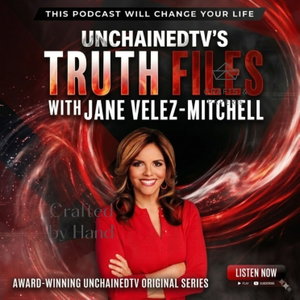
SHARE OUT IF YOU LOVE HORSES! Yet another horse has died in New York City's carriage trade. Deniz, a 16-year-old male who worked the city streets for a decade, collapsed and died in Central Park on June 9th near famous Strawberry Fields. His final breaths were caught on tape, a video that has gone viral, sparking grief and outrage. This latest tragedy has also reignited calls for New York City to end the carriage trade once and for all. In this episode of UnchainedTV's award-winning Truth Files podcast, host Jane Velez-Mitchell dives into the rising national movement to end this controversial practice. Joining the conversation are Edita Birnkrant, Executive Director of NYCLASS and one of the nation's leading voices against the trade, along with prominent NYC social media influencer Jamie Logan. Together, they discuss the growing momentum to pass Ryder's Law, a bill that would ban horse-drawn carriages in NYC. The tide is undeniably turning. The podcast highlights how the mood of the nation is shifting, pointing to the Philadelphia City Council's historic vote to ban the carriage horse businesses. Both famed tennis star Martina Navratilova and Meghan McCain, former co-host of The View, have expressed heartache and anger on X over the horse's death. Crucially, even the prominent Central Park Conservancy has broken tradition to take a public stand urging an end to horse drawn carriages. Advocates argue these gentle animals deserve dignity, not the stress of navigating gridlocked traffic, exhaust fumes, and concrete. However, opponents push back; Transport Workers Union Local 100, representing the drivers, maintains that the horses are well-cared for and that a ban would eliminate jobs. Truth Files extends an open invitation to union representatives to comment further. Tune in to hear how the tragic loss of Deniz, caught on video, could be the game changer for horses,


TRANSCRIPT

Outrage after Another NYC Carriage Horse Dies. What Next?
(0:01) All right, we are live with extraordinary breaking news. (0:06) After nearly 10 years of campaigning (0:08) by animal rights organizations, (0:10) the beagles at Ridgeland Farms are all being freed, (0:14) every last one of them. (0:16) This is history in the making.
 
(0:18) You are looking at just released footage (0:21) of the beagles who were released today. (0:24) We're talking about 325 dogs being released today (0:28) and tomorrow. (0:30) So this is a truly extraordinary.
 
(0:33) Big Dog Ranch Rescue secured the deal (0:35) to ensure that the remaining 475 dogs (0:39) at Ridgeland Farms will be released (0:42) and the facility is going to close permanently, (0:46) which is really history in the making. (0:49) Of course, those of you who have been following this(0:52) know that it is a saga that has gone on for a decade. (0:56) And take a look at these beagles.
 
(0:58) I mean, this is huge breaking news. (1:00) We've also got huge breaking news (1:02) about what's happening with carriage horses. (1:05) Another tragic death of a carriage horse in Central Park.
 
(1:10) His last moments you are seeing there caught on videotape, (1:15) which has sparked outrage from celebrities (1:18) like Martina Navratilova, Meghan McCain, (1:21) and some of the Kardashians just saying, (1:23) what is going on in New York City (1:25) that this is being allowed to happen? (1:27) We have one of the leaders (1:29) of the ending carriage horse trade movement on with us, (1:33) but first we're gonna go straight out to Wisconsin (1:37) on the beagle story. (1:40) So much happening. (1:41) Amy Van Artsen with the Marty Project.
 
(1:44) You brought us these incredible images. (1:47) What's happening there? (1:49) Yeah, thanks so much for having me, Jane. (1:50) It was such an incredible day.
 
(1:52) I just, truly some of the best news ever (1:54) is to hear that Ridgeland Farms is finally closing. (1:56) I couldn't be more ecstatic to finally feel this (1:59) after so many years. (2:00) There's been so many individuals in the movement (2:02) that it took to make this happen.
 
(2:04) And we finally did it. (2:05) So come August, the doors will close for the last time (2:07) and I couldn't be more excited. (2:09) Now you got this footage.
 
(2:12) What was your emotional reaction seeing (2:15) that these dogs were in cages all of their lives? (2:19) Some of them undoubtedly subjected to experiments. (2:24) These are the dogs with tattoos on their ears. (2:27) I mean, what was it like to see this? (2:29) Yeah, I think for me, it was especially powerful (2:32) just to connect with them individually.
 
(2:33) Like I think today I had a little more time (2:35) just to sit in the grass with them (2:36) and like to have them come up one by one. (2:38) That was something I'll just never forget. (2:41) And so just to, I mean, just to see their faces (2:43) and to see them take it in and as they, you know(2:45) gain confidence and just start to see the tail legs (2:48) and just to see them, you know, interact with each other (2:50) like that, just to take it all in today was, (2:52) I mean, just such an honor (2:53) and privilege to be there with them.
 
(2:55) Given everything that's happened in Wisconsin (2:58) and we have a team of experts here standing by (3:02) to talk about this, but given what has been national (3:06) even global media attention on the whole Ridgeland dog saga (3:13) with of course the attempts to get all the beagles out (3:19) by going in there and doing open rescues, (3:22) open rescues that at first got about two dozen dogs out (3:28) but then there was a second open rescue (3:31) that turned into a fiasco (3:34) as the rescuers were hit with tear gas. (3:38) You know, it's been a global story. (3:42) Do you feel that this outcome is a turning point (3:46) in animal rights history, Amy? (3:49) Oh, I entirely do.
 
(3:50) And Jane, I'll be right back. (3:51) I'm sorry, I got to jump off quick. (3:52) Okay, no worries.
 
(3:54) There's a lot going on in Wisconsin. (3:57) The dogs are still being taken out. (3:59) So the fact that you're seeing people pop on and pop off (4:05) it's because that there is just so much breaking news (4:07) happening right now.
 
(4:08) And we're going to get to the horses in a second (4:10) but I do want to ask Hurek Tela (4:14) who is an anti-vivisection activist (4:16) who has worked for literally decades (4:19) to end animal experimentation. (4:21) Do you feel this is the tipping point? (4:24) Hurek. (4:24) I definitely believe so.
 
(4:27) The secrecy of the cruelty to animals has been exposed (4:33) thanks to brave activists who have been fighting this, (4:38) documenting this specifically in Richland (4:41) and in other vivisection laboratories around the country (4:44) and around the world. (4:45) And the secrecy is out. (4:49) People now are starting to see (4:51) what they couldn't even imagine (4:54) goes on in vivisection labs.
 
(4:56) And next, we have the opportunity now with this momentum (5:00) to help people understand that animal research doesn't work, (5:05) that there is human beings who need help(5:09) with all kinds of diseases, cancer, diabetes, you name it (5:12) and that they need the help(5:14) and medical doctors can definitely work with those patients (5:19) and come up with solutions on top of some other laboratory, (5:24) non-animal based laboratory technologies. (5:27) I mean, we're talking about in the age of the computers (5:30) and technology. (5:32) So the momentum is on our part to say goodbye (5:35) to animal research once and forever, (5:38) not just the beagles who are the sweet little creatures (5:42) but also even all kinds of animals, rats, mice.
 
(5:47) There's a couple of hundred million animals every year (5:51) in the United States that's being used for vivisection. (5:54) They don't have an accurate count (5:55) because mice and rats aren't even reportable. (5:59) There are estimates that about a hundred million mice, (6:02) rats are being used.
 
(6:03) Another hundred million other animals, (6:05) dogs, cats, pigs, ferrets, bunnies. (6:09) And it's about time that we stop, (6:14) that we help people understand that this is not science. (6:18) This is not research.
 
(6:20) This is a government funded torture of other creatures (6:25) that is not helping human medicine, (6:28) whether it's in pharmaceutical drugs or in other areas. (6:31) So I think the momentum is on our side. (6:34) I am so pleased that JFK Jr. (6:36) and Secretary of Groups Rawlings (6:39) announced the formation of ORIVA, (6:41) which is an organization under NIH,(6:44) which is going to hopefully expedite the transition (6:49) to non-human methodologies.
 
(6:53) And we need to take this momentum and run with it. (6:59) I agree. (7:00) I wanna thank you, Hurrik.
 
(7:02) There's so much happening. (7:04) Now we're gonna go to Adita Bernkrant. (7:07) Adita is one of the most prominent animal rights activists (7:10) in the United States, indeed the world.
 
(7:12) She leads New York class, (7:13) which has led the fight to ban carriage horses. (7:17) So Adita, I wanna get your response to this latest death, (7:21) which has gone viral because it was caught on videotape. (7:26) What is the significance (7:27) and how is it reactivating the push (7:30) to end the carriage horse trade in New York? (7:33) Right now we have incredible momentum(7:36) because this footage, (7:39) this heartbreaking footage of 16 year old Dennis (7:42) who took his last breaths in front of people (7:44) that were sobbing, hugging each other, traumatized, (7:50) this went unbelievably viral in a way we've never seen.
 
(7:53) And it has reignited the demand (7:57) that the New York City Council do the right thing here(8:00) and free these horses from this miserable existence. (8:05) This is one of many horses who has been worked (8:08) to the point of collapse and death. (8:10) We've also had at least six violent runaway crashes (8:14) in Central Park that has injured people, (8:18) sent people to the hospital, including carriage drivers, (8:21) nearly trampled people to death.
 
(8:23) This has got to end. (8:25) And I think we have reached a tipping point (8:29) in that actually just a few days ago, (8:31) Philadelphia banned horse-drawn carriages. (8:34) San Antonio, Texas recently voted (8:36) to ban horse-drawn carriages.
 
(8:38) Chicago's already done it. (8:39) So New York City is a glaring outlier (8:41) in still allowing this to continue. (8:44) And it's been a really tough political issue here (8:46) for a lot of different reasons.
 
(8:48) But we really feel that we have the momentum now (8:52) to get this done because there has been such a groundswell (8:56) of outrage and heartbreak and disgust (9:00) that this beautiful horse should not have suffered (9:03) and died like that. (9:04) None of this should be happening. (9:06) We have rescue farms for all of these horses (9:09) to be living and running free as nature intended.
 
(9:12) Right now they're stuck in a abusive situation (9:15) and we have the solution with rider's law. (9:18) So it's very simple what we're asking, pass rider's law. (9:21) This is what 78% of polled New Yorkers want, (9:24) the Central Park Conservancy, which manages the park, (9:27) strongly supports rider's law.
 
(9:29) They put a very strong statement out actually (9:31) after the horrible death of Dennis saying, (9:35) this just highlights the urgent need to do this. (9:38) Look, we know what the nature of horses are. (9:40) They are nervous, skittish prey animals.
 
(9:43) So a horse can collapse at any time. (9:46) A horse can drop dead at any time. (9:48) They can also spook and run wild at any time.
 
(9:51) And that's why the Central Park Conservancy says (9:53) in an increasingly crowded park,(9:56) we can no longer protect public safety and health (9:59) by allowing these horses to continue to run wild, (10:03) to collapse and even die, unfortunately, (10:06) right in front of horrified people. (10:07) I can tell you, I spoke to multiple witnesses (10:10) who were there walking their dog, jogging, riding bikes. (10:14) They will never forget what they saw.
 
(10:16) One woman I spoke with who walks her dog regularly (10:19) in the park said that this was the second violence (10:22) she's seen in just nine months in Central Park (10:25) because she saw Dennis die right in front of her eyes (10:28) while walking her dog. (10:29) And last Labor Day, a horse rampaged through the park (10:34) after spooking and running wild. (10:37) And the actual tourists in the back (10:39) had to jump out of that carriage to save their lives.
 
(10:42) And this witness in the park had to jump out of the way (10:45) to avoid being trampled.(10:47) So at this point, the only way we can protect lives, (10:51) whether that's the carriage drivers, (10:53) whether that's the people in the park, (10:55) New Yorkers, tourists, and the horses themselves (10:58) is to pass this common sense legislation (11:00) that most other large cities have already done. (11:03) So that's our task to get that done.
 
(11:06) And the website link on the screen here (11:09) is we have everything laid out. (11:12) Whether you live in New York City, (11:14) contact your council member. (11:16) If you're outside of New York City, (11:17) there's also action steps you can take.
 
(11:19) Also, please follow our Instagram page at NYCLASS. (11:24) We're constantly putting updates. (11:25) There's gonna be a lot happening (11:26) because we really believe (11:28) that this is the year of the horse, 2026.
 
(11:30) We're finally gonna get this done and free these horses. (11:33) Well, I have to tell you,(11:35) it's so extraordinary to see all this mainstream outrage (11:41) because these aren't just animal rights activists. (11:43) These are people, I'm gonna play a clip (11:45) of the demonstration outside City Hall (11:48) that occurred after this horse's death.
 
(11:50) And you can see this is a massive group of everyday people, (11:54) not what they call radical animal rights. (12:20) Now I'd like to bring in my colleague Jamie Logan and I'd like to get your reaction because (12:28) you've covered both of these. You're a New York City native and yet you've also been (12:33) at the Ridgeland.
 
You were one of the people who was attacked with tear gas and pepper (12:40) spray. So what do you think's happening? So I mean just seeing this footage of the horse (12:46) carriages first and foremost, it's so powerful. It I think tears at anybody's heart whether (12:52) you're an animal rights activist or not.
 
And in fact, most New Yorkers want these carriages (12:57) banned anyway. It's a thing of the past. We're in 2026.
 
Let's use our own damn legs at this (13:05) point. It is truly the definition of insanity that we are just doing the same thing over (13:11) and over again and expecting a different outcome. But the outcome is the mere fact that there (13:16) is a dead horse on the side of the street.
 
It seems like every few months. And so it's (13:22) just a matter of like, when is the next catastrophe going to happen? And so we must get this rider's (13:28) law passed and end the horse carriage industry for good. There was just a victory in Philadelphia (13:34) where the horse carriages are banned there.
 
So come on, New York City. Come on, girl. Like (13:39) what are you waiting for? Yeah, I think you know, you're making very important points.
 
I want to (13:45) though. We always show both sides of the story here. First of all, let's look at the union's (13:51) response.
 
And I want to get your response, Adita, to the union's response, because they say (13:57) TWU Local 100 said Dennis was examined by the NYPD mounted units veterinarian in March and (14:04) was found fit for work. Union officials said there were no signs that the horse was ill before (14:08) Tuesday's incident. We are all in mourning.
 
TWU Local 100 shop steward Christina Hansen said in (14:15) a statement and they said they closed their stables for a day this past Wednesday in honor of (14:21) this horse's death and that a necropsy will be conducted soon to determine the cause of (14:27) death. I want to get your response to that. And I believe the last death was actually last (14:34) year in terms of a New York City carriage horse.
 
You can clarify all that. Yes. Last August, a (14:41) 15-year-old horse, a mare, dropped dead on the streets.
 
And actually, my response is that all of (14:49) these horses get a perfect bill of health because there's no independent veterinary (14:54) oversight. Rider, which was the horse that the legislation is named after, was a 26-year-old (15:00) horse. That's about equivalent of an 85-year-old human.
 
The owners had falsified his age to say he (15:07) was just 13 years old. And this was a horse that was riddled with cancer, emaciated and very sick. (15:14) Well, guess what? Rider had a perfect bill of health.
 
And then he collapsed on a hot August (15:20) day in 2022. And then it was revealed that he was a very sick horse. But we don't have the autopsy (15:28) results from this particular horse.
 
But regardless of what the autopsy shows, the fact of the matter (15:36) is that horses have medical emergencies all the time. They can trip and fall at any time. There (15:42) were passengers in that carriage when Dennis collapsed.
 
They are very lucky that they weren't (15:48) thrown from the carriage and injured. But regardless of whether Dennis was in perfect health and just (15:55) had a cardiac event that could happen to any horse or whether he was sick and wasn't being (16:02) treated, the outcome is the same. Horses can collapse and die at any moment.
 
And that is why (16:07) we cannot have them dragging open carriages with passengers, sometimes very young children. (16:15) There's no safety measures. There's no modern safety measures in these carriages, right? So (16:22) it's a 19th, 18th century contraption thrown into midtown Manhattan.
 
So when something goes wrong, (16:30) which happens regularly, these carriages just fall apart. They're very flimsy. They crash into (16:35) vehicles.
 
So again, the industry's response will often be that, well, horses can die at any time. (16:44) And by the way, I also feel like that's sort of a very flippant response when people are (16:51) watching this horse die in public. But the point is that they shouldn't be there pulling carriages (16:57) in stressful conditions.
 
We know that the traffic is stressful. They're pounding pavement. They go (17:03) back to multi-level storied stables, if you can call them that, where they are put into very small (17:13) stalls that are about half the size recommended by humane orgs.
 
Horses are herd animals, right? (17:19) But they have no pasture in New York City. They don't have grass. So the things that horses need (17:24) to be healthy are often denied them in New York City.
 
And the fact that we know that horses can (17:32) collapse, die, spook at any moment is exactly why we cannot safely and humanely operate horse-drawn (17:41) carriages in the city. It puts everyone at risk. Just last month, actually, there was another (17:47) violent spooking incident in the park where two carriages lined up waiting for rides collided (17:53) with each other.
 
And the carriage driver was flung from the carriage and ended badly injured, (17:59) was trapped underneath. He was badly injured, taken away by ambulance. The passengers had just (18:04) stepped off and narrowly avoided also being thrown in the air.
 
And Jamie Logan is right. There's (18:10) things keep happening every few months, whether it's horses spooking and running wild through (18:15) the streets, crashing, running wild in the park, injuring people, dropping dead, unfortunately. (18:22) These happen regularly.
 
Unfortunately, it will happen again. We know that. And we always say this.
 
(18:30) And here we go. And unfortunately, Deniz has died a horrible death. I mean, I spoke to people who (18:38) also were angry that it appeared that the carriage, you know, in the videos you see (18:43) people running, rushing around and giving aid to trying to comfort the horse.
 
Some of the people (18:49) that were witnesses there made a point to tell me that they were very disgusted that Deniz's carriage (18:54) driver didn't comfort him. You know, at a certain point, that carriage driver knew that that horse (19:00) was dying to not at least give some comfort, cradle his head so he doesn't have to die on (19:08) asphalt. People noticed that and they thought it was it was very upsetting that this was his horse.
 
(19:15) This was actually the owner of the horse as well, not just the driver, and that it appeared that (19:19) he didn't even give comfort to his horse. Other people were giving comfort. And you're right that (19:25) it's just regular people.
 
By the time when I got to the park the day that Deniz had died, (19:29) he had already been dead for about an hour on the ground. There was still a large group of just (19:35) regular New Yorkers that had been in the park. These weren't activists.
 
And some of them were (19:40) yelling and upset and crying. They had a visceral response to seeing this. And for many of them, (19:47) they're aware of these kinds of terrible tragedies happening all the time because they're New Yorkers.
 
(19:53) They're in the park regularly. They watch the news. So it's all so unnecessary.
 
And we are (20:01) committed to getting this done. We really could use everyone's help. The only way we can get this (20:06) done is if the elected officials hear.
 
It's very important also that any communication that we have (20:12) as advocates with elected officials is very respectful and polite. We don't win anyone over (20:20) by being nasty or aggressive. So I always say, please reach out politely.
 
That's how we win (20:26) hearts and minds. And we are on the right side of history here. Let's get it done.
 
(20:30) And we invite the carriage horse driver on anytime. We invite the union on. We would love to dialogue.
 
(20:38) So you have an open invitation. I want to talk a little bit about (20:42) Mayor of New York. This is what Mayor Mamdani said.
 
As I've said, I support removing horse (20:49) carriages from Central Park. I've also said that I look forward to working with union partners (20:54) and community leaders to actually deliver on that. He said, I think in Central Park, (21:00) what we've seen is a lot of concern about the welfare of these horses.
 
And I want to figure (21:04) out a way for us to actually get to the end of that. Easier said than done. I'm a formerly a (21:10) New Yorker.
 
I covered politics in New York as a reporter back when we had Ed Koch as mayor. (21:17) Is this been an issue for many, many decades? And you even had one mayor say, I'm going to end it.(21:27) And he didn't end it.
 
So what's your reaction to this new mayor saying that sort of like, (21:34) I'd like to work to end it. I'd like to work to end it and with the union. But the union is very (21:40) much against ending it.
 
Right. I think any elected official, especially a mayor, they have to be very (21:46) careful in a tense political situation. And he has to deal with all stakeholders.
 
That's the way (21:51) it is. But he already pledged actually before he was elected that he absolutely supports banning (21:58) horse-drawn carriages. He answered our candidate questionnaire and said he believes they are (22:01) inhumane and unnecessary.
 
And he has stood by that pledge. I think when he's saying he wants to find (22:07) a way to make it happen with the union, he's acknowledging that this has been a contentious (22:12) issue. And I think it's smart for any elected official who wants to get things done when there's (22:17) two sides that want different things, that you have to come together and make that happen.
 
(22:22) And I think that he has a relationship with that union. And I think that he can make it happen. I (22:28) mean, this is not rocket science.
 
We have about maybe 100 jobs that need to be replaced. And we (22:36) can find safer, better paying, stable jobs that are not obsolete. Horse carriage industry is (22:43) obsolete.
 
That's why even cities like San Antonio, Texas, cowboy culture, have banned it. So we think(22:50) that there's a real solution here that would benefit everyone, because it's often the carriage (22:56) drivers themselves that are the ones that get badly injured when these happen. So let's transition (23:00) them into better employment where they would have benefits and worker protections and not be (23:06) reliant on seasonal work or weather conditions.
 
And I think also because of all of (23:14) these horrible things that happen regularly and the public is aware of, less and less people (23:20) want to take horse-drawn carriage rides. The carriage industry has even said that themselves, (23:24) that the pedicab tours of Central Park are more popular than the horse carriages, (23:29) because people see these images that go worldwide. And it's hard to want to support (23:37) that when you see something like that happening, a horse dying in public or horses that run wild (23:42) and crash into cars.
 
They realize that that could be them stuck in the back of a carriage that just (23:47) rampages through the park or down Sixth Avenue. And that's a big risk to take on your trip to (23:53) New York City. No one wants that to be their trip to New York City ending up in a tragic (23:58) horse carriage crash.
 
So we feel like we have so much momentum, so much on our side, so many other (24:05) cities that have already done it that we can get this done. We just need the support from the (24:11) public. Listen, I was just editing a video, a mini doc that we're doing about the history of (24:18) the animal rights movement in America.
 
And this was discussed in 1898 when the very first (24:28) electric carriage parade occurred in Manhattan. 1898, they had electric carriages that looked (24:37) very much like the electric carriages that they could use today. The prototypes are there.
 
(24:44) They're all over the place. There's one in Philadelphia that Jamie, Logan and I rode in.(24:50) They're really cool and they don't smell like poop.
 
They're so close to the butt in your face. (24:55) It's just a beautiful electric carriage. So I would recommend those.
 
And look, we're not saying (25:02) that we have to take away culture and tradition. It's simply a matter of replacing these carriages (25:07) with horseless ones. And you can still ride around the park.
 
And in fact, you have pedicabs right now (25:14) that are such a great option to take. They actually go faster. You get the wind in your (25:19) face.
 
They're really fun. And just the other day, Travis Barker and his girlfriend, Kourtney (25:25) Kardashian, were caught and seen in a pedicab. And even they're out there promoting them.
 
(25:31) So yeah, we need to look at the consequences of these horse carriages and adjust accordingly. And (25:38) we have to stand against these industries because it's all about profit. It's not about the ethics (25:44) for these industries.
 
And so if they're not making money, then why would they continue using the (25:49) horse carriages? I want to talk a little bit in the time we have remaining about, are we hitting (25:56) an animal rights tipping point? Because I honestly feel like this is happening. We've got a great(26:03) activist, Karen LaCava, right behind us, who's working here at our temporary headquarters. There (26:08) you are.
 
Yes. But the reason I say that is the tenor of these animal rights demonstrations has (26:16) been changing because it used to be sort of a hardcore group of animal activists. But now you're(26:22) seeing members of Congress, for example.
 
Honestly, I was listening to a New York congressman, a (26:31) representing upstate New York, talk about the fact that there's this company called Marshall (26:37) Bioresources in upstate New York. Now that Ridgeland is closing, it's going to become the target of (26:44) the focus of why are we breeding beagles for experimentation. And honestly, he sounded like (26:50) an animal rights activist.
 
This is a congressman. Let's listen to him and talk about it on the other (26:55) side. Those people inside of Marshall, they're hearing them too here today.
 
And they're hearing (27:00) them every day from this day forward. They know they have a problem on their hands. And, you know, (27:10) like I said, I paid a visit here.
 
We pulled in within one minute of our arrival and we pulled (27:16) over there and tried to kind of peek around the corner. There's a big gate. They had security (27:21) out here so fast.
 
They didn't know what was coming. It was made very clear that we weren't welcome. (27:28) We had no appointment and we could go buzz off.
 
They don't want anyone to see what's going on (27:35) behind those gates and in those buildings. But as you all drove up here and you saw the map on (27:41) your car, you see the enormity of this site, the amount of buildings there. I mean, it is, (27:47) it's just, it's mind boggling that this many animals can be held under one roof in this state.
 
(27:54) And there was a protest there at Marshall Bio Resources, and we also invite Marshall(28:01) Bio Resources on any time. This is where the beagle battle is headed toward. Now that(28:08) the breaking news that we brought you today, that Ridgeland Farms is closing and all 475 beagles (28:16) that remain are going to be moved out.
 
Many of them were moved out today. Now the focus (28:23) is going from Wisconsin where Ridgeland is to New York, where the largest beagle breeding facility (28:30) remains, 16,000 beagles reportedly. And so we are seeing this grassroots growth of this movement.
 
(28:40) Again, I see a commonality, Horik. It's the protests against beagle testing, but it's also(28:49) the protests against the horses. We saw the people protesting against the horses.
 
These animal rights (28:57) protests are growing in number and they're becoming mainstream. And it's also bipartisan. (29:03) You have Republicans and Democrats, liberals, conservative, young, old, people of all (29:09) ethnicities, races, demographics.
 
They're coming together and saying, at least when it comes to (29:15) dogs and horses at this point, they don't want to see abuse. Your thoughts? (29:22) Definitely. When the cruelty is behind closed doors, such as in the case of vivisection labs, (29:31) and even with the horse carriages, most people do not see the horses, how they suffer.
 
(29:38) They see strong animals that are, people think, oh, they love to walk. What are they going to do? (29:44) Stand in their barn all day long? They don't have the impression of what's going on in the (29:50) horse's body and mind until the horse drops dead. So when the cruelty aspect comes out, (29:57) then people all of a sudden are shook up.
 
And when the uselessness of it, like you have other (30:06) carriages that you can use that require less food, maybe they require no poop to be cleaned. (30:15) And in animal research labs, when you have all these clinical trials with human beings that are (30:22) there to help humanity, I think people make the connection between the secrecy, the veil being (30:29) lifted, of the secrecy, and they see it with their own eyes, whether it's the carriage horses (30:36) or the video footage that brave souls like Wayne and the other people have gone in and (30:42) risked their lives and taken, and now everybody can see that. And when the truth comes out that (30:48) the congresspeople, when the New Yorkers, when the FDA, when people at the NIH, when the Secretary (30:59) of Human Health and Services, they say that the research doesn't work.
 
We have major problems (31:04) with our extrapolation from species. And when people look at these horses and say, (31:09) what am I doing? Is this fun? Do I ask that horse if it has given any of one of us the authority to (31:18) sit on its back? Nobody has asked this horse to give his permission. It is outrageous that people (31:26) think that they can put their big butts or small butts on top of this beautiful, gentle animal.
 
(31:34) It's outrageous, whether it's for carriages or, or horse races, or primarian, which the hormone that (31:44) horrifying animal research with horses, that now it's done mostly more in China, (31:51) because of public outrage. And it's just outrageous. People have to learn that these(31:57) animals are not offers to use and abuse.
 
And that this is not promoting our health and our sanity (32:04) and our fun and entertainment. It's ridiculous. I want to say that there's, let's talk about the (32:12) horses.
 
And then we've got some more breaking news on the beagle front. But we're here with (32:17) Karen LaCava, who actually worked with horses extensively. And what is your reaction to this?(32:25) So one of the things that really breaks my heart is that this is so criminal to me is that(32:31) these carriage drivers know the horses, they know the body language when they are not feeling well, (32:36) they know the body language, they should be stopping when they see that their horses are (32:42) in distress.
 
It's, it's really, that's very criminal to me, besides the fact they shouldn't (32:47) even be there. They know their horses. Yeah, and we don't want to say criminal, (32:53) in the sense that, for example, there was a horse who died, and there was a trial wasn't there.
 
(33:01) And the driver was put on trial, and it turned out that he was acquitted. So that's very,(33:07) it's very interesting. Society is, is still, at the end of the day, (33:13) treating these animals mostly as property, correct? (33:16) I certainly think it's safe to say it's a moral crime.
 
Yes. Oh, the criminality of it, (33:21) like the criminal justice system is very problematic. But in the case of that, (33:25) that was actually rider's owner.
 
You know, part of the problem is that because as I mentioned, (33:32) there is no independent veterinary oversight. So you only have the paid industry vets who give (33:39) a perfect bill of health, even to a horse as sick as rider who was essentially dying, (33:44) and got a perfect bill of health. And was a they were able to lie about his age.
 
So (33:49) when it comes to a criminal prosecution, when you're dealing with that, unfortunately,(33:54) it gave the owner of that horse a get out of jail free card, because he got to say, well,(34:00) this horse was perfectly fine and got licensed by the city. So how could I have known(34:05) that my horse was sick? Of course, the horse was emaciated and had to be like displaying some (34:12) other symptoms. But animal abuse, unfortunately, is still not taken very seriously by the legal (34:18) system, especially when it comes to working animals.
 
And particularly in New York, as we (34:24) really learned from this trial, the laws are so antiquated. One of the one of the legal terms that (34:33) was used was overdrive, overdriving the horse. That's an obsolete term that the jury didn't (34:40) understand what that term meant.
 
And actually, the prosecution, the D.A. tried to give the (34:47) the judge refused to allow the prosecution to give a clarifying definition of what overdrive meant, (34:55) which essentially meant overwork. But, you know, we weren't surprised that he was acquitted in that (35:01) case because we knew that the standard would be very high in terms of animal cruelty. But (35:06) for sure, we consider it a moral crime.
 
And I think most New Yorkers do that. This is so (35:11) unnecessary. We have a solution here, a solution that would really benefit everyone because we do (35:17) we don't want anyone to lose their livelihood and lose a job.
 
But we have to have safe jobs that don't (35:23) put everyone's lives at risk and that don't harm horses. And I really think we have reached a (35:29) tipping point. And what you said reminded me of that saying, Jane, of first they ignore you, (35:34) then they laugh at you, then they fight you and then you win.
 
And I think we've gone through (35:39) all those phases. We're still in the fight phase with the horse carriages, but we will win. (35:46) Yeah.
 
And I want to thank you. I know you're very busy, so stay on if you can. But we are going to (35:51) talk a little bit about Ridgeland because this is a major breakthrough.
 
If you're just joining us, (35:58) these are some of the just released beagles. They were released just minutes ago. And this is the (36:03) first footage of them getting out.
 
We have three hundred and twenty five of these beagles who've (36:10) spent their entire lives in cages being released today and tomorrow and one hundred and fifty more (36:17) by August. Then the facility, the controversial facility Ridgeland is going to close. This is the (36:24) big breaking news.
 
And what's really fascinating is that it's gone mainstream. We have Republicans, (36:34) Democrats, liberals, conservatives, all young people from all across the country and indeed(36:39) the world, plus celebrities speaking out, saying no more beagle experimentation specifically and no (36:46) more animal experimentation in general. And I want to play some breaking news.
 
Let's go back to when (36:54) a congressman confronted Robert F. Kennedy, Jr., Health and Human Secretary Services Secretary, (37:01) about this issue. And he said that he didn't know that this was going on, even though it's (37:10) like global news. Let's listen to that clip.
 
And then we've got some new breaking news that has (37:14) just come over the wires. It's not the wires anymore, but you know what I'm talking about. (37:19) In my district, we have something called Ridgeland Farms.
 
That's a beagle breeder for research. (37:25) They've had three hundred eleven code violations, including very serious harm to the health of dogs. (37:29) Grants are still, in the last month, going to groups that are getting beagles from Ridgeland (37:35) Farms.
 
Could you please take a look at this? I believe you, but I have a hard time believing that. (37:41) I need to look into this. All right, so we're finding out what exactly he said.
 
Right now, (37:52) it literally just came in. Let's look at it together, Jamie. We can figure it out.
 
(37:56) He's saying. As a secretary, I'm joined by my friend and colleague, Secretary of Agriculture(38:03) Brooke Rollins. Brooke and I want to start by thanking Laura Trump for her extraordinary(38:09) leadership on this issue.
 
Today, we're highlighting a major win for animal welfare. (38:14) Ridgeland Farms, a dog breeding facility that's supplied animals for research, (38:19) will transfer its remaining 475 beagles to a large, cage-free, no-kill dog rescue. Most of those dogs (38:29) will leave the facility immediately and begin the path toward adoption and permanent homes.
 
(38:34) We are committed to humane animal care and to replacing animal testing with effective alternatives (38:40) wherever possible. And we're turning that commitment into lasting change. Today, we're (38:46) announcing the creation of ORIVA, a new NIH office that will accelerate the development and use of (38:52) humane-based research technologies and help reduce reliance on animal testing across all of NIH.
 
(38:59) Thank you, Mr. Secretary. This is such welcome news, as USDA had taken action to hold Ridgeland (39:06) Farms accountable with federal requirements for humane animal care. We conducted inspections, (39:12) we investigated conditions at the facility, and we put the operation on notice about inbound (39:18) accountability.
 
Prior to today's announcement, USDA informed the facility that if it fails (39:24) to voluntarily cancel its Federal Animal Welfare Act Class A Breeder License by July 1st, (39:31) we will begin termination proceedings. And our work, in addition to groups similarly seeking (39:36) accountability, has paid off. Accountability matters, animal welfare matters, and enforcement(39:42) matters.
 
Earlier this year, USDA published a request for information on standards of care (39:48) for dogs covered under the Animal Welfare Act to ensure that we are aware of the best available (39:55) science and the latest evidence in animal welfare. And we will continue to use every tool available(40:01) to ensure that animals receive humane treatment in this country. This is what responsible(40:06) government looks like, agencies working together and protecting animal welfare.
 
Thank you to (40:12) everyone who helped make this happen. When our work isn't finished, we're going to continue fighting (40:16) to improve animal welfare and expand humane alternatives to animal testing and hold (40:22) institutions accountable. Thank you.
 
Wow. That is a shock. I mean, honestly, (40:32) I mean, it's, it's a shock.
 
What is your reaction, Horak, to that news? That is breaking news. We (40:38) literally just got it on our phone. Yeah, we knew that the special prosecutor had cut a deal (40:44) for Wrigley to... Speak up.
 
We knew that the federal special prosecutor had already cut a (40:53) deal with Wrigley so that they would relinquish their state breeding license. But I personally (41:00) was very worried about the federal license and what RFK Jr. is, or actually Secretary Rawlings (41:09) is saying is that they are relinquishing their federal license, which my understanding is that (41:16) the federal license is what allowed them to breed and do research in-house. Now I'm hoping that... (41:25) They're closing, okay? They're closing their doors.
 
Yes. So closing, their federal license (41:32) is cut out too. That's immense.
 
But I mean, the big picture here, (41:38) and excellent points. Thank you, Horak, but can you scooch up? The big picture here is that (41:44) for decades, we've had, first of all, an attitude where you can't even discuss this. If you even (41:52) stand up against animal testing at all, you're against fighting cancer, you're against this, (41:57) you're against that.
 
And now there's this recognition that we're in the 21st century. (42:01) We have organs on a chip. There's a new documentary coming out that talks about (42:06) it's far more effective and it has a much greater success rate when you're dealing with (42:12) AI systems, quantum computing systems, organs on a chip, organoids, all of this high-tech stuff.
 
(42:19) And so honestly, this is a mind-blowing breakthrough for the animal rights movement(42:24) happening in real time. I am just thinking about (42:27) all of these little individuals who are seeing grass for the first time, who are seeing sunlight, (42:34) and who are experiencing life outside of a cage. That is amazing.
 
And the numbers are... (42:42) The fact that we got every single dog out of Richland, this is a sign, this is a message to (42:50) animal testing as a whole. We have our next target. We are not going to stop until every cage is (42:57) empty.
 
And just take one look at one of these dogs and it just will motivate you to want to (43:05) go back to the next facility and get the rest of them out there. (43:08) Yeah. And I just want to say on a personal level, having covered this issue for decades, (43:15) okay, when I was a reporter in Philadelphia and I was just at the same time that PETA was (43:20) getting started, we're talking 1981 or 80, okay? I was a reporter in Philadelphia and somebody sent (43:30) me video of head injury experiments being conducted on baboons that was so horrific.
 
(43:36) I, at that moment in time, said, I'm devoting myself to animal rights. That's how bad it was.(43:43) 1980, 90, 2000, 2010, 2020, we're talking almost half a century ago.
 
And today, (43:52) today, you're seeing representatives of the government saying we are going to get rid of (43:58) animal experimentation. This is a breakthrough. This is a game changer.
 
Final thoughts from (44:05) everybody, because my mind is blown. The National Institutes of Health, the USDA, the FDA, they are (44:14) all changing. And they are the biggest funders of animal experimentation.
 
NIH is the biggest (44:20) funder of animal experimentation in the world. So if they're saying now that they are going to (44:26) move away from this, that's the beginning of the end. It's two sides of the same coin.
 
Yes, (44:33) it's people protesting on one side, okay, but it's also the government realizing, I think,(44:39) oh my God, the national mood has changed. And we want to be popular with average people who have (44:45) dogs and who love animals. And we're going to change too.
 
So it's a convergence of technological (44:52) improvements. I just watched a documentary that's just out about this last night, where people who (44:57) used to experiment on dogs, a scientist who said he's done at least 50 to 80 experiments on dogs (45:02) said it doesn't work anymore. We're using AI, we're using organs on a chip, we're using organized, (45:13) thank you, and we're getting better results, more efficiency, faster results, and more accurate (45:19) results.
 
So this is the beginning of the end. I want to get final thoughts from you, Adita, (45:23) and then we'll wrap it up. I mean, watching that video, I would believe it was AI if I didn't know (45:29) any better.
 
It's that stunning and remarkable. And it really does show a tipping point. I mean, (45:35) I think that announcement really is the death of animal testing in this country.
 
And I think it (45:42) shows the bipartisanship of these issues, that whether it's a Republican administration or a (45:49) Democrat, it doesn't matter. And I know that Lara Trump, who is Donald Trump's daughter-in-law, (45:57) played a big part in this, I believe. She's on the board of the Big Dog Ranch that was involved (46:03) with the rescue, and she has been a dog rescuer for a long time.
 
And I think that that may have (46:08) helped influence the Trump administration. But I think, like you said, this convergence, (46:13) this is truly a remarkable day. And I am very excited to see how this all plays out and to see (46:20) more progress being made.
 
And I can see in my lifetime, perhaps, there will no longer be (46:26) animals in cages being experimented on. Amazing. It is breakthrough.
 
Final thoughts, (46:34) Today's actions and results have been in motion for decades. As you said, James, from even over (46:42) a century ago, people have been fighting this. And we have to give ourselves, the average person, (46:49) me, you, we have to give ourselves more credit.
 
Because oftentimes we think that, oh, the (46:54) politicians will know better, the scientists will know better. They don't. You would be shocked to (47:00) how many doctors, they don't even know that animal research goes on.
 
I mean, it's mind-blowing that (47:05) they don't. We expect RFK Jr. and the politicians to know what to do good for our health and to (47:13) protect the animal welfare laws. But they are learning from us.
 
So we have to be so proud of (47:20) ourselves. And we have to make our activities tenfold, a hundredfold, now that the momentum (47:26) is on our side, and help teach them, teach the politicians that it's okay to stand up and end this (47:35) use and abuse of animals, whether it's with carriages or in vivisection labs. (47:40) All right.
 
And final thoughts. (47:42) Final thoughts. I want to just say that it is going to be harder and harder to ignore animal (47:49) rights.
 
We are going to keep bringing these issues to mainstream media. It is something that we can(47:56) solve. There's a solution here.
 
And that's the beauty in this issue, is that we as individuals (48:01) can have such an impact on the lives of so many. So it's no longer this fringe, kind of erratic, (48:10) radical thing. This is an essential issue.
 
And I think it is, in part, it is essential to creating (48:19) peace amongst humans as well, all animals. So let's come together. Let's work together.
 
So excited to (48:25) be fighting for this. (48:25) I am so excited. This is an extraordinary day.
 
I'm shocked at that video I just saw. It is, (48:32) you know, something like Adida said, this would be AI if we didn't know that this statement actually (48:38) had been made, that this statement is a groundbreaking change in the sense that a (48:44) government representative, a top government representative, is saying we need to end (48:51) animal testing, essentially, if you boil it down. It's huge.
 
So you know what? It gives me hope. (48:57) It gives me hope because here we are plugging away for decades. I mean, it goes back for me, (49:03) you know, more decades than I care to admit.
 
And to see something like that today gives me hope. (49:09) It makes me feel like, wow, as Nelson Mandela said, it always seems impossible until it's done. (49:17) So keep fighting.
 
Keep going out there because we're starting to win, people. All right. Talk to you soon.
 
(49:24) Thank you, everybody. Great job. Great job.
 
(49:28) So it's a vegan Netflix. Okay, that's the craziest thing I've ever heard. I love Unchained TV.
 
(49:34) Your life will change. It's just that easy. Unchained TV has all sorts of content for everybody.
 
(49:40) Unchained TV changed my life. Unchained TV is crushing it. I love Unchained TV.
 
(49:48) Unchained TV is my go-to. Unchained TV. Who knew? Unchained, baby, yay!

Podden och tillhörande omslagsbild på den här sidan tillhör Jane Velez-Mitchell. Innehållet i podden är skapat av Jane Velez-Mitchell och inte av, eller tillsammans med, Poddtoppen.