Dela

Pueblo leaders and environmentalists are angry that the U.S. Bureau of Land Management (BLM) released an environmental assessment last week with the intent of eliminating a buffer around Chaco Culture National Historical Park that has prevented oil and gas leasing.
As KUNM’s Jeanette DeDios (Jicarilla Apache and Diné) reports, BLM is offering just two weeks for public comment on the report.
A Biden administration order placed a 20-year ban on oil and gas development on federal lands within 10 miles of Chaco, a UNESCO World Heritage Site.
This upset some Navajo communities who rely on royalty payments and infrastructure from oil and gas for their livelihoods.
President Buu Nygren said thousands of Navajo oil and gas allottees would be negatively impacted by the decision.
But in April, the BLM gave the public one week to comment on a proposal to expand oil and gas leasing around Chaco.
The current proposed environmental assessment has three options: leave the buffer intact, reduce it to five miles, or remove all protections.
Brian Vallo (Acoma Pueblo), chairman for the Chaco Heritage Tribal Association, says the Trump administration is not working with Pueblo communities, despite tribes working together to create an ethnographic study on why this landscape is vital to Native cultures.
The study is a first of its kind, he says, and was conducted by the Pueblos themselves.
“So it really traces the ethnography of this cultural and sacred landscape from our present-day communities to the great houses in Chaco, but also everything in between, pilgrimage trails, shrines, sacred sites, springs, and other places that are significant to our continued observance and practice of our own traditions and you know, Indigenous way of life.”
Vallo says the association is frustrated that the federal government is not adhering to a data-sharing agreement and not considering information from this ethnographic study, but moving forward with a draft environmental assessment.
“All of humanity, the land, and the resources, the animals, the water. All of those things have connection, and that connection is maintained through the generations of those of us who are the practitioners, those of us who are the cultural leaders, and the greater Pueblo community as well.”
Members of New Mexico’s congressional delegation have also condemned the BLM announcement as a move to push for more oil and gas drilling.
The All Pueblo Council of Governors has continued to invite Secretary of Interior Doug Burgum to visit Chaco Canyon and hold a consultation with Pueblo members, but he has not responded.
Vallo says young folks at Acoma are already mobilizing.
“Young people from within our community who are going door to door with laptops and or notebooks to encourage tribal members to submit letters.”
Public comment closes on July 29.
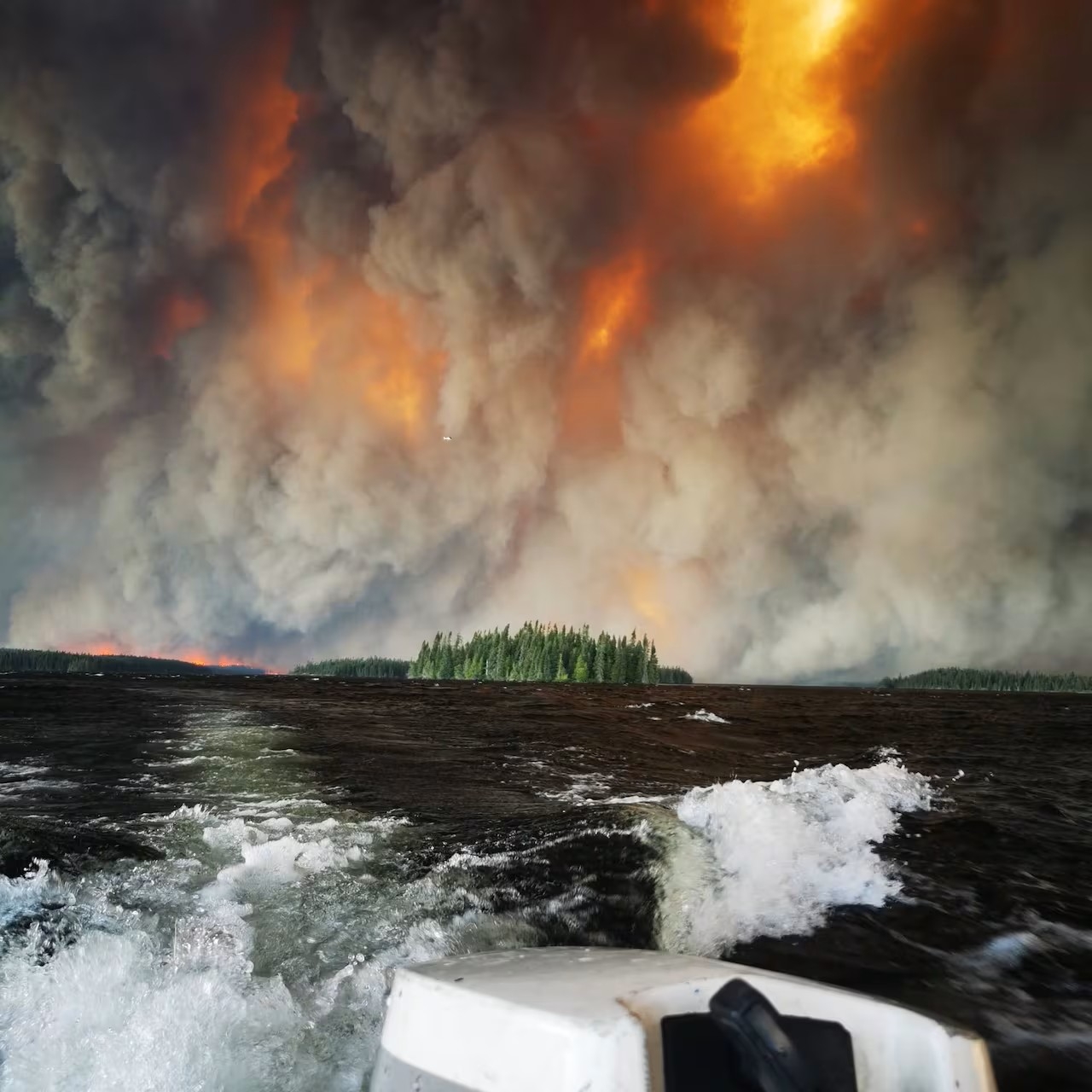
The view of Namaygoosisagagun First Nation as resident evacuated across Collins Lake. (Courtesy Wayne Wastaken)
Across Canada this weekend, nearly 900 wildfires were burning – from the Atlantic provinces to British Columbia.
Northern Ontario is one of the regions that has been hardest hit.
One Indigenous community there has been destroyed.
And as Dan Karpenchuk reports, Indigenous leaders are calling on the federal government in Ottawa for more support.
At least one small first nation in northern Ontario has burned to the ground by a devastating wildfire, which is one of nearly 200 alone burning in the province.
Residents fled the Namaygoosisagagun First Nation by boat on Collins Lake, many having only a few minutes to gather some personal belongings, according to Chief Helen Paavola.
“It was just a matter of minutes before my members would have died. And even during that whole time, there was no help.”
Namaygoosisagagun, also known as Collins First Nation, is only one of ten communities, Indigenous and non-Indigenous, that have been evacuated as wildfires rip through the region.
Namaygoosisagagun is now is ashes – and its residents say they face an uncertain future.
The Assembly of First Nations is calling on Ottawa for help including financial support.
Linda Debassige is the grand chief of the Anishnabek Nation. She says when the wildfire first approached the community, the chief herself tried to contact government officials, but they said they were not aware of the fire.
“And so, had the community waited for the official emergency response activiation, this would be a recovery mission at this point in time, which is unfathomable.”
Debassige says the community now needs accommodations, food, and especially a commitment to support rebuilding.
One of the problems is that the Namaygoosisagagun is not federally recognized as an official Indigenous first nation.
The remote first nation, more than 700 miles north of Toronto, has no road access.
Debassige says the Anishnabek Nation Grand Council, which includes 39 first nations, does recognize it and is supporting members by providing accommodation, food, and clothing.
Get National Native News delivered to your inbox daily. Sign up for our daily newsletter today.
Download our NV1 Android or iOs App for breaking news alerts.
Check out today’s Native America Calling episode
Avsnitt sparat!
Du hittar sparade avsnitt på Mina sidor.
Kunde inte spara avsnitt
Något gick fel. Försök igen.