Dela
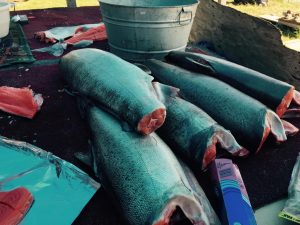
Photo: Salmon prepared for drying at fish camp on Kuskokwim River near Napaskiak on June 21, 2016. (Rhonda McBride / KNBA)
The state of Alaska is not ready to give up its fight just yet in the Kuskokwim subsistence lawsuit.
It has filed a motion to appeal a federal judge’s decision to award $1.8 million in attorney fees to several Native organizations, which joined a federal lawsuit against the state over subsistence fishing rights.
The case began four years ago when federal managers sued the state for failing to uphold a rural subsistence priority, required under federal law.
The state ultimately lost a series of court battles, which culminated when the U.S. Supreme Court declined to hear the case.
Tanner Amdur-Clark works for one of the groups which joined the lawsuit, the Kuskokwim River Inter-Tribal Fish Commission.
He says the state’s appeal continues a long pattern of delay.
“It’s yet another blow to Alaska Native organizations that are essentially taking money that they really should be using to be providing services and helping out folks in rural Alaska — and instead they’re having to do this, to essentially fight for their lives against the state of Alaska.”
The other groups in the lawsuit are the Association of Village Council Presidents, the Alaska Federation of Natives, the Ahtna Native Corporation, and an Ahtna tribal advocacy group.
Amdur-Clark says, combined, they spent more on legal costs than the court awarded them.
“Eventually at the end of the day, it’s the state of Alaska and the taxpayers of the state of Alaska that are going to pay for all of this, so the court got it right the first time. We’ll continue the fight.”
In a statement, acting Attorney General Cori Mills defended the state’s spending. She said it was necessary to get clarity on a recent U.S. Supreme Court ruling’s impact on subsistence management.
She also said the state should not be on the hook for attorney fees, because the Native groups voluntarily joined the federal lawsuit – and that the state is appealing the award, because it is “both legally impermissible and factually unreasonable.”
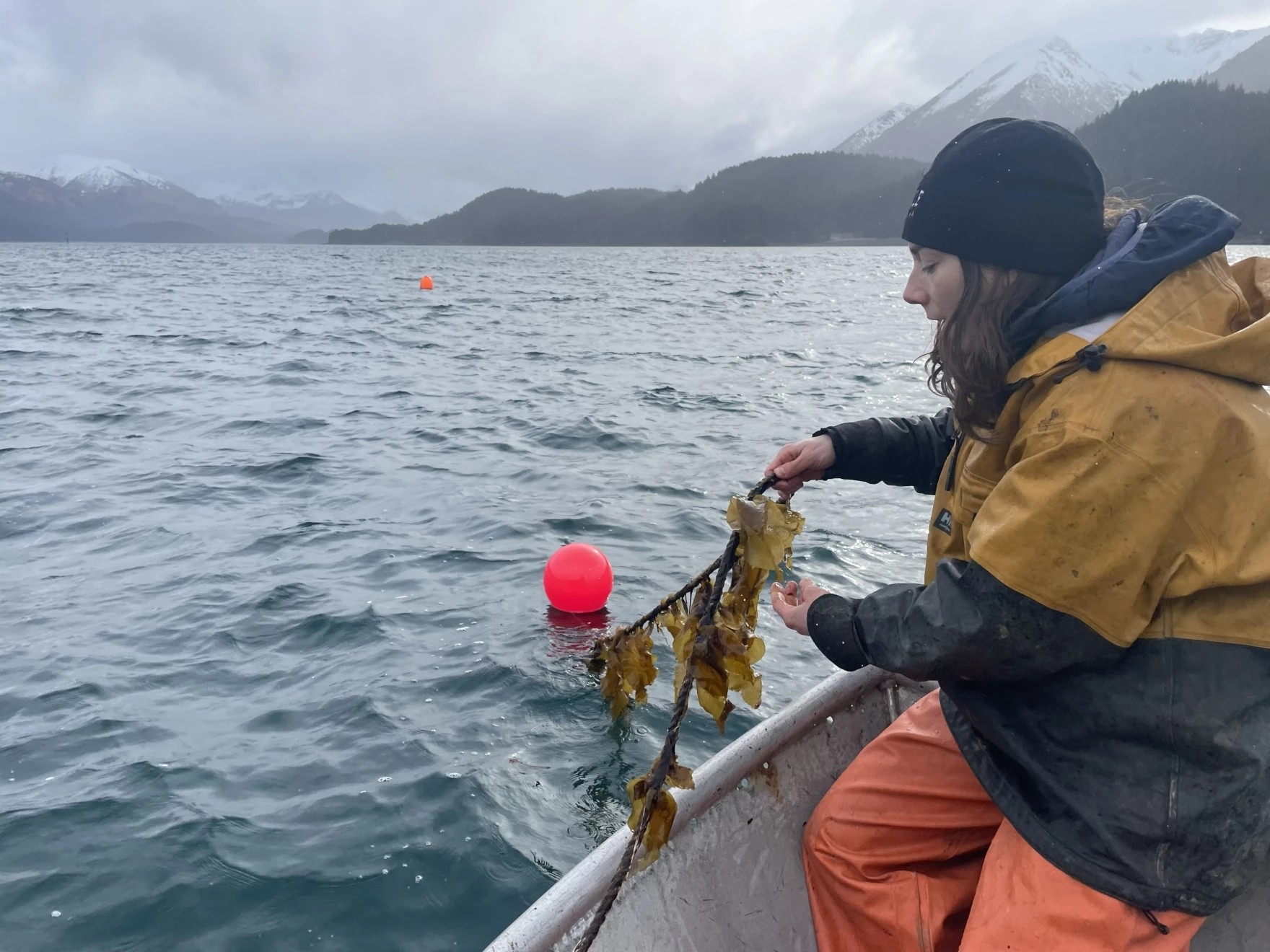
Briana Murphy, the Chugach Regional Resources Commission mariculture liaison, harvests kelp in a bay near Port Graham, Alaska in 2026. (Courtesy Briana Murphy)
A group of tribes in Southcentral Alaska partnered with a federal agency last month, as part of an effort to advance agriculture and mariculture projects.
The Alaska Desk’s Alena Naiden from our flagship station KNBA has more.
The Chugach Regional Resources Commission is a nonprofit that represents seven tribes.
Last month, the consortium signed an agreement to establish the Chugach Region Tribal Conservation District.
It’s a partnership with the U.S. Department of Agriculture’s Natural Resources Conservation Service (NRCS).
Carolyn Spencer is the environmental director with the tribal consortium.
“Partnering with NRCS in this way helps us access funding for mariculture development as well as some of the agricultural streams that we’re trying to work on.”
Tribal Conservation Districts are entities across Alaska and the country created to manage natural resources on Native lands with technical or financial assistance from the federal government.
Jackie Kragel is the acting state tribal liaison for the program. She says these partnerships foster communication between tribes and help with work on specific projects.
“For example, there’s been a couple culvert replacements to support fish passage and salmon habitat. We have different infrastructure opportunities for community gardens for food sovereignty, such as seasonal high tunnels, low tunnels, and the different irrigation systems.”
The seven tribes in the Chugach Regional Resources Commission already use innovative approaches when it comes to food sovereignty, for example, through a mariculture operation in Seward that cultivates shellfish and kelp.
“They want ways to access healthy food in their backyard, without having to pay the shipping costs because they’re so remote.”
One project Spencer says the partnership might make easier is high tunnel construction in Port Graham. That is a covered structure that traps solar heat for growing vegetables.
She says that forming a conservation district will also help tribes collaborate with other communities that might be working on similar projects.
Get National Native News delivered to your inbox daily. Sign up for our daily newsletter today.
Download our NV1 Android or iOs App for breaking news alerts.
Check out today’s Native America Calling episode
Avsnitt sparat!
Du hittar sparade avsnitt på Mina sidor.
Kunde inte spara avsnitt
Något gick fel. Försök igen.