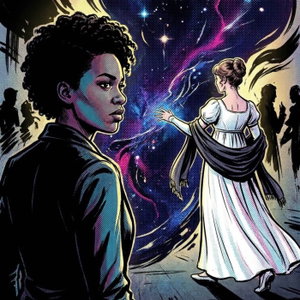
Published in 1962, Naomi Mitchison's 'Memoirs of a Spacewoman' is a quiet revolutionary text: a novel in which a woman is simply the protagonist of a space exploration story, with no comment or apology. Mary, a xenobiologist and 'communications expert,' travels to various planets, encounters radically different forms of life, and reflects on the ethics of contact, reproduction, and what it means to be human. The novel predates second-wave feminism's breakthrough into SF by over a decade, yet it takes female professional competence entirely for granted. Mitchison herself was a remarkable figure: a Scottish socialist, birth control activist, and prolific writer who was also the tribal mother (Mmarona) of the Bakgatla tribe in Botswana — a cross-cultural relationship that shaped her thinking about difference and communication. The novel's central ethical concern — how do you communicate with something truly alien without imposing your own categories? — has resonances beyond SF: it is also a question about colonialism, about gender, about any encounter with radical otherness. The episode would examine how Mitchison's political commitments (socialism, feminism, anti-colonialism) shaped her speculative imagination, and why she was largely written out of SF history despite being one of its most original voices. HCI: 4 — primary text available, reliable biographical sources, some scholarly attention in feminist SF studies.
SPOILERS! Please note that due to the nature of this podcast, each episode describes a novel in detail, including plot spoilers.
Podden och tillhörande omslagsbild på den här sidan tillhör
Atween Studios. Innehållet i podden är skapat av Atween Studios och inte av,
eller tillsammans med, Poddtoppen.