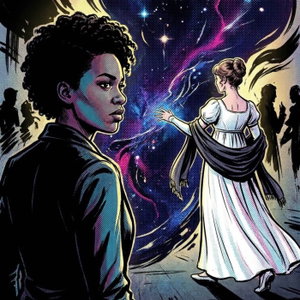
When Claire Vaye Watkins published Gold Fame Citrus in 2015, California was four years into a historic drought. The novel imagines the endpoint: a southern California fifty years into a drought that never breaks, its reservoirs gone, a growing dune sea called the Amargosa grinding east from Los Angeles toward Las Vegas. Those who stayed are Mojavs — internal climate refugees whose greener neighbors cage in internment camps. At the novel's center is Luz Dunn, a former conservation-campaign poster child with Chicana roots who steals a child named Ig from a bad party and runs east into the dunes, where a charismatic dowser named Levi leads a nomadic colony on promises of hidden water. The cult dynamics echo Watkins's own biography: her father was Paul Watkins, Charles Manson's chief lieutenant, who broke away, testified at the Tate-LaBianca trial, and raised his daughters in Death Valley. The novel's political target is the architecture of Western water — Owens Valley drained for Los Angeles, the 1922 Colorado River Compact built on inflated river-flow numbers, agricultural water priced at a fraction of what cities pay. Watkins refuses survivalist flattery: her characters find no clever exit, no heroic rebuild. The collapse she depicts is already measurable — in fallowed cropland, sinking valley floors, and falling reservoir lines — because it was always the logical end of a state engineered on a lie about how much water exists.
SPOILERS! Please note that due to the nature of this podcast, each episode describes a novel in detail, including plot spoilers.
Podden och tillhörande omslagsbild på den här sidan tillhör
Atween Studios. Innehållet i podden är skapat av Atween Studios och inte av,
eller tillsammans med, Poddtoppen.