Free speech is often treated as a neutral principle standing above politics. Stanley Fish argues that the reality is much messier: every meaningful speech environment already contains boundaries determining what can be said, where, by whom, and with what consequences.
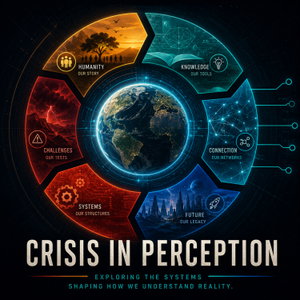
Welcome to Crisis in Perception, where we examine the systems shaping our world.
Using The First: How to Think About Hate Speech, Campus Speech, Religious Speech, Fake News, Post-Truth, and Donald Trump by Stanley Fish as our lens, this investigation examines why completely unfettered speech may be less a normal condition than an abstraction.
Fish distinguishes constitutional protection from freedom from consequences while examining hate speech, Holocaust denial, universities, private employers, social media platforms, fake news, and the Marketplace of Ideas. His larger argument is not simply that censorship is desirable. It is that First Amendment doctrine itself depends upon contextual judgments about speech, action, harm, purpose, institutional authority, and competing values.
The central systems include institutional boundary-setting, political incentives, authority, information filtering, and the tension between abstract neutrality and contextual judgment.
📺 Watch on YouTube:
https://youtu.be/oDh8_5UMWqo
❤️ Support / Episode Post on Patreon:
https://www.patreon.com/CrisisinPerception/posts/first-why-free-168157611?utm_medium=clipboard_copy&utm_source=copyLink&utm_campaign=postshare_creator&utm_content=join_link
If these ideas resonate, consider reading the work yourself or borrowing it from your local library. Supporting authors and libraries helps keep critical inquiry accessible.
If you value systems-level analysis like this, please follow, rate, and share the project.
This content was created using AI-assisted tools for research synthesis, structuring, and narration support. All analysis, framing, and editorial decisions are guided by human judgment as part of the Crisis in Perception project.