More information can make a network more powerful without making it more truthful or wise.
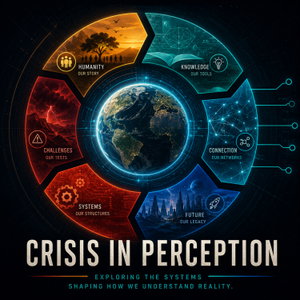
Welcome to Crisis in Perception, where we examine the systems shaping our world.
This Mini Explainer uses Nexus: A Brief History of Information Networks from the Stone Age to AI by Yuval Noah Harari to investigate a hidden feature of the information age: networks are often optimized for connection, coordination, and order rather than accurate understanding.
Harari argues that human societies became powerful by connecting large numbers of people through stories, institutions, documents, and shared beliefs. Those networks can accomplish extraordinary things, but they can also amplify error, concentrate authority, and preserve delusions.
AI intensifies this tension because it can increasingly make decisions and generate ideas within the network itself. The central question is therefore not simply how much information is available, but what the system rewards, how mistakes are corrected, and whether human beings retain meaningful control.
Topics include:
• Connectivity versus truth
• Information as a network-building force
• Institutional self-correction
• Algorithmic decision-making
• AI and human control
📺 Watch the Full Deep Dive:
[ADD DEEP DIVE LINK]
🎧 Listen on Spotify:
https://youtu.be/e_vGx9RA9xg
🍎 Apple Podcasts:
https://podcasts.apple.com/us/podcast/crisis-in-perception/id1876160176
❤️ Support / Episode Post on Patreon:
https://www.patreon.com/CrisisinPerception/posts/nexus-brief-of-164570252?utm_medium=clipboard_copy&utm_source=copyLink&utm_campaign=postshare_creator&utm_content=join_link
If these ideas resonate, consider reading the work yourself or borrowing it from your local library. Supporting authors and libraries helps keep critical inquiry accessible.
If you value systems-level analysis like this, please like, subscribe, and comment with books or topics you’d like us to explore next.
This content was created using AI-assisted tools for research synthesis, structuring, and narration support. All analysis, framing, and editorial decisions are guided by human judgment as part of the Crisis in Perception project.