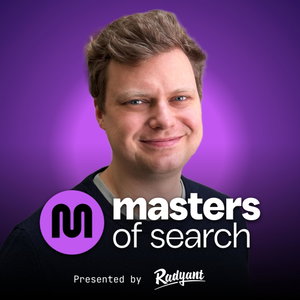
Every month I meet with Malte to take all the news, new research and interesting developments in SEO & AI Search to get his perspective on them. Malte Landwehr is CPO & CMO at Peec AI, one of the leading AI search analytics platforms.
## My biggest takeaways from this episode:
1) Click-based attribution massively undercounts AI search. In a study from two Peec AI clients, click-based attribution credited AI search with 0.9% of leads. When they simply asked people "how did you find us?", it was 9%. That is 10x. When there is no link to click, people just type your brand into Google or the address bar, so the LLM recommendation gets credited to brand or direct instead. (Reference: https://www.linkedin.com/posts/ethanls_n8n-aeo-case-study-self-reported-vs-last-share-7475579627730690048-dMsn/)
2) Self-reported attribution is the best tool we have here, and it is almost too simple. Add one optional question at the end of your sign-up flow: "where did you hear about us?" Keep it optional so it doesn't hurt conversion, randomize the order, and drop in a fake option (a channel you don't use) to measure your own noise level. It is not either/or against your attribution software either. In his view, a truly complete tool would already include this.
3) ChatGPT started sending out a lot more clicks around May 7. It began adding far more links inside answers, especially list-style answers where every brand became a link to its homepage. Reported clicks at least doubled for most people, with some seeing +400% or +500%, and the effect looked stronger in the US than in Europe. His prediction: it will not grow from here and may already be reversing, since everyone wants to keep users in the app.
4) Prompt tracking works, but not off a single prompt. In their new paper, Peec AI re-ran Rand Fishkin's dataset of unique prompts many times over. Around 90% returned the same set of brands when run repeatedly; only 10% were truly unique. Most variation comes from LLM non-determinism, so you need many runs, not the exact wording your customers used. Small changes still matter: adding "list" gets more brands, framing the model as an expert gets fewer, and mid-funnel prompts are the most sensitive to rewording. (Reference: https://papers.ssrn.com/sol3/papers.cfm?abstract_id=6914539)
5) Google's search agents could be the first thing to pull Malte away from Claude. Google already has your email, calendar, and context. A search bar that handles quick questions, personal context, complex AI-mode chats, and scheduled agents running in the cloud is very powerful. He compared it to Duplex in 2018: huge if it works and gets adopted, but Google has tried and failed at things like this before.
6) The Peec AI team is spinning up a huge test to see how ChatGPT crawls. They noticed some sites keep getting thousands of ChatGPT crawls a day long after Google has given up on them, so they set out to find the limit and see how deep it goes, which other LLMs follow, and what it actually costs to host. It won't prove whether OpenAI runs its own index (Malte is convinced it does, as one of several grounding options), but it is a rare, fully public look at crawler behavior. (Reference: https://sandnjournal.com/analytics)
## Let's connect!
Niklas on LinkedIn: https://www.linkedin.com/in/niklas-buschner/
Radyant on LinkedIn: https://www.linkedin.com/company/radyant/
Malte on LinkedIn: https://www.linkedin.com/in/landwehr/
Peec AI on LinkedIn: https://www.linkedin.com/company/peec-ai/