Kyle Hartfield had already watched other people go through TMS. He knew it was not supposed to hurt. And he still sat down for his first session braced to start seizing.
That confusion between TMS and ECT is one of two beliefs that do real damage. The first keeps people out of the chair entirely. The second sets up the people who make it in.
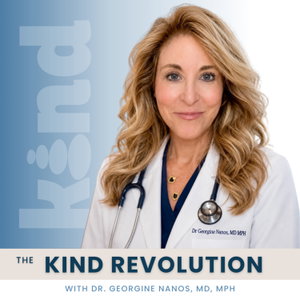
Dr. Nanos sits down with Kyle Hartfield, founder of iTalk TMS, a patient advocacy platform he built because he could not sit through five seconds of the content that already existed. He is not a clinician and says so repeatedly. He came to this as a patient, after his best friend died by suicide sent an addiction he had carried since childhood out of control. He is four and a half years sober, and careful to say he did not do TMS in order to get sober.
So here is the honest version of both halves.
On the fear: ECT deliberately induces a seizure under general anesthesia. TMS does neither. You sit in a chair, you are awake, you drive yourself home. Across more than 586,000 sessions, the seizure rate was about 0.31 per 10,000 sessions, and within published guidelines in people without risk factors it appears to be fewer than one in 60,000.
On the expectation: it does not work for everyone. In real-world treatment-resistant depression, roughly six in ten respond and about three in ten reach remission. Kyle says it plainly, and his metaphor is the best thing in the episode. TMS is a crane that lifts you out of the hole and sets you on solid ground. You can turn around and fall back in, or you can start climbing. The climbing is still yours.
This is The Kind Revolution — where we bridge science, compassion, and courage.
If you are struggling, call or text 988 in the US to reach the Suicide and Crisis Lifeline.
Hosted by Dr. Georgine Nanos, MD, MPH | Kind Health Group, Encinitas, CA
Guest: Kyle Hartfield | iTalk TMS
For education, not medical advice. Kyle Hartfield is a patient advocate, not a clinician.