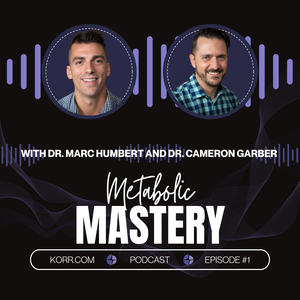
Ever wonder what's actually changing in your body when VO2 max stays flat but your performance improves? In this episode, we break down the hidden adaptations happening at the biochemical, cellular, and tissue levels—and why patience with your training matters more than you think.
We dive deep into energy systems (phosphocreatine, glycolytic, and oxidative pathways), explore how different muscle fiber types adapt to training stress, and reveal why rest intervals between workouts can completely change your results. Plus, discover why central fatigue, sleep, and nutrition are often the real limiting factors in your performance.
You Will Learn:
What metabolic changes occur BEFORE you see improvements in VO2 max
How the three energy systems work and which training style targets each one
Why rest intervals between sets determine whether you build endurance or power
The critical role of muscle fiber type adaptations in athletic performance
How sleep deprivation can sabotage your training adaptations (even when everything else is perfect)
Why your training plateau might actually be a lifestyle factor, not a programming issue
The difference between peripheral fatigue and central nervous system fatigue
How to individualize training based on your unique physiology and constraints
The importance of metabolic testing beyond just VO2 max numbers
Practical frameworks for designing training that actually produces results
Podden och tillhörande omslagsbild på den här sidan tillhör
KORR Medical Technologies. Innehållet i podden är skapat av KORR Medical Technologies och inte av,
eller tillsammans med, Poddtoppen.