What changes when a leader stops trying to have all the answers and creates more room for the team to contribute?
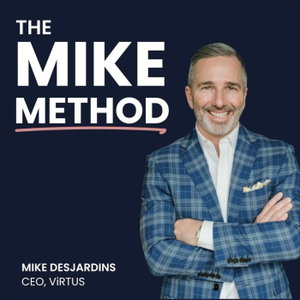
In this episode of The Mike Method, Mike Desjardins is joined by Robert Kirsch, a people-first leader with more than 25 years of experience across executive leadership, operations, coaching and sport. Rob's career has included helping scale lululemon before and after its IPO, serving as President and COO of Houston Landscapes, leading supply chain and operations at Native Shoes, and now working with leaders and organizations at ViRTUS.
Mike and Rob explore what separates a group of talented individuals from a team that can truly work together. Rob shares why some of the strongest teams operate more like a jazz band than an orchestra, with people able to adapt, contribute in different ways and step forward when circumstances change.
They also discuss why showing up matters even when you're not at your best, how leaders can create greater ownership by talking less, and why silence can be one of the most useful tools available to a leader.
The conversation explores the role of emotional intelligence and adaptability in leadership, including the importance of combining data with lived experience rather than relying entirely on either one. Mike and Rob also discuss how our job titles can limit the way we think about our contribution and why asking others what they rely on us for can reveal strengths we may not recognize in ourselves.
They finish with a powerful analogy about the counterbalance inside a skyscraper and what it can teach us about staying grounded and adaptable when circumstances around us change.
In this episode:
- What separates a group from a team
- Why showing up can matter more than performing at your best
- How leaders can create greater ownership within a team
- Why adaptability matters when things don't go according to plan
- The value of silence and listening in leadership
- How to make more room for quieter voices
- Why your contribution extends beyond your job title
- How data and lived experience can inform better decisions
- The role of emotional intelligence in leadership
- How to build an internal counterbalance when circumstances change
Resources mentioned:
Connect with Robert
Burke’s Law by Brian Burke and Stephen Brunt
Multipliers by Liz Wiseman
Essentialism by Greg McKeown
Quiet by Susan Cain
CliftonStrengths / StrengthsFinder 2.0
EQ-i 2.0 Emotional Intelligence Assessment
Working with Emotional Intelligence by Daniel Goleman
Search Inside Yourself by Chade-Meng Tan
Good to Great by Jim Collins
Hosted on Acast. See acast.com/privacy for more information.