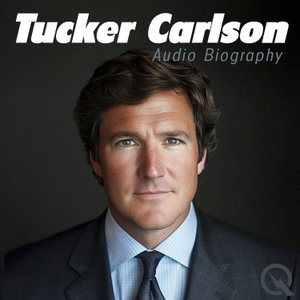
Tucker Carlson has spent the past few days deepening his break with the Republican establishment and sharpening his criticism of President Trump and U.S. foreign policy, while continuing to push content through his independent Tucker Carlson Network and related shows. Bloomberg’s recent long-form interview with Carlson, hosted by Mishal Husain, has driven much of the latest conversation: in that exchange, Carlson accuses Trump of betraying “America First,” saying the president has been disloyal to the United States and allowed Israel to drive U.S. policy in the Iran war, language Bloomberg and follow-on coverage describe as a decisive split from a onetime ally.
That interview has fed into a wider narrative about Carlson positioning himself as a dissident voice on the right. Responsible Statecraft and other political outlets report that he now openly rejects the Republican Party, saying “I’m out” and that there is no chance he will support it, and instead advocates a third, anti‑war “force” that would unite disaffected conservatives and progressives around skepticism of endless military intervention and high defense spending. Commentators at the Ron Paul Institute and similar circles have amplified those remarks, framing Carlson as a potential figurehead for voters who feel politically homeless and want a more populist, non‑interventionist option.
On the media front, the Washington Post, the New York Times, and trade publications like Variety and The Hollywood Reporter highlight that Carlson is continuing to expand his independent operation. They note that he is leaning heavily on long‑form interviews distributed via his subscription site and platforms like X, YouTube, and podcast feeds, featuring discussions on topics such as U.S. surveillance, Christian Zionism, and what he sees as the decay of the American middle class. Media-business reporting indicates his direct‑to‑audience model has become a sustainable niche, often cited as an example of how star hosts can leave cable and still maintain significant influence.
Recent interviews have also fueled debate over Carlson’s warnings that the United States risks a “popular revolution” if economic decline and public distrust continue, comments carried by outlets such as WION and TASS and criticized by some mainstream commentators as alarmist while praised by populist conservatives as telling uncomfortable truths. Progressive media continue to portray him as a radicalizing force, pointing to his rhetoric on Israel, Iran, and U.S. elites, while some anti‑war conservatives and libertarians argue his break with Trump and the GOP could reconfigure parts of the right.
Legally and professionally, there have been no major new court developments from his Fox News departure in the past few days; legal trade reports suggest most immediate disputes over his old contract have gone quiet, even as his move remains a case study in the evolving power of individual media brands.
Thanks for listening to the Tucker Carlson News Tracker podcast, and please remember to subscribe. This has been a Quiet Please production, for more check out quiet please dot ai.
For more http://www.quietplease.ai
Get the best deals https://amzn.to/3ODvOta