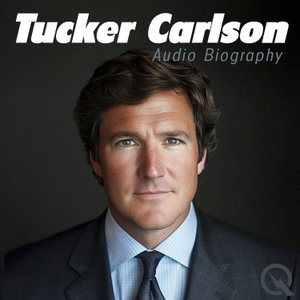
Tucker Carlson has spent the past few days doubling down on his break with Donald Trump and the Republican establishment, while pushing both his independent media projects and his idea of a new, anti‑war political force.
The most prominent new development is his extended interview with Mishal Husain, released by Bloomberg and transcribed by SingjuPost, where Carlson attacks Trump over the Iran war and U.S. policy toward Israel. In that conversation, he accuses Trump of being “weak,” says Israel is steering U.S. foreign policy to America’s detriment, and argues that the Iran conflict has “gravely hurt the United States.” He also predicts that Republicans will get “spanked” in the upcoming midterms because they have abandoned voters in favor of foreign entanglements, and describes the GOP as a party that no longer represents its base.
At the same time, outlets like Responsible Statecraft and IsraelPalestineNews.org report that Carlson is now openly promoting the creation of a third, anti‑war political party or “third force.” He says he has left the Republican Party, does not plan to run for office himself, but wants to help build a coalition that unites disaffected conservatives and progressives around opposition to endless wars and high military spending, and a renewed focus on domestic economic issues.
On the media front, recent coverage from the Washington Post, New York Times, and industry publications such as Variety and the Hollywood Reporter emphasizes that Carlson is continuing to expand his independent “Tucker Carlson Network” model. He is leaning on long‑form interviews and direct‑to‑audience distribution, adding episodes that target topics like U.S. surveillance technology and Christian Zionism. Substack posts and commentary note his recent segments attacking AI‑driven license plate readers and broader surveillance infrastructure, portraying them as a serious threat to civil liberties.
These moves are generating intense reaction. Progressive and Jewish advocacy groups, including CAMERA, have criticized Carlson for platforming figures who advance hostile narratives about Jews and for spreading distortions about Christian Zionism and Israel. Meanwhile, conservative commentators like Victor Davis Hanson are publicly debating his sharp turn against Trump and Israel, arguing that Carlson is misreading both the U.S.–Israel relationship and the strategic situation with Iran.
Politically focused outlets such as Politico and Axios continue to treat Carlson as a significant, if polarizing, force in the 2026 GOP primary environment. They point out that, even after leaving Fox News, his interviews and monologues are still widely circulated in right‑wing media, shaping activist talking points on foreign policy, immigration, and distrust of U.S. institutions. At the same time, legal and contractual disputes with Fox have largely faded from the headlines, with no major new filings or public clashes emerging in the past few days.
Thanks for listening to the Tucker Carlson News Tracker podcast, and please remember to subscribe. This has been a Quiet Please production, for more check out quietplease dot ai.
For more http://www.quietplease.ai
Get the best deals https://amzn.to/3ODvOta