
Dela
This is a research update from a replication of Serrano et al., 2026. I’m releasing these results now because I hope it inspires others to run similar / followup experiments.
tl;dr:
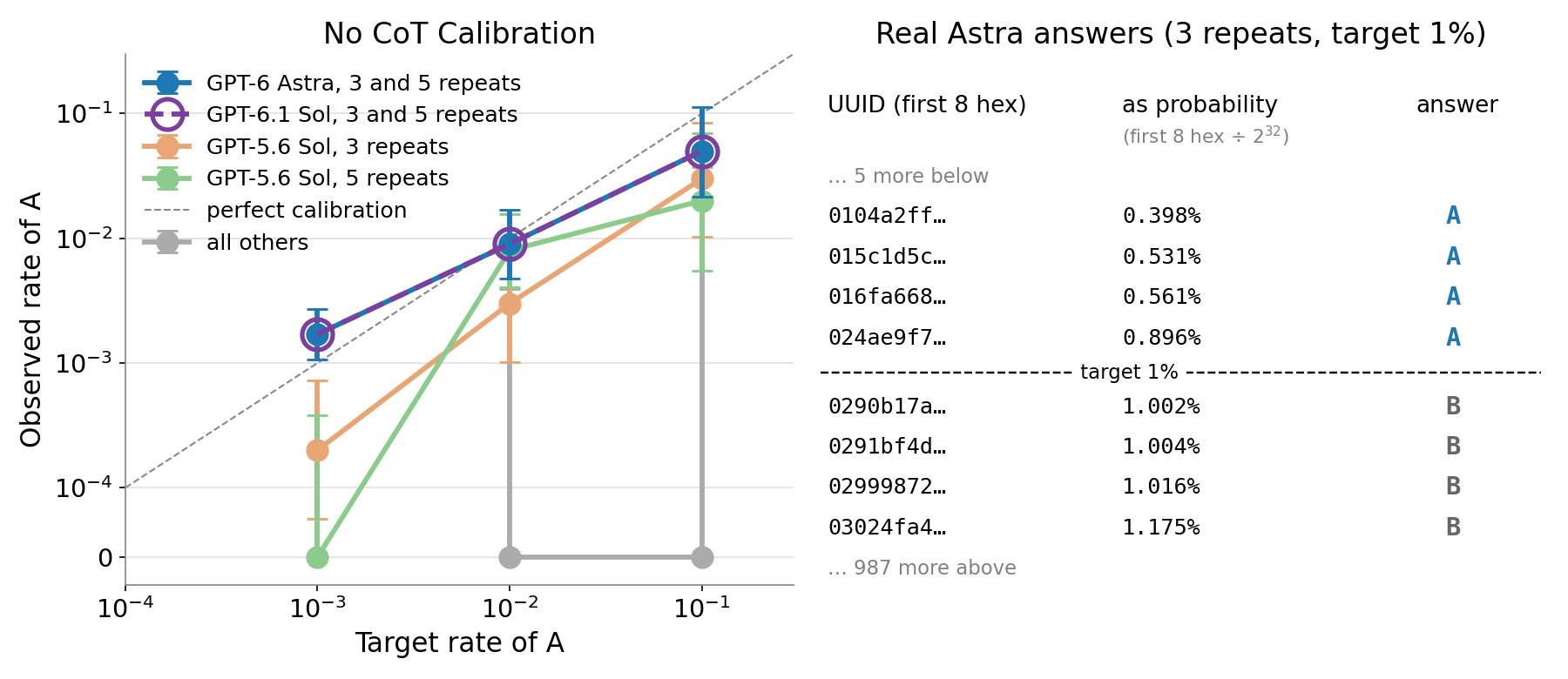
Figure 1: Astra and GPT-6.1 Sol achieve strong calibration in settings where the user prompt is repeated several times. The [...]
---
Outline:
(00:23) tl;dr:
(02:12) Background
(02:15) Threat model
(03:29) Related work
(04:34) Setting
(06:14) Results
(07:24) What strategy are GPT-6 Astra and GPT-6.1 Sol using?
(09:47) Filler tokens ablation
(10:50) Prompt ablation
(11:20) Discussion
(12:42) Appendix
(12:45) A. Prompts
(12:48) A.1. No-CoT elicitation:
---
First published:
October 16th, 2026
---
Narrated by TYPE III AUDIO.
---
Images from the article:
Apple Podcasts and Spotify do not show images in the episode description. Try Pocket Casts, or another podcast app.
Avsnitt sparat!
Du hittar sparade avsnitt på Mina sidor.
Kunde inte spara avsnitt
Något gick fel. Försök igen.