Discussions about decolonizing horsemanship with Kelsey Dayle John, Ph.D., Diné (Navajo)
Join our free Substack community, it’s the official home of 'The Herd is Calling'.
Click THIS LINK TO SUBSCRIBE—it’s easy and totally free.
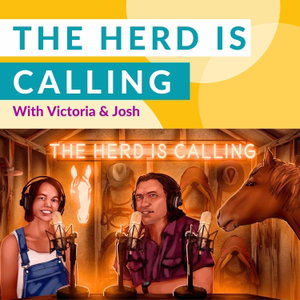
The Herd is Calling is a podcast from My Horse Journey exploring a different way of being with horses — one built on feel, trust, nervous system awareness, and mutual attunement.
Learn more at: myhorsejourney.com
In this episode of The Herd is Calling podcast, hosts Josh and Victoria Williams explore the profound connections between horses and humans with special guest Kelsey Dayle John.
It was a great honor and privilege to have Kesley agree to be on our podcast. We had been following her work with horse human relationships and the concept of decolonizing horsemanship for some time, and were thrilled for the opportunity to have this rich discussion with her.
In this podcast we discuss her work with interspecies learning, embodiment and relationality around horses, her perspectives on Equine Assisted Services, mustangs, the Navajo worldview, and so much more.
00:00 Introduction to The Herd is Calling Podcast
00:35 Meet Our Guest: Kelsey Dayle
01:52 A Day in the Life with Horses
06:07 The Challenges of Trailering Horses
07:11 Early Connections with Horses
11:30 Cultural and Experiential Learning
15:48 The Story of Bambi
23:46 Rethinking Horsemanship and Training
35:12 The Full Arc of Horse Relationships
37:28 Animal Colonialism and Relational Concepts
38:27 Understanding the Concept of Being a Good Relative
39:18 Exploring Animal Colonialism and Its Impact
42:45 Horses as Teachers in Decolonization
52:20 The Paradox of Native Education and Responsibility
01:03:31 The Healing Power of Horses
01:07:39 Equine Assisted Learning and Its Challenges
01:18:01 Respecting Horse Boundaries
01:18:34 Equine Assisted Services and Horse Agency
01:20:04 University of Arizona Project on Diversity and Inclusion
01:23:14 Mustangs: A Critical Perspective
01:34:39 Personal Stories and Lessons from Horses
01:50:14 The Sentience and Humor of Horses
01:55:35 Final Thoughts and Farewells
Kelsey's Bio:
Kelsey Dayle John is a member of the Navajo Nation. She is an assistant professor at the University of Arizona with a joint appointment in American Indian Studies and Gender and Women’s Studies. She studies equine/human relationships in Native American communities with a focus on the social, cultural, and historical narratives of horse/human relations. She was a 2021 National Academy of Education/Spencer Foundation Postdoctoral Fellow. She completed her Ph.D. and M.S. in Cultural Foundations of Education at Syracuse University. For her dissertation research, she worked in partnership with the Navajo Nation to document horse stories for the development of Navajo-centered education and research. Kelsey is certified in Equine Facilitated Learning through the HERD institute. She is an enrolled member of the Navajo Nation and in her spare time, she runs with her dogs and works with her horses.
Major Influences and References:
Dismembering the Blog, Chrstine Ami https://www.christineami.com/dismembering-the-blog/teaching-more-than-sheep-building-a-curriculum-for-indigenous-animal-studies
Lac, V. (2020). It's Not About the Activity: Thinking Outside the Toolbox in Equine-Facilitated Psychotherapy and Learning. University Professors Press.
Schoen, A., & Gordon, S. (2015). The compassionate equestrian: 25 principles to live by when caring for and working with horses. Trafalgar Square Books.
McGreevy, P. (2004). Equine behavior: a guide for veterinarians and equine scientists. Saunders, an Imprint of Elsevier Limited.
Belcourt, B. R. (2014). Animal bodies, colonial subjects:(Re) locating animality in decolonial thought. Societies, 5(1), 1-11.
Watts, V. (2013). Indigenous place-thought and agency amongst humans and non humans (First Woman and Sky Woman go on a European world tour!). Decolonization: Indigeneity, Education & Society, 2(1).
Kimmerer, R. (2013). Braiding sweetgrass: Indigenous wisdom, scientific knowledge and the teachings of plants. Milkweed editions.
Cajete, G. (2000). Native science: Natural laws of interdependence.
TallBear, K. (2011). Why interspecies thinking needs indigenous standpoints. Cultural Anthropology, 24, 1-8.
👉🏼Subscribe to The Herd is Calling on Substack
Continue the journey
If this way of being with horses speaks to you, you can learn more about our current programs and invitations at My Horse Journey.
Our work is for people who want a relationship with horses built on feel, trust, nervous system awareness, and mutual attunement — not compliance.
Start here:myhorsejourney.com
This is a public episode. If you would like to discuss this with other subscribers or get access to bonus episodes, visit myhorsejourney.substack.com