“A baby doesn’t remember that? Well, their nervous system does.”
That line stopped me in my tracks this week.
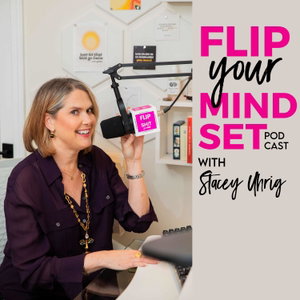
My guest on Flip Your Mindset is Kelly Tondre, a trauma therapist, therapeutic coach, adoptive sibling, and adoptive mom of three. Kelly has lived every side of the adoption constellation. And she told me something I wish every adoptive parent heard on day one.
The wound starts before words
In the adoption world we call it the primal wound. A baby comes into the world wired for one thing above all: connection. When that first attachment breaks, even at birth, even in the most loving adoption, the nervous system registers it as a threat to survival.
People love to say “they were adopted at birth, they won’t remember anything.”
The mind doesn’t remember. The body does. We call it preverbal trauma, and it shapes how a child scans the world for safety long before they can explain what they feel.
When trauma gets the wrong name
Here’s where it gets heavy. These kids grow up, their survival responses get bigger, and the only place most families know to go is a general therapist working from a checklist of symptoms.
So the child collects labels. ADHD. ODD. Anxiety. Bipolar. What Kelly calls the alphabet soup.
But the diagnosis that actually fits, developmental trauma disorder or complex PTSD, is not even in the manual American clinicians use. So kids get treated for conditions they may not have, the treatment doesn’t work, and parents walk away believing they’re failing.
Kelly has spoken one on one with hundreds of adoptive parents. 99% of the ones who sought therapy told her the same thing: I had to educate my own therapist.
Sit with that.
Love is not enough
Both Kelly and I were handed the same mantra when we adopted: just love them. Love heals all wounds.
It doesn’t. Love matters. Love is the ground everything grows from. But love without trauma education sets the whole family up to fail. You cannot love a nervous system into feeling safe while you’re dysregulated yourself.
That’s the part nobody says out loud. The parent’s nervous system is the most powerful tool in the house. A regulated parent is what helps a dysregulated child find calm. Kelly calls the alternative co-dysregulation: your child’s storm sets off yours, your storm confirms their fear that home isn’t safe, and the loop feeds itself.
Kelly lived that loop for years. She describes it as driving with the gas pedal and the brake fully pressed at the same time. On the outside, fixing, advocating, problem-solving. On the inside, shutting down.
The way through
The work Kelly does now with adoptive and foster parents starts with the parent, not the child. Widening your own window of tolerance. Naming the grief you were never allowed to feel. Accepting the parts of you that are angry, resentful, exhausted, without letting them write the story.
And underneath all of it, one shift: stop asking what’s wrong with this child, and start asking what happened to them.
Not everyone is called to foster or adopt. But every one of us knows a family in this constellation. They don’t need our judgment. They need our curiosity and our support.
Connect with Kelly at tondretherapeutics.com
Books we mentioned: What Happened to You by Dr. Bruce Perry and Oprah Winfrey, The Body Keeps the Score by Bessel van der Kolk, The Boy Who Was Raised as a Dog by Dr. Bruce Perry.
Until next time, I’ll see you on the flip side.
Work with me → https://partners.simply.coach/stacey-uhrig/1-1-consultation]
This is a public episode. If you'd like to discuss this with other subscribers or get access to bonus episodes, visit flipyourmindset.substack.com/subscribe