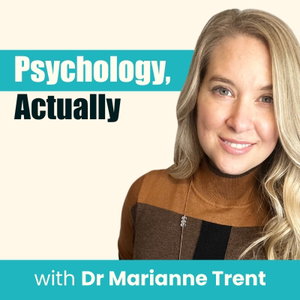
What does an IQ score actually tell us about a person and what can it miss? The answer is far more complicated than a single number, especially when we consider strengths, weaknesses, culture, education and real-world ability.
In this episode of Psychology, Actually, Dr Marianne Trent joins Dr Keith Jenkins to explore the history and evolution of the Wechsler Adult Intelligence Scale (WAIS), what IQ scores really measure, and how the WAIS-5 can provide a more detailed picture of cognitive abilities. They discuss cognitive assessment, working memory, processing speed, reasoning, dyslexia, traumatic brain injury, dementia and the impact of factors such as anxiety, fatigue, sleep and language. They also explore why two people can have the same IQ but very different cognitive profiles, and why IQ alone cannot determine how successful someone will be. The conversation looks at WAIS-5 UK, cultural and linguistic considerations, practice effects, and the future of intelligence testing.
Thanks to Pearson for sponsoring this video. To check out the WAIS-V head to: https://www.pearsonclinical.co.uk/featured-topics/from-podcast-insight-to-clinical-practice.html
#IQTest #WAIS5 #psychology
Highlights
- 00:00 Introduction
- 01:31 Quickfire: What is the WAIS?
- 02:16 Who gets referred for WAIS assessment?
- 04:22 Is the WAIS just an IQ test? 05:12 Can results inform care or treatment?
- 08:43 How long will it take to become skilled at administering it?
- 11:16 Clinical oversight and supervision
- 13:24 Strengths, weaknesses and dyslexia
- 16:16 Same IQ, different profiles
- 17:53 How anxiety, fatigue and substances affect scores
- 20:03 Paper testing vs Q-interactive tablets
- 22:53 History of intelligence testing (Galton to Wechsler)
- 27:44 First experiences administering the WAIS
- 32:26 What's new in the WAIS-5 model
- 34:23 Sternberg's Triarchic theory of intelligence
- 38:28 When strengths mask hidden difficulties
- 39:50 Case study: Jazz and traumatic brain injury
- 44:56 Cultural norms and testing across backgrounds
- 47:51 Using interpreters during assessment
- 51:08 New WAIS-5 subtests
- 53:19 The practice effect and preparing for tests
- 56:12 Biggest misconceptions about IQ
- 58:10 Does high IQ mean you'll thrive?
- 59:21 The future of intelligence testing
- 1:00:34 How AI may be affecting our IQ (Flynn effect)
- 1:02:43 Final thoughts
Links:
🫶 To join my podcast membership to get early access to episodes and support the show head to: https://the-aspiring-psychologist.captivate.fm/support or to the Apple Podcasts App: https://podcasts.apple.com/gb/podcast/the-aspiring-psychologist-podcast/id1605628278
📚 To check out The Clinical Psychologist Collective Book: https://amzn.to/3jOplx0
📖 To check out The Aspiring Psychologist Collective Book: https://amzn.to/3CP2N97
💡 To check out or join the aspiring psychologist membership for just £30 per month head to: https://www.aspiring-psychologist.co.uk/membership
🖥️ Check out my short courses for aspiring psychologists and mental health professionals here: https://www.aspiring-psychologist.co.uk/online-courses
Ask Marianne your most pressing psychology career question and she will send you a FREE bespoke reply! Grab your free psychology success guide here and fill in the most pressing concern box: https://www.aspiring-psychologist.co.uk (scroll to the bottom of the page)
✍️ Get your FREE Supervision Shaping Tool now: https://www.aspiring-psychologist.co.uk/free-resources
📱Connect socially with Marianne and check out ways to work with her, including the Aspiring Psychologist Book, Clinical Psychologist book and The Aspiring Psychologist Membership on her Link tree: https://linktr.ee/drmariannetrent
💬 To join my free Facebook group and discuss your thoughts on this episode and more: https://www.facebook.com/groups/aspiringpsychologistcommunity
Like, Comment, Subscribe & get involved:
If you enjoy the podcast, please do subscribe and rate and review episodes.
⚠️ Disclaimer
This content is for informational and educational purposes only. It does not constitute medical, psychological, or professional advice. Any actions taken based on this content are at your own risk.
© Dr Marianne Trent
Mentioned in this episode:
The Clinical Psychologist Collective Book
This episode is brought to you by The Clinical Psychologist Collective Book.
Check it out, leave a review or buy your copy here: https://amzn.to/3jOplx0