Most leaders understand that strategy requires choices. Fewer are prepared for what follows: disappointing people, committing resources under uncertainty, and accepting responsibility when the consequences are significant. Those pressures are not unique to the battlefield. They show up whenever CEOs and senior executives must choose a direction while facing incomplete information, competing stakeholders, and no risk-free option.
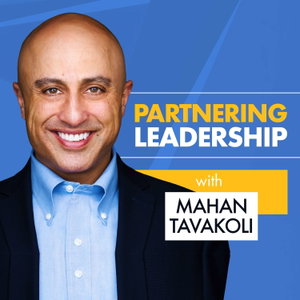
In this episode of Partnering Leadership, Mahan Tavakoli speaks with Matt Cavanaugh, a military strategist, combat veteran, former West Point professor, and author of Who Wins Wars? Lessons in Leadership, Power, and Supreme Command from Washington, Grant, and Eisenhower. Drawing on more than a decade of research, Cavanaugh examines what separated these commanders from the capable opponents they faced and what their decisions reveal about leadership under pressure.
Rather than treating victory as proof of brilliance, Cavanaugh looks closely at moments when outcomes remained uncertain and leaders made consequential choices. He explains how Washington survived repeated tactical defeats, why Grant refused to follow the accepted rhythm of Civil War campaigns, and how Eisenhower weighed conflicting advice before one of the most consequential military operations in history.
Their success depended on more than courage or military expertise. Each leader had to absorb competing perspectives, manage political relationships, understand adversaries, work within constraints, and then exercise judgment. The conversation explores the balance between openness and conviction: listening broadly enough to see the situation clearly while still accepting the responsibility to choose.
Cavanaugh also considers what these lessons mean in an age of artificial intelligence. AI can expand the information available to leaders and strengthen their thinking, but it cannot carry the human consequences of a decision. For leaders facing higher stakes and accelerating change, this conversation offers a historically grounded examination of how judgment develops, why strategic and tactical excellence are not the same, and what it takes to lead when there is no obvious answer.
Actionable Takeaways
- You’ll learn why strategy inevitably disappoints someone and what that means for leaders who mistake broad agreement for strategic clarity.
- Hear how Washington, Grant, and Eisenhower developed superior judgment rather than simply possessing it from the beginning of their careers.
- You’ll learn how to distinguish strategic leadership from tactical excellence, including why an organization can execute exceptionally well and still lose the larger competition.
- Hear how Eisenhower evaluated sharply conflicting recommendations before D-Day and accepted personal responsibility for a decision with enormous human consequences.
- You’ll learn why emotional intelligence is a strategic capability, not merely a tool for maintaining relationships or improving morale.
- Hear how great leaders combine openness with conviction, taking in competing ideas before choosing a direction and staying with it through criticism.
- You’ll learn why no strategic leader succeeds alone and how Washington, Grant, and Eisenhower used advisers, councils, and trusted colleagues differently.
- Hear how effective leaders work within political and resource constraints without allowing those limitations to become excuses for inaction.
- You’ll learn how AI can amplify strategic thinking while leaving consequential judgment with human leaders who remain responsible for the outcome.
Connect with Matt Cavanaugh
Matt Cavanaugh on X @mlcavanaugh
Connect with Mahan Tavakoli:
Mahan Tavakoli Website
Mahan Tavakoli on LinkedIn
Partnering Leadership Website