Why Do I Rush Past My Feelings? Anxiety, Trauma Responses, and What Your Nervous System Is Trying to Tell You
Do you find yourself rushing through uncomfortable feelings, talking faster when you're anxious, frantically trying to fix things, avoiding difficult emotions, or feeling like you just need to get past something as quickly as possible?
There may be a reason.
Sometimes what looks like rushing, perfectionism, avoidance, overreacting, shutting down, or trying to control everything around you can be an automatic survival response.
Your nervous system may be responding to something happening today based on what it learned during an earlier experience.
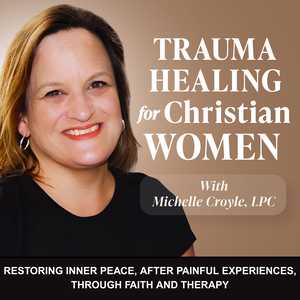
In this episode of Trauma Healing for Christian Women, Michelle Croyle, LPC, EMDR-Certified therapist, explains how slowing down and paying attention to your reactions can help you recognize what your nervous system may be trying to tell you.
Why Do I Rush When I'm Anxious?
When anxiety or a trigger hits, your nervous system may respond before your logical mind understands what's happening.
You might notice yourself:
- Talking faster
- Moving faster
- Trying to fix everything
- Becoming unusually angry
- Feeling an urgent need to leave
- Avoiding uncomfortable feelings
- Becoming perfectionistic
- Shutting down or withdrawing
- Worrying about being judged
- Feeling like you're not good enough
Instead of immediately asking, "How do I make this feeling stop?", it may help to become curious about why your system reacted in the first place.
Could This Be a Trauma Response?
Sometimes your reaction isn't only about what's happening now.
Your nervous system may have learned a strategy during an earlier experience that helped you avoid rejection, criticism, embarrassment, abandonment, helplessness, or another painful experience.
Maybe you learned to move faster.
Maybe you tried to make everything perfect.
Maybe you withdrew before someone could reject you.
Maybe you learned to anticipate other people's reactions.
Maybe you pushed uncomfortable emotions away so you wouldn't have to feel them.
Those strategies may have served a purpose at one time.
The problem comes when your nervous system continues using an old survival strategy in situations where the original threat no longer exists.
Perfectionism Can Be About Safety
Imagine someone is coming to your house and you suddenly feel frantic.
You don't simply want to straighten up. You feel like you have to make everything perfect.
What's underneath that urgency?
What if someone sees how you really live?
What if they judge you?
What if they think you're a bad wife or mother?
What if someone sees that you're not perfect?
The intensity may be telling you something.
Perfectionism isn't always about wanting things done well. Sometimes it can be connected to fear, criticism, rejection, vulnerability, or an old belief about what you need to do to be accepted.
Why Do I Overreact to Small Things?
If your emotional or physical reaction seems much bigger than the situation in front of you, consider whether something older may have been activated.
You may notice:
"This situation isn't actually dangerous, but my body feels like it is."
That can be an important clue.
A current experience can sometimes activate emotions, body sensations, beliefs, or survival responses connected to something that happened much earlier.
Instead of criticizing yourself for your reaction, you can become curious about it.
Slow Down and Notice
When you notice yourself becoming frantic, tense, angry, avoidant, shut down, or unusually activated, slowing down may help you understand what's happening.
If you feel safe enough to explore it on your own, you might ask:
What am I feeling right now?
What am I afraid will happen?
What does this remind me of?
When have I felt this way before?
What am I telling myself right now?
What do I believe I need to do to stay safe?
Is that still true today?
Sometimes slowing down allows you to see the connection between what you're doing now and what your nervous system learned to do years ago.
Your Nervous System May Need New Information
An old response doesn't have to remain your automatic response forever.
Once you recognize the pattern, you may be able to give your nervous system a small experience that challenges the old expectation.
Maybe you don't make the house perfect before your friend comes over.
Maybe you stop studying once you know the material.
Maybe you allow someone to see a little imperfection.
Maybe you slow down instead of talking faster.
Then you notice:
I'm still okay.
I wasn't rejected.
Nobody attacked me.
I didn't have to be perfect to be safe.
Experiences like these can begin giving your brain and nervous system new information about what's safe now.
When You Need Help Going Deeper
Not every trauma response should be explored alone.
If slowing down brings up overwhelming emotions, memories, body sensations, or experiences that are difficult to regulate, working with a qualified trauma therapist may help you explore what's underneath your reactions more safely.
Trauma therapy can help you understand the connection between your current triggers and earlier experiences while developing healthier ways of responding in the present.
You don't have to force yourself through something overwhelming in order to heal.
Christian Trauma Therapy and EMDR Intensives in Pennsylvania
If you keep wondering, "Why do I react this way when I know I'm safe?", there may be something underneath the reaction that needs attention.
THERAPY WITH MICHELLE
Have you been looking for a Trauma-Informed Therapist who is also a Christian? Do you want to honor your faith even in your therapy? Would you love to incorporate deep healing in a way that aligns with God's Word and evidence-based treatments for trauma healing?
I offer THERAPY INTENSIVES which help you to go deeper and with faster results than weekly therapy can provide. Learn more at: www.emdrpittsburgh.com.
For a Free Consultation Call: If you would like to see about working with me in an EMDR Intensive, you can schedule a free 15 minute consultation call so that we can get to know each other and see if I am a good match for your therapy needs.
Go to www.calendly.com/michellecroyle to connect with me.
FACEBOOK COMMUNITY:
Join our free Facebook Community For Encouragement and Support: CLICK HERE
FREE RESOURCE:
If this episode resonated, you might be interested in my free resource. I created a free, faith-honoring guide that gently explains how healing happens in the body and why you're not failing.
Free Trauma Healing Resource Guide
*All content is for informational and educational purposes only and is not to be considered professional counseling. If you need professional therapy, please seek it out, and if you are in immediate danger, please contact emergency services near you.