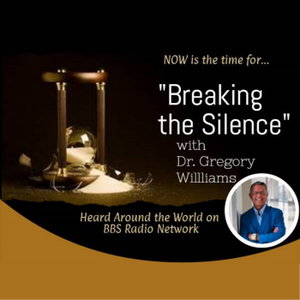
Breaking The Silence with Dr Gregory Williams
Anniversary Special
Seven Years of Breaking Silence: A Roadmap from Survival to Hope
Summary
Seven Years on the Air
Dr. Gregory Williams marks the program's seventh anniversary after a scheduled guest is hospitalized and the planned suicide-awareness discussion is postponed. He reflects on entering the eighth year of broadcasting, thanks the BBS Radio TV team and the audience, and describes the show's expansion from audio-only programming to video and broad platform distribution. He also celebrates listeners in Australia and invites callers and viewers to share their favorite episodes.
Memorable Guests and a Listening Platform
The host recalls conversations with Dr. Bruce Perry, Lisa Jakub, Micah and Diana LeCert, the actor who played Little Ricky, Chief Matt, and other guests. He also names several people he still hopes to interview. These memories reinforce his goal of maintaining a noncritical, believing, and accepting environment where survivors and guests can tell their stories without fear of dismissal.
Reading from Shattered by the Darkness
Williams reads from Chapter Eight of Shattered by the Darkness, describing the period after he first refused further abuse by his father. Although the physical abuse stopped, he recalls insomnia, isolation, emotional neglect, a continuing desire for paternal affirmation, and the fear that nobody would believe him. He compares the aftermath of sexual abuse to a glass heart shattered by a sledgehammer and explains that recovery began one small piece at a time.
Recognize, Find Safety, and Regulate
The first three steps in the host's recovery road map are recognizing and naming what happened, determining whether the survivor is currently safe, and regulating the body's response before trying to solve larger problems. Williams discusses identifying triggers, unhealthy behaviors, intimidation, and perceived threats. He recommends breathing, tapping, walking, rest, and the five-four-three-two-one sensory exercise as ways to redirect attention and lower acute anxiety.
Reach Out, Process, and Rebuild
The next steps are reaching out to trusted people, processing the experience at a manageable pace, and rebuilding what trauma took away. Williams urges survivors to develop a support system, reject self-blame, examine their triggers and losses, and restore routines, confidence, goals, decision-making, and personal control. He distinguishes healthy boundaries, which protect a person, from walls, which keep everyone out.
Growing from Survival Toward Hope
The final step is growth: moving from merely surviving toward living with strength, purpose, and a renewed sense of personal worth. Williams introduces the SAFE reminder - stop, assess, find support, and engage the next step - while distinguishing stress, anxiety, trauma, and abuse. He closes by emphasizing journaling, Christian faith, service to others, and the message he has repeated throughout the program's history: there is always hope.