Why Music Exists at All: A Mystery Older Than Language | HISTORY FOR SLEEP
Why does music exist when it predates human language itself? Join us on Sleepy Time History as we explore one of humanity's greatest unsolved mysteries.
From the oldest musical instruments ever discovered to the evolution of sound in the human brain, this deep dive into music history reveals how our ancestors created melody long before they spoke words. We examine the archaeological evidence, the evolutionary puzzle of why natural selection would favor music, and what makes musical patterns universal across every human culture.
Discover how music and language evolved as twins separated at birth, the neuroscience behind how sound becomes emotion, and why sacred sound has been humanity's portal to the divine throughout history. This is history for sleep that will captivate your mind while relaxing your body.
Perfect for history buffs, music lovers, and anyone curious about human origins and the mysterious role music plays in our existence.
Subscribe to Sleepy Time History for more fascinating deep dives into the stories that shaped civilization. Let history lull you to sleep while feeding your curiosity.
Want to support our work? Consider becoming a member:
https://www.youtube.com/channel/UC6uGYezl7-dtRlaXohwo5ew/join
Chapters:
00:00 The Sound Before Words: Opening the Mystery
05:42 The Oldest Instruments: Archaeological Whispers from the Deep Past
18:48 Before Homo Sapiens: Did Our Ancestors Sing?
31:50 The Evolutionary Puzzle: Why Would Natural Selection Favor Music?
46:51 The Musical Brain: How Sound Becomes Emotion
1:00:33 Music and Language: Twins Separated at Birth?
1:13:48 Universal Patterns: What All Human Music Shares
1:35:56 Sacred Sound: Music as Portal to the Divine
1:58:03 The Continuing Mystery: What We Still Don't Know
2:19:50 Closing Reflections: The Song That Never Ends
Further Reading:
- The Descent of Man, and Selection in Relation to Sex — Charles Darwin (1871)
- The Singing Neanderthals: The Origins of Music, Language, Mind and Body — Steven Mithen (2005)
- Music, Language, and the Brain — Aniruddh D. Patel (2008)
- New flutes document the earliest musical tradition in southwestern Germany — Nicholas J. Conard, Maria Malina, Susanne C. Münzel (Nature, 2009)
- Universality and diversity in human song — Samuel A. Mehr et al. (Science, 2019)
- Anatomically distinct dopamine release during anticipation and experience of peak emotion to music — Valorie N. Salimpoor et al. (Nature Neuroscience, 2011)
Note on Process & Accuracy:
Every story on this channel begins with a deep respect for history. We act as directors and editors, using AI tools to help research and draft the script while we shape the narrative and verify facts. The narration comes from a digital replica of a professional voice actor, and the images are individually crafted artistic impressions. Even with these tools, creating a story of this depth still takes hours of work.
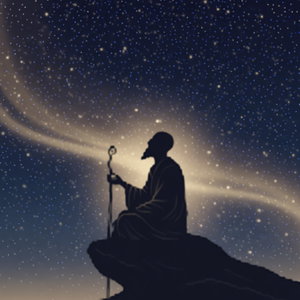
Please note that while the narrative is thoroughly based on historical research, its primary purpose is storytelling for entertainment and relaxation. As such, it is not intended to be used as a formal academic or scientific source. Images shown are AI-generated and for illustrative purposes only; they may not reflect actual historical appearances or events. Thank you for your trust and support.