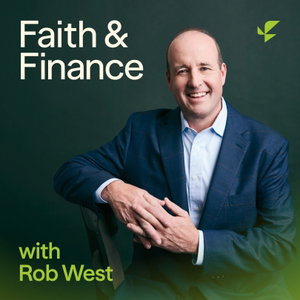
Money is never just about money, and work is never just about a paycheck. Scripture teaches that God owns everything, gives us the ability to earn, and calls us to work with integrity because ultimately, we serve Christ.
Howard Dayton, Founder of Compass Financial Ministry and author of Business God’s Way, says those truths should shape not only how Christians manage money, but how we earn it in the first place.
Remember Who You’re Really Working For
The foundation of biblical earning begins with recognizing that God owns everything and that He is ultimately the One we serve.
Colossians 3:23-24 says:
“Whatever you do, work heartily, as for the Lord and not for men… You are serving the Lord Christ.”
That applies whether you own a business, work for a large company, serve in ministry, or earn a paycheck somewhere in between. Your employer may sign the check, but your work is ultimately an act of service to Christ.
Even the ability to earn is a gift from God. Deuteronomy 8:18 reminds us:
“You shall remember the Lord your God, for it is he who gives you power to get wealth.”
That perspective guards against pride when things go well. Our abilities, opportunities, creativity, and strength are all resources God has entrusted to us.
Let Integrity Define Your Work
If we represent Christ in the workplace, honesty should characterize everything we do.
For business owners, that means treating customers, employees, vendors, and even competitors with integrity. For employees, it means giving an honest day’s work, using company resources responsibly, and refusing to take what does not belong to us—even when no one would notice.
Jesus said in Matthew 5:16:
“Let your light shine before others, so that they may see your good works and give glory to your Father who is in heaven.”
Our conduct at work can either reinforce or undermine the faith we profess. Biblical integrity means doing what is right because we belong to Christ, not simply because honesty is good for business.
Plan Wisely Without Presuming on Tomorrow
Running a business or managing a career requires planning. Scripture affirms the value of order and thoughtful preparation.
1 Corinthians 14:40 says, “All things should be done decently and in order.” While the immediate context concerns worship in the church, the broader principle reminds us that order and intentionality have value.
At the same time, good planning should never become confidence that we control the future.
James 4:13-14 warns those who say, “Today or tomorrow we will go into such and such a town and spend a year there and trade and make a profit,” reminding them, “You do not know what tomorrow will bring.”
Christians should plan carefully while holding those plans with open hands. We prepare responsibly, but we remain dependent on God.
Make Generosity Part of the Business Plan
Many biblical principles such as honesty, diligence, and planning are also recognized as sound business practices. Generosity, however, can run against the world’s instinct to accumulate and protect as much as possible.
Proverbs 11:24-25 says:
“One gives freely, yet grows all the richer; another withholds what he should give, and only suffers want. Whoever brings blessing will be enriched, and one who waters will himself be watered.”
This is not a promise that generous people will always become materially wealthy. Scripture does not teach us to give in order to get more. Instead, generosity reflects trust in God and loosens money’s grip on our hearts.
For a business owner, generosity might mean giving a portion of profits, caring intentionally for employees, supporting ministry, or finding creative ways to use the company’s resources to serve others.
Some Christian business leaders have gone even further. Entrepreneurs such as Alan Barnhart and Stanley Tam structured their businesses around extraordinary generosity, viewing their companies not simply as vehicles for personal wealth but as resources entrusted to them for God’s purposes.
The form generosity takes will look different for every person and every business. The important question is whether we are willing to ask God how the resources He has entrusted to us can bless others.
Work as a Steward
Earning money God’s way begins with a different definition of success.
The goal is not merely to maximize income or grow a business. It is to faithfully steward the abilities, opportunities, relationships, and resources God provides.
We work diligently because we serve Christ. We act honestly because we represent Him. We plan wisely while remembering that tomorrow belongs to God. And we hold what we earn with open hands so that generosity can become a natural expression of faithful stewardship.
When we understand that God is both the Owner and our ultimate Employer, work becomes more than a way to make a living. It becomes another opportunity to honor Him with what He has entrusted to us.
On Today’s Program, Rob Answers Listener Questions:
- I’d like to help my daughter buy a home by financing part of the purchase myself. Can we structure a private family mortgage using the applicable federal rate, and how should we handle the interest, paperwork, and tax reporting?
- I’m behind on filing my taxes and have been quoted more than $600 for preparation. I also run a nonprofit ministry and would like to keep costs down. Where can I find affordable or free tax-preparation help, and could a Certified Kingdom Advisor® (CKA®) assist?
- I received a Schedule K-1 from an investment held inside my IRA. How should I handle that for tax purposes?
- My husband and I are dairy farmers with operating and capital lines of credit around 8.5%. We’re considering using money from his Roth IRA to pay down the debt. At age 60, would there be taxes or penalties, and is that a wise move?
Resources Mentioned:
Remember, you can call in to ask your questions every weekday at (800) 525-7000. Faith & Finance is also available on Moody Radio Network and American Family Radio. You can also visit FaithFi.com to connect with our online community and partner with us as we help more people live as faithful stewards of God’s resources.
Hosted by Simplecast, an AdsWizz company. See pcm.adswizz.com for information about our collection and use of personal data for advertising.