Dela
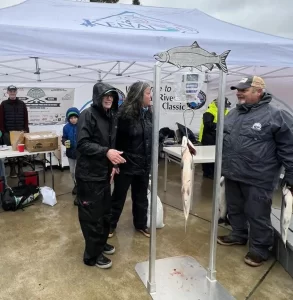
Kenai, Alaska’s annual Silver Salmon Derby will not return this year in response to poor silver salmon runs in the Kenai River.
The Kenai Chamber of Commerce and Visitor Center, which hosts the competition each year, announced the decision Thursday, as Ashlyn O’Hara reports.
This year’s derby was scheduled to happen the second week of September.
The annual event is billed as the world’s most responsible fishing tournament. That is because it awards prizes based on a fish weight that is closest to a random number instead of awarding the biggest fish caught, which organizers say can incentivize harmful catch-and-release strategies.
In the chamber’s announcement, executive director Samantha Springer said the decision to cancel the derby was difficult, but aligns with the competition’s commitment to responsible fishing.
The announcement came the same day the Alaska Department of Fish and Game extended limits on the Kenai River silver salmon sport fishery.
Traditionally, the fishery bag limit increases from two large fish to three large fish on September 1.
The department is keeping the limit to two fish through the end of November.
Like the derby, the department says its decision is due to a below-average silver run.
The state says that indicates weak returns to Cook Inlet.
Patrick Fowler is a fisheries management coordinator for the state. He says the department does not count the Kenai River’s coho run the same way it counts other salmon species, like king and sockeye.
Instead, Fowler says they use several data points to determine when a run may be lower than usual.
Fowler says the combination of data points suggest this year’s silver salmon run is stronger than in 2024, but weaker than last year.
In the press release, the chamber says it will consider hosting the 2027 derby earlier in the year.
Thursday’s announcement comes on the heels of a lackluster sockeye season in the Kenai River, and as the river’s king fishery remains closed outright due to poor runs.
On August 10, the last day the state counted fish for Kenai River late-run sockeye, a little over a million fish had been counted. That is lower than the cumulative counts for each of the last four years, and about a quarter of how many were counted during last year’s record season.

Courtesy NCAI
The National Congress of American Indians is bringing Tribal leaders together to identify priorities for an upcoming federal consultation on violence against women.
NCAI’s Violence Against Women Task Force will host two pre-consultation meetings for Tribal leaders and organizations.
The meetings will help participants develop talking points and strategies ahead of the U.S. Department of Justice’s annual government-to-government consultation with Tribal Nations.
That consultation is led by the Office on Violence Against Women and provides Tribal leaders an opportunity to raise concerns and priorities directly with federal officials.
NCAI will hold one of its preparatory meetings virtually and another in person at the Tulalip Resort in Washington state.
The organization says both will focus on issues Tribal leaders want addressed during the federal consultation.
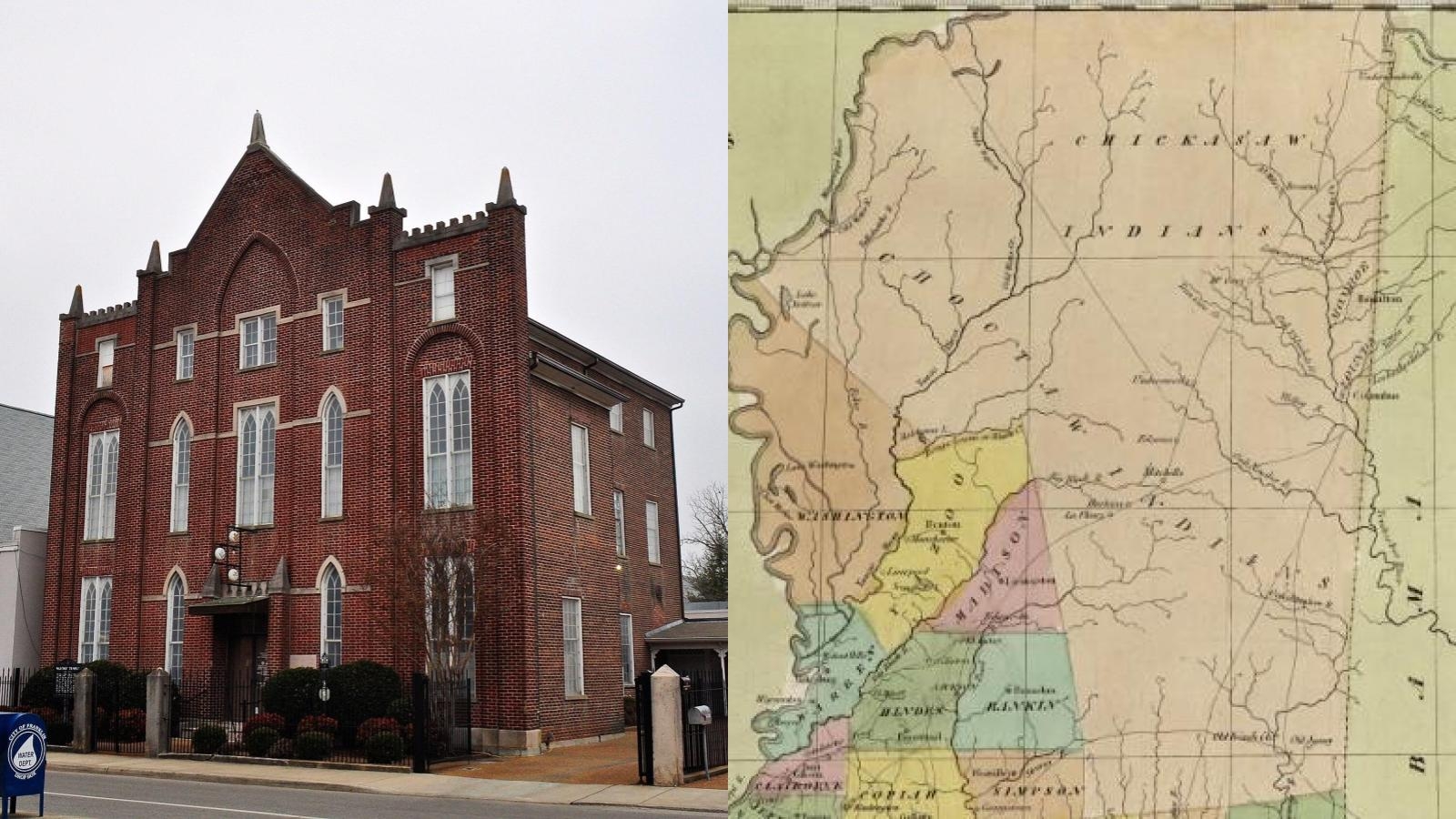
Franklin Masonic Hall where President Andrew Jackson met with Chickasaw delegation in 1830, left, and map of Chickasaw land in Mississippi at the time of the treaty negotiations. (Photo: Skye Marthaler / Wikimedia)
And on this day in 1830, Chickasaw leaders signed the Treaty of Franklin with the United States in Tennessee.
The agreement called for the Chickasaw Nation to give up its remaining homelands east of the Mississippi River in exchange for suitable territory west of Arkansas, but the agreement allowed Chickasaw representatives to inspect the proposed western lands before relocation.
They ultimately determined the land was unsuitable.
The treaty was never ratified and became void, but negotiations over Chickasaw lands continued as the United States pursued its policy of removing Native nations from the Southeast.
Get National Native News delivered to your inbox daily. Sign up for our daily newsletter today.
Download our NV1 Android or iOs App for breaking news alerts.
Check out today’s Native America Calling episode
Avsnitt sparat!
Du hittar sparade avsnitt på Mina sidor.
Kunde inte spara avsnitt
Något gick fel. Försök igen.