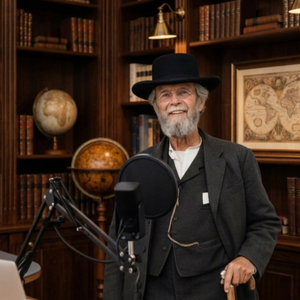
Andrew Taylor Still became a fully licensed physician in 19th-century America via a preceptor apprenticeship without earning an MD degree. Disillusioned with toxic "heroic medicine"—a turning point accelerated when three of his children died from meningitis in 1864—he broke from conventional practice to pioneer osteopathy. In 1892, Dr. Still founded the American School of Osteopathy and created the Doctor of Osteopathy (DO) degree to establish an independent healing identity separate from the MD establishment.
🔑 Key Takeaways & Highlights
Licensure via Apprenticeship: Dr. Still legally practiced in Kansas and Missouri after an apprenticeship under his father, proving 19th-century licensure didn't require a university MD.
Disillusionment with Heroic Medicine: After Civil War medical service, losing three children to meningitis, and losing teeth as a teen due to toxic calomel (mercury), Still abandoned regular medicine.
Creation of the DO Degree: In 1892, Dr. Still established the DO degree instead of the MD to reflect a philosophy rooted in self-healing.
Defending Identity: In 1899, Dr. Still rejected an ASO faculty petition to switch the school's degree from DO to MD, permanently preserving osteopathy's distinct identity.
⏱️ Timed Topic Outline
Introduction: The MD Myth — Debunking the myth that Dr. Still held an MD and explaining 19th-century state licensing.
Preceptor Apprenticeships — Exploring Still's apprenticeship and the 1883 Adair County Roll Book showing licensed physicians without medical diplomas.
Heroic Medicine on the Frontier — Examining 1800s standard care (calomel, purging) and Still’s personal injury from toxic calomel.
Tragedy & Turning Point (1855–1874) — Civil War medicine, the 1864 meningitis tragedy, and Still's 1874 break with conventional medicine.
Birth of the DO — Founding the ASO in 1892, Still earning his DO in 1897, and rejecting the 1899 MD petition.
📖 Key Terms
Heroic Medicine: Aggressive 19th-century regular medicine relying on toxic purges, emetics, and bleeding.
Calomel: A mercury-chloride purgative standard in the 1800s that caused severe toxicity and tooth loss.
Apprenticeship: The primary 1800s medical training method involving 2–3 years under a preceptor physician.
DO vs MD: MD denoted 19th-century regular medicine; DO was created by Still for an independent, self-healing system. Still became Missouri's first licensed DO in 1900.
Podden och tillhörande omslagsbild på den här sidan tillhör
Ed Paget. Innehållet i podden är skapat av Ed Paget och inte av,
eller tillsammans med, Poddtoppen.