Totalitarianism is often understood as extreme power imposed from above. Hannah Arendt’s investigation reveals a deeper system involving political disintegration, atomized masses, ideological certainty, and the destruction of factual reality.
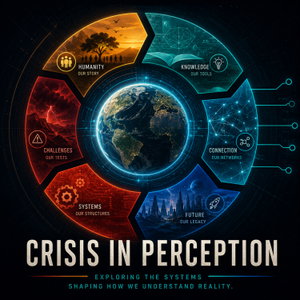
Welcome to Crisis in Perception, where we examine the systems shaping our world.
Using The Origins of Totalitarianism by Hannah Arendt as our lens, this episode explores how modern antisemitism, imperialism, statelessness, class breakdown, propaganda, organization, and terror became interconnected elements in the emergence of total domination.
Arendt distinguishes totalitarian government from ordinary dictatorship. The system she describes does not merely suppress opposition or monopolize state power. It attempts to reorganize society around permanent movement, ideological logic, arbitrary enemies, and the elimination of human spontaneity.
At the center of the investigation is a reinforcing pattern: political isolation creates demand for certainty and belonging; movement membership weakens independent relationships; conformity encourages fear and denunciation; and increasing isolation makes the individual more dependent on the movement.
The episode examines rootlessness, rightlessness, mass society, ideological consistency, institutional terror, political belonging, and the fragile relationship between factual reality and organized power.
📺 Watch on YouTube:
https://youtu.be/FnVs02vVViM
❤️ Support / Episode Post on Patreon:
https://www.patreon.com/CrisisinPerception/posts/origins-of-how-165032781?utm_medium=clipboard_copy&utm_source=copyLink&utm_campaign=postshare_creator&utm_content=join_link
If these ideas resonate, consider reading the work yourself or borrowing it from your local library. Supporting authors and libraries helps keep critical inquiry accessible.
If you value systems-level analysis like this, please follow, rate, and share the project.
This content was created using AI-assisted tools for research synthesis, structuring, and narration support. All analysis, framing, and editorial decisions are guided by human judgment as part of the Crisis in Perception project.