What protects our judgment in a world where convincing explanations are often easier to find than reliable evidence?
This episode presents AI-narrated educational analysis based on published sources. The voices are synthetic and do not represent real conversations, interviews with the authors, or human experts.
AI-assisted tools support research synthesis, production, and narration. Source selection, editorial framing, and final editorial decisions are guided by human judgment as part of the Crisis in Perception project.
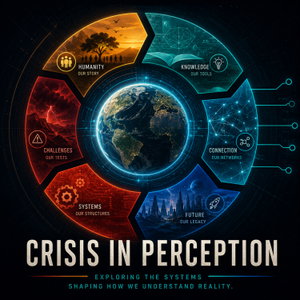
Welcome to Crisis in Perception, where we examine the systems shaping our world.
In The Demon-Haunted World: Science as a Candle in the Dark, Carl Sagan argues that scientific thinking is among humanity's most valuable intellectual tools—not simply because it produces knowledge, but because it helps us recognize and correct mistakes.
This Deep Dive investigates the psychological, cultural, and institutional conditions that allow pseudoscience and unsupported claims to flourish. From the Face on Mars to Sagan's Baloney Detection Kit, the discussion examines how human perception, emotional needs, educational failures, and information incentives shape what societies accept as true.
The investigation also considers a larger consequence: scientific literacy becomes increasingly important when citizens must make decisions about technologies, health, environmental risks, and the policies governing their lives.
Central themes include skepticism and wonder, evidence evaluation, human fallibility, institutional authority, media incentives, scientific self-correction, and democratic responsibility.
Ultimately, the investigation asks whether a society can remain intellectually independent when its technological power grows faster than its capacity to evaluate claims about that power.
📺 Watch on YouTube:
https://youtu.be/o8nbt6DUCyc
❤️ Support / Episode Post on Patreon:
https://www.patreon.com/CrisisinPerception/posts/demon-haunted-as-172726305?utm_medium=clipboard_copy&utm_source=copyLink&utm_campaign=postshare_creator&utm_content=join_link
If these ideas resonate, consider reading the work yourself or borrowing it from your local library. Supporting authors and libraries helps keep critical inquiry accessible.
If you value systems-level analysis like this, please follow, rate, and share the project.