Who controls the meaning of a war when the government, military, journalists, politicians, and public are all competing to define it?
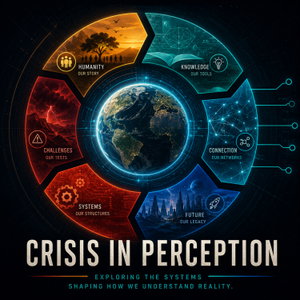
Welcome to Crisis in Perception, where we examine the systems shaping our world.
Using Selling the Korean War: Propaganda, Politics, and Public Opinion in the United States, 1950–1953 by Steven Casey as our lens, this investigation examines the extraordinary information problem created by America’s first major Cold War limited conflict.
The Truman administration wanted to maintain public support without generating panic or political pressure for a wider war. That produced a deliberately restrained message at crucial moments. Yet official silence created its own consequences: journalists speculated, political opponents filled information gaps, battlefield correspondents challenged optimistic military communiqués, and Douglas MacArthur’s headquarters struggled to reconcile press freedom with operational security and morale.
The deeper system is a feedback loop among policy, propaganda, journalism, political competition, and public opinion. Casey’s history shows why wartime perception cannot simply be commanded from above—and why the political requirements of sustaining a war become especially difficult when military strategy itself depends upon keeping that war limited.
Central mechanisms include information scarcity, censorship and self-censorship, bureaucratic rivalry, media incentives, political counter-framing, public legitimacy, and the tension between transparency and strategic restraint.
📺 Watch on YouTube:
https://youtu.be/M34tZRFDnYY
❤️ Support / Episode Post on Patreon:
https://www.patreon.com/CrisisinPerception/posts/selling-korean-168481213?utm_medium=clipboard_copy&utm_source=copyLink&utm_campaign=postshare_creator&utm_content=join_link
If these ideas resonate, consider reading the work yourself or borrowing it from your local library. Supporting authors and libraries helps keep critical inquiry accessible.
If you value systems-level analysis like this, please follow, rate, and share the project.
This content was created using AI-assisted tools for research synthesis, structuring, and narration support. All analysis, framing, and editorial decisions are guided by human judgment as part of the Crisis in Perception project.