The most opaque asset in private capital is a relationship.
Every investment starts with a path to a CEO or a board. That path lives in one partner's head, inbox and calendar.
Ken Fine spent five years designing propulsion systems for nuclear submarines, where a single error could sink a boat with the crew still aboard. Then more than a decade at Financial Engines, turning Bill Sharpe's Nobel-winning models into a product individual savers could use to run their 401(k)s.
Today he runs Affinity, a CRM purpose-built for private capital. His first reaction: "a CRM? Hasn't that been figured out?" Then he saw the data set.
For about a decade, the platform has ingested its customers' emails and calendar appointments, and mapped out the relationships inside firms and across them. Basically who knows whom, how and in what context.
By Ken's count, roughly 40 to 50% of the venture capital market is on it. The map reaches past the firms themselves to the founders, board members and bankers they deal with. Private equity and private credit are now where the platform is growing fastest.
Humans can only know so many people, and we recall fewer when it matters. Firms often end up waiting for a banker to run a process instead of finding the path they already had.
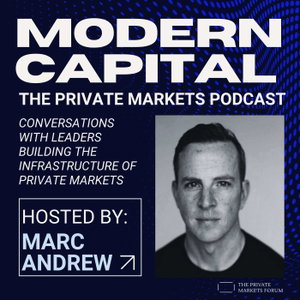
In this episode of the Modern Capital Podcast, Ken and Marc cover:
- What designing nuclear submarines teaches you about ownership, and when software needs the opposite
- What the Financial Engines playbook means for putting private assets into 401(k) plans
- Why the line between a VC firm, a PE firm and a private credit firm is disappearing
- The three layers of what comes after the CRM: raw data capture, compliance, and agents for sourcing, deal qualification, IC prep and portfolio monitoring
- What is left for the human when the agents do the rest
- How Ken uses AI every day, from inbox triage to a thought partner he tells to be cynical
"This space, as much or more than most, is relationship-driven. So if you're in the venture world, and you want to make an investment, you're going to need to find a way to get connected to the CEO, or get connected to board members. So leveraging networks is a critical piece of capital within these firms."
Relationships as infrastructure. Ken is putting that currency on the books.