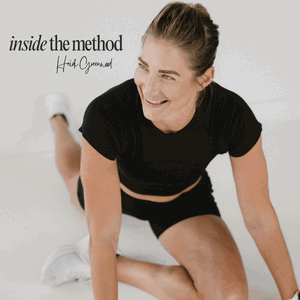
You Can Plank After Diastasis: Busting Pregnancy & Postpartum Fitness Myths with Jessica Dorrington, PT
SHOW NOTES:
What if the advice you were given about pregnancy and postpartum exercise is outdated?
In this episode of Inside the Method, Heidi sits down with physical therapist and women’s health specialist Jessica Dorrington, author of Strong as a Mother, to break down some of the biggest myths surrounding movement during pregnancy and postpartum.
From “don’t plank with diastasis” to “wait 12 weeks before running,” Jessica shares what current research actually says — and why many women have been unnecessarily held back.
Together, Heidi and Jessica explore how strength training supports both mom and baby, why core separation (diastasis recti) is often misunderstood, and how return-to-run timelines should be individualized — not fear-based.
This conversation is for active women, new moms, coaches, and anyone who wants evidence-based clarity around pregnancy fitness.
KEY MOMENTS:
02:10 – Jessica’s Journey from Runner to Women’s Health PT
05:45 – Why Pelvic Health & Sports Performance Belong Together
09:30 – The Truth About Diastasis Recti (Interrecti Distance Explained)
13:20 – Can You Train Your Abs During Pregnancy?
16:10 – Is Heavy Lifting Safe While Pregnant?
19:05 – How to Gauge Intensity: Borg Scale & The Talk Test
22:40 – Signs You Might Be Overtraining During Pregnancy
26:15 – Exercise Benefits for Baby (Not Just Mom)
30:10 – Postpartum Return to Running: What’s Changed
34:20 – Prolapse, Planks & Letting Go of Fear-Based Rules
38:00 – Why Movement Is Medicine
STAY CONNECTED:
● Instagram: @hjogreenwood
● Website: heidigreenmethod.com
CONNECT WITH JESSICA DORRINGTON:
● Book: Strong as a Mother (Available February 17)
● Available on Amazon, Barnes & Noble, Target & major retailers
SUPPORT THE SHOW:
If this episode encouraged or empowered you, share it with a mom, coach, or friend who needs it — and consider leaving a review.
Your support helps us continue bringing evidence-based, empowering conversations to women everywhere.
Remember — your body is capable of more than you think.
And movement isn’t something to fear.
It’s something to reclaim.