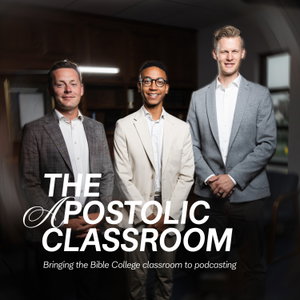
In this episode of The Apostolic Classroom, Steven Gill and Andrew Herbst conclude their discussion on the historical case for the resurrection by addressing one of the most common objections raised against the New Testament: Do the Gospel accounts contradict one another?
Drawing from the resurrection narratives in Matthew, Mark, Luke, and John, the hosts examine several of the alleged discrepancies critics frequently point to—including the number of women at the tomb, the timing of the resurrection morning, the appearance of the angels, and the sequence of events surrounding the empty tomb. Rather than treating these differences as contradictions, the conversation demonstrates how the Gospel writers present complementary eyewitness perspectives that together provide a fuller picture of history.
Along the way, Steven and Andrew explore the importance of historical method, audience, literary purpose, and sound biblical interpretation, showing why variation in eyewitness testimony often strengthens rather than weakens historical credibility. The discussion also highlights how Scripture communicates faithfully through distinct human authors while remaining unified in its central message.
This episode concludes the resurrection section of Semester 2's apologetics series, equipping believers to thoughtfully respond to claims of biblical contradiction and to approach the Gospel accounts with greater confidence, clarity, and historical awareness.
This episode of The Apostolic Classroom was sponsored by Liv Hill Nutrition. Visit them at livhillnutrition.net.

Podden och tillhörande omslagsbild på den här sidan tillhör The Apostolic Classroom. Innehållet i podden är skapat av The Apostolic Classroom och inte av, eller tillsammans med, Poddtoppen.