Connect with us at:
communicationskillsforwomen@gmail.com
Rosemay Webster on LinkedIn
Elizabeth Amorino on LinkedIn
We'd LOVE to hear from you.
Friends With Your Boss? Navigating Workplace Friendships, Power & Boundaries
Can you be friends with your boss and still have a healthy professional relationship?
Workplace friendships can be meaningful. You might genuinely like your boss, talk about your families, laugh together, support each other, or even spend time together outside of work. But when friendship and professional roles overlap, things can get complicated quickly.
What happens when your boss makes a decision you disagree with? Do you respond as a friend—or as an employee?
The truth is, friendship doesn't erase hierarchy, and hierarchy doesn't eliminate connection.
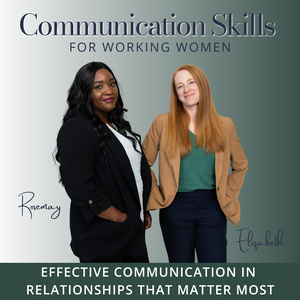
In this episode of Communication Skills for Working Women, Elizabeth Amorino and Dr. Rosemay Webster break down how to navigate workplace friendships, professional boundaries, and power dynamics using three simple ideas:
Connection. Role. Power.
Connection: Value the Relationship Without Making Assumptions
A workplace friendship can be a genuine friendship. You can trust someone, care about them, talk about your family, and enjoy spending time together.
But personal connection doesn't automatically mean you can communicate with each other exactly as you would outside of work.
You might find yourself thinking:
-
“We're friends, so I should be able to tell them anything.”
-
“We're close, so they should understand how I feel.”
-
“If I disagree with them, I'm going to damage our friendship.”
Instead of making assumptions, pause and recognize both parts of the relationship.
“I value this relationship, and I also recognize that we're at work.”
Connection means valuing the relationship without expecting the friendship to erase the professional context.
Role: Know Who You Are to Each Other at Work
The same person can occupy multiple roles in your life.
Your boss might also be your friend. A colleague might be a mentor. Someone you genuinely like might also be responsible for evaluating your performance.
Those professional roles don't disappear because you have a personal connection.
When an important conversation comes up, ask yourself:
“Which role am I communicating from right now?”
If you're discussing a work decision, communicate professionally. If you're giving feedback, recognize the professional role you're in. If you're having a personal conversation, recognize that you're shifting into a different part of the relationship.
One helpful phrase is:
“I value our relationship, and I want to approach this conversation professionally.”
Role gives you clarity about how to communicate at work.
Power: Recognize Who Has Authority
Power is an important part of any workplace relationship.
If someone has authority over your:
-
Pay
-
Promotion
-
Schedule
-
Performance evaluation
-
Opportunities
-
Responsibilities
there is a power difference—even when you genuinely like each other.
That power difference can influence communication. You might hesitate to disagree, feel pressure to say yes, or worry that speaking honestly could affect your relationship or your career.
It can also create the perception of favoritism among other employees.
Ask yourself:
“Is this relationship affecting what I feel comfortable saying or doing?”
Recognizing power doesn't mean the relationship is unhealthy. It means the power difference deserves to be acknowledged.
You can communicate honestly while still protecting the professional relationship.
Try:
“I'm going to push back on this decision because of my perspective on the work—not because of our relationship.”
Connection. Role. Power.
When a workplace relationship feels complicated, come back to these three questions:
Connection: What is our relationship?
Role: What are our professional roles?
Power: Where does authority exist between us?
You don't have to choose between being human and being professional.
You can have connection and boundaries.
You can value a friendship while still recognizing the professional relationship.
And sometimes, clarity is what allows connection to remain healthy.
Your Communication Challenge
Think about one workplace relationship that feels complicated.
Ask yourself:
-
Connection: What is our relationship?
-
Role: What are our professional roles?
-
Power: Where does authority exist between us?
Then ask yourself:
“Is there anything I'm avoiding saying because I'm afraid it will change the relationship?”
You don't have to say it today.
Start by getting clear with yourself.
Because when you understand the connection, role, and power in a workplace relationship, you have a much clearer starting point for your next conversation.
If This Episode Resonates
Follow Communication Skills for Working Women and share this episode with another working woman who might be navigating a complicated workplace friendship, difficult conversation, professional boundary, or power dynamic.
We're here to help you communicate with more clarity and confidence in the relationships that matter most.
Speak Clearly and Listen Bravely.
The Art and Science of Connection