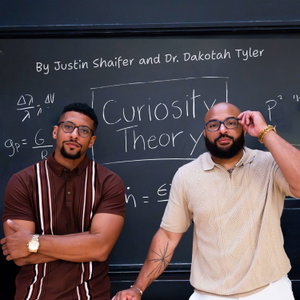
In this episode of Curiosity Theory, hosts Dr. Dakotah Tyler and Justin Shaifer sit down with Dr. Naia Butler-Craig, a newly minted aerospace engineer and NASA electric propulsion researcher, for a conversation about rocket science, how we actually move through space, and where humans are headed next.
The discussion moves from her path through grad school and into NASA to how electric propulsion works and why it beats chemical rockets on efficiency, what it would really take to get people to the Moon and Mars, and what living and working at the agency is like from the inside. Along the way, she breaks down what is happening inside a Krypton Hall effect thruster and why plasma, not combustion, is the future of deep space travel.
The conversation also dives into why astrology is not astronomy, how to think about trust and misinformation in science, the engineering and people behind the missions we take for granted, and the surprising ways space tech is advancing medicine on Earth through Avatar tissue chips. It closes on the sci-fi and the curious childhood that set her on this path in the first place.
Chapters
00:00:00 Intro and meeting Dr. Naia Butler-Craig 00:01:15 Her path into NASA and life inside the agency 00:11:43 Electric propulsion vs chemical rockets explained 00:17:23 Getting humans to the Moon and Mars 00:24:04 Why astrology is not astronomy 00:31:50 Trust, misinformation, and relying on science 00:37:00 Is NASA still competent? The engineering behind spaceflight 00:46:01 Avatar chips: how space tech advances medicine 00:58:50 How sci-fi and a curious childhood shaped her 01:03:34 Inside a Krypton Hall effect thruster 01:11:37 Where to find Naia and final thoughts
Follow us @curiositytheorypod @dr.starkid @mr.fascinate
Podden och tillhörande omslagsbild på den här sidan tillhör
Dr. Dakotah Tyler & Justin Shaifer. Innehållet i podden är skapat av Dr. Dakotah Tyler & Justin Shaifer och inte av,
eller tillsammans med, Poddtoppen.