I believe the material you teach matters far less than the precision you bring to it. Your voice is as unique as your fingerprint, and that is what makes the work yours, whether you wrote the song or someone else did.
There is a moment I hear constantly in my work. Someone is describing their expertise, walking me through how they actually help people, and then they stop partway through to explain where they learned it. Well, I teach that, but it's not really mine. I'm certified in this. I learned it from so and so. The wording changes, but the voice does the same thing every time. It drops. It gets apologetic, like they have just confessed to something. And I think that quiet apology is costing a lot of genuinely capable people the chance to own their impact.
Here is what I want you to understand about that hesitation. It comes from integrity. Someone who stops to say where they learned something is refusing to take credit for a thing they did not build, and that is exactly why people trust them. Nothing is wrong. It is just unnamed. The certification has a name. The book has a name and an author and a cover you can point at. The wisdom you brought to it has not been labeled yet, and that does not make it less important. It just makes it harder to point at.
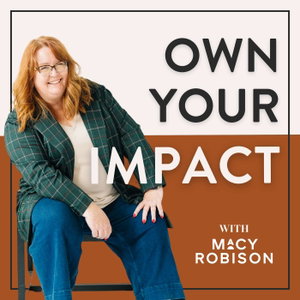
In this episode I use Kelly Clarkson to show you what I mean, because her career is the clearest version of this I know. Other people's songs, then her own catalog, then back to other people's songs on purpose, and at no point along the way was anyone confused about the artist. I also tell you about my friend Raj Lulla, who came to a workshop of mine in Nashville planning to be supportive and left with his year changed. The tools he uses did not change at all. What changed was the name on the door and his understanding of what he brings to the tools once he is holding them.
IMPACT POINTS FROM THIS EPISODE:
⚡ The hesitation is integrity, not a deficiency. — When you stop to credit the person you learned something from, you are refusing to take credit for a thing you did not build. That instinct is the reason clients trust you and keep sending their friends. The problem is not that you have too much integrity. It is that the part you contributed has a name attached to it yet, and the part you borrowed does.
⚡ The song will change more than once, and that is not a ladder. — You might start out licensing something because someone built a good tool and you are excellent with it. Then you build your own material. Then you do both at the same time, which is what most of the people I work with are actually doing. Licensed material is not the bottom rung and original is not the top. It is just what a twenty or thirty year career looks like when you are the face of your ideas.
⚡ Knowing your voice is what gives you agency. — This is not a nice feeling to have about yourself. It is what lets you choose. When you know what you bring, you can look at a tool someone is selling you and tell in about a minute whether it will sound like you or fight you. If you do not know, you will keep apologizing for whichever song you happen to be holding, because you have no way to tell the difference.
PEOPLE & RESOURCES MENTIONED:
CONNECT WITH MACY:
SUBSCRIBE & REVIEW:
If you loved this episode, please take a moment to subscribe and leave a review on Apple Podcasts! Your support helps me reach more thought leaders who are ready to make an impact with their ideas. 🎙 Thanks for tuning in to Own Your Impact!