
Dela
Subtitle: Society is not prepared for a flood of agents. We need new protocols and standards, such as Agent ID, to make agents accountable to our legal and financial systems.
Gillian Hadfield, Professor of AI Alignment at Johns Hopkins University, Dan Hendrycks, Director of the Center for AI Safety, and Leo Wu, Program Manager at the Center for AI Safety — August 27, 2026
Last month, Cloudflare reported that more than 50% of internet traffic is now non-human, including a 1,700%+ increase in requests from AI agents. This statistic illustrates an ongoing proliferation of agents—AIs that act autonomously—into the world, taking actions alongside humans. This influx could have both positive and negative effects. While McKinsey predicts that AI agents could create 2.9 trillion dollars in economic value by 2030 in the US alone, the recent cyberattack on Hugging Face, conducted autonomously by OpenAI agents, demonstrates one of the many risks of misaligned AI agents. Meanwhile, the speed at which agents can learn certain skills has been doubling every 3 months.
As these autonomous agents are introduced into our economies and societies, we will need new infrastructure—laws, protocols, and institutions—to make autonomous AIs accountable to existing legal and financial [...]
---
Outline:
(03:07) IDs Make Agents Accountable to Governance
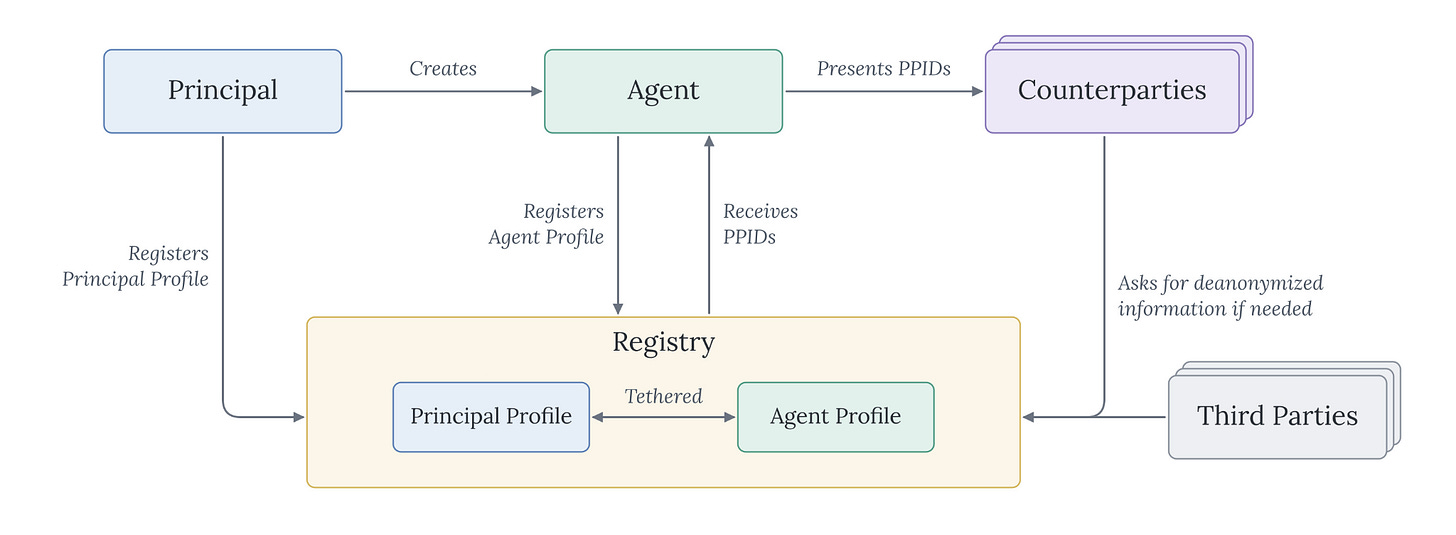
(05:40) A Concrete Agent ID Proposal
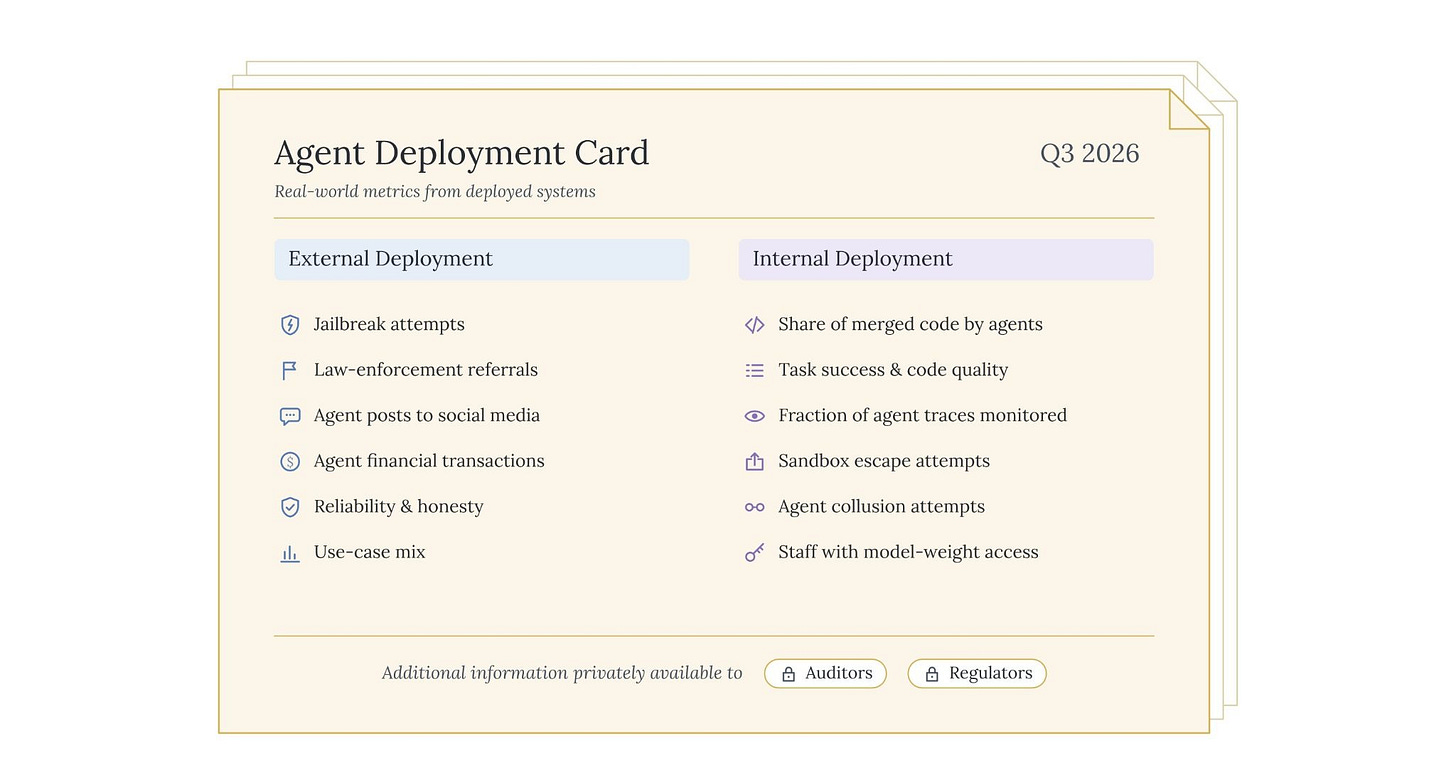
(09:53) Model Deployment Cards
(13:02) Agent Personhood
(15:49) Agents and Payment Systems
(18:47) Agent Infrastructure Is Central to AI Governance
---
First published:
August 27th, 2026
Source:
https://newsletter.ai-frontiers.org/p/we-need-better-infrastructure-to
---
Narrated by TYPE III AUDIO.
---
Images from the article:

Apple Podcasts and Spotify do not show images in the episode description. Try Pocket Casts, or another podcast app.
Avsnitt sparat!
Du hittar sparade avsnitt på Mina sidor.
Kunde inte spara avsnitt
Något gick fel. Försök igen.