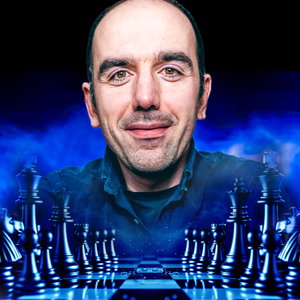
00:00 Intro04:38 Does this only apply to grandmasters?07:25 Quiet positions vs Chaos11:00 Play the pieces, not the player?16:50 Nothing to Lose Mentality23:15 The TRAP framework35:00 Cognitive Biases in Chess44:57 Mistakes to Avoid against Stronger Players54:42 The Impact of Chessable on TeachingIn this episode, I sit down with FIDE Master Niranjan Navalgund to explore a question that fascinates many ambitious players: how do you beat stronger opponents, especially grandmasters? We discuss the ideas behind his Chessable course How to Beat a Grandmaster, which focuses less on openings and theory and more on the practical and psychological realities of facing higher-rated players. Niranjan explains why this topic matters for everyone, not just those paired against titled players, because the same emotional patterns often show up whenever we face someone we perceive as “stronger.” We talk about pressure, authority bias, over-respect, risky overpressing, time trouble, and the need to stay objective instead of chasing perfect chess.The conversation also widens into coaching, learning, and chess culture. Niranjan shares the framework behind his course, including his TRAP model—Time trouble, Risky overpushes, Ambushes, and Psychology—and explains how stronger players can become vulnerable when they feel pressured to win. We connect this to broader ideas from cognitive science, practical tournament preparation, and even Indian philosophy, showing how mindset shapes performance before a single move is played. Along the way, we also discuss Chessable course design, how to teach adults without overwhelming them, and why good chess improvement depends not only on knowledge, but on learning how to think, prepare, and respond under pressure.
Podden och tillhörande omslagsbild på den här sidan tillhör
Can Kabadayi. Innehållet i podden är skapat av Can Kabadayi och inte av,
eller tillsammans med, Poddtoppen.