
Dela
Scott Aaronson, while working at OpenAI, largely solved AI text watermarking together with Hendrik Kirchner.
Here is how his solution works, or see Tenobrus's version.
Then, given enough text, a score is derived for howe well the choices fit with that particular pseudo-randomness source, versus a different source.
If you want to dig deeper, here is a full paper. The method has very nice properties:
---
Outline:
(03:51) This Is Fine
(04:37) Anthropic Derangement Syndrome
(07:34) People Don't Understand LLM Outputs Are Already Random
(08:47) People Don't Trust The Method To Be Costless
(12:20) People Are Suspicious Of Any Alteration On Principle
(14:16) Maybe It's Partly The Word Watermark
(15:14) A Lot Of People Don't Want To Get Caught
(16:04) There Are Some Times You Prefer Not To Be Recognized
(16:18) There Are Some Good Reasons To Be Concerned
(16:37) Cheat Cheat Cheat Cheat Cheat
(18:38) The Writing In The Middle and Error Rates
(21:00) Millions For Defense But Not One Cent For Tribute
---
First published:
August 21st, 2026
Source:
https://www.lesswrong.com/posts/3mKuPHmaK7NW3QypR/ai-text-watermarking-is-free-and-good
---
Narrated by TYPE III AUDIO.
---
Images from the article:
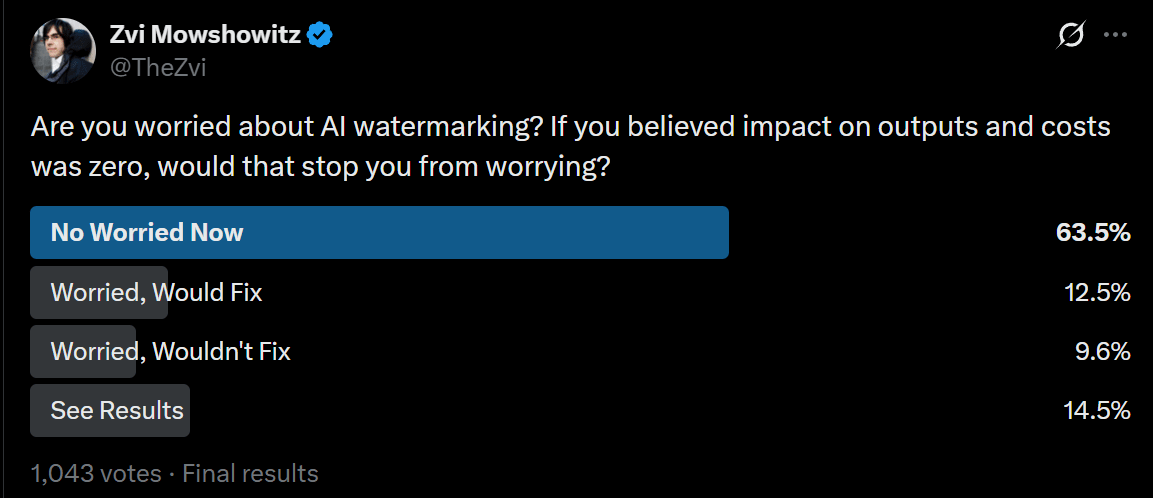
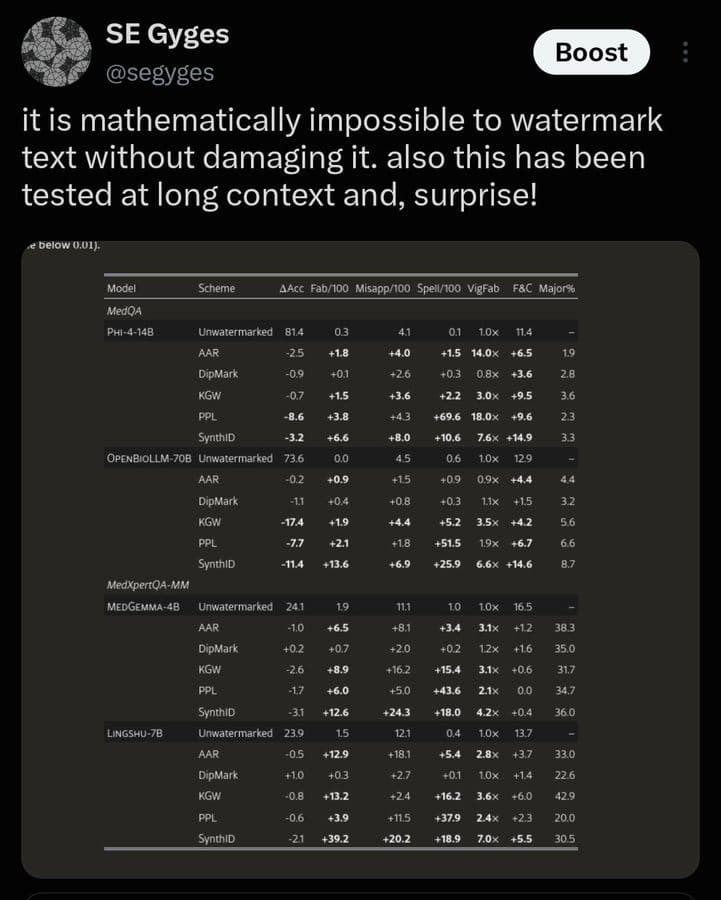
Apple Podcasts and Spotify do not show images in the episode description. Try Pocket Casts, or another podcast app.
Avsnitt sparat!
Du hittar sparade avsnitt på Mina sidor.
Kunde inte spara avsnitt
Något gick fel. Försök igen.