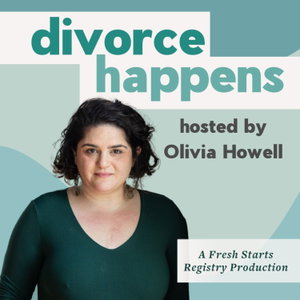
You did the hardest thing you've ever done — you left. And somehow, that's not where the guilt ends; for so many divorced moms, it's where a whole new kind of guilt begins. If you've ever lain awake wondering how you can call yourself a good mother when your kids are still living, at least part-time, inside the very dynamic you found the strength to walk away from, this episode of Divorce Happens is for you. Olivia sits down with Lyerly Spongberg, a Certified ADR Divorce Coach, Pre-Mediation Coach, and Co-Parenting Specialist and founder of Step Up With Lyerly, for an honest, nuanced conversation about one of the most under-discussed emotional realities of co-parenting after divorce: the guilt of getting out when your children didn't.
Spongberg brings more than professional training to this conversation — she brings twenty-plus years of lived experience, having divorced in her thirties and later rebuilt a blended family of six children as a stepmother to four. That dual perspective, expert and survivor, shapes everything she offers here, starting with a distinction she says changes the way divorced parents talk to themselves: guilt is “I did something bad,” while shame is “I am bad.” Divorce guilt and co-parenting shame, she explains, are not the same weight to carry, and untangling them is often the first real step toward healing. From there, the conversation moves into concrete territory — how to steady yourself and your children during the disorienting transition between homes, why building a small ritual (even something as simple as always baking cookies when the kids come home) can anchor a child through change, and why resisting the urge to defend yourself against a co-parent's bad-mouthing is, paradoxically, one of the most powerful things you can do for your credibility in your children's eyes.
What makes this episode so reassuring is its honesty about time. Olivia shares her own story — her children were three and five when she divorced, and it wasn't until they were thirteen and ten that she noticed she'd stopped bracing every time her ex reached out. Spongberg echoes that truth for listeners in the thick of it now: the triggering feeling does soften, high-conflict co-parenting doesn't stay high-conflict forever, and children are far more resilient — and far more attuned to who you really are — than guilt convinces you they are. Listeners walk away with two grounding takeaways: give yourself permission to protect your own peace during your parenting time off, because a regulated parent is a safer parent to come home to; and remember, in Spongberg's own closing words, that grief is not the same thing as failure. If you're carrying guilt about a decision you know, deep down, was the right one, this conversation offers both the clinical language and the human permission to finally put some of that guilt down.
🔗 Check out Fresh Starts Registry:
The first & only divorce registry + support platform ➡ https://www.freshstartsregistry.com/
📱 Instagram: https://www.instagram.com/freshstartsregistry/
📘 Facebook: https://www.facebook.com/FreshStartsRegistry
🎙 Podcast IG: https://www.instagram.com/divorcehappenspod/
📬 Magazine: https://divorceguidemagazine.com/
💛 The Divorce Happens Community: https://divorcehappens.substack.com/