Jess's Rule
Leadership and Culture in Healthcare | Series 8
Guest: Andrea Brady, mother of Jessica Brady and founder of the Jessica Brady Cedar Trust
Jessica's Story
Jess was 26 years old when she first became unwell, in the middle of the pandemic. Initial symptoms began with stomach problems, diagnosed remotely as a UTI without testing, her first course of antibiotics followed. Over the following months, Jess developed a persistent cough that made normal conversation difficult, forcing her to speak in a whispered voice. Further symptoms developed: post-nasal drip, morning vomiting, enlarged lymph nodes in the neck, significant weight loss, night sweats, and acute fatigue so severe that towards the end she struggled to get up to use the toilet. Jess was a radio frequency engineer who designed satellites ,organised, proactive, and very clear about knowing her own body. She didn't smoke, didn't drink, ate healthily and exercised, not a profile clinicians associated with serious illness.
“She was fractionally too old for young people's cancers.”
The Clinical Journey
Over five months, Jess contacted her GP surgery on 20 occasions. She was prescribed six courses of antibiotics, nasal sprays and steroids. She saw six different GPs at her surgery, never her nominated named GP. Of 20 contacts, only three resulted in face-to-face appointments. The diagnosis given was long COVID, despite Jess never having tested positive for COVID. Andrea attended one GP appointment with Jess and requested a referral to an ear, nose and throat specialist , the request was not granted. Jess pursued a private referral, leading to a biopsy of her lymph nodes. The result was secondary cancer, confirmed the following day via full body scan as stage 4 adenocarcinoma of unknown primary. The cancer had spread to her bones, lungs and liver. Jess died three weeks after diagnosis, aged just 27.
“It was horrible that she wasn't diagnosed and of course, I'm left and Jess was left with thinking, what if she had been listened to earlier?”
Andrea's Response — From Grief to Campaign
Andrea credits Jess herself as the reason the campaign exists, even while seriously ill, Jess wanted her GP practice to understand what had happened, not through litigation but through awareness. Andrea describes the concept of the doing cure — referenced from author Michael Rosen, who also lost a son, as the thing that kept her functioning through grief. Initially focused on what charity to support in Jess's name, Andrea quickly identified a gap: Jess was fractionally too old for young people's cancer charities, hadn't received Marie Curie support, and was too unwell to be treated in a hospice. The campaign petition, Jess's Rule, was launched one night after Jess died, focused on improving awareness and diagnosis of cancer in young adults. Hundreds of people contacted Andrea, making clear Jess was far from an isolated case.
“I don't think I would be here today and Jess's Rule wouldn't have been actioned if it hadn't been for Jess.”
“If I was going to function, I had to function with purpose.”
“She felt really strongly that she wanted her GP practice in particular to understand what had happened and what she'd gone through.”
Jess's Rule — The Campaign
The core principle: when a patient presents to their GP on a third occasion without resolution, their case should be elevated for review — symptoms investigated thoroughly and proactively, regardless of age or demographic. Andrea first raised this idea with Health Secretary Matt Hancock, as one of twelve points she brought forward. An oncologist at a Health Select Committee hearing confirmed this was historically known as "three strikes and you're in",old school training that had been lost. The petition launched in January 2021 and reached nearly half a million signatures by implementation. Andrea worked through multiple Health Secretaries during the campaign. A critical meeting with Wes Streeting in December 2024 led to a roundtable of experts to assess feasibility. Andrea worked closely with the Royal College of GPs and Claire Fuller from NHS England to shape how the rule would be implemented, listening carefully to clinical expertise while ensuring the nuance of Jess's experience was reflected. Jess's Rule was formally implemented in September 2025. It has since been introduced in the Isle of Man in March 2026, with interest from Scotland, Wales, Denmark, New Zealand and the United States.
“I began to carry the stories of other parents with me... I felt I was doing it for Jess, but then I felt I was doing it for so many other people who were diagnosed too late.”
The Jessica Brady Cedar Trust
The Trust was set up approximately nine months after Jess died, focused on primary care and early cancer diagnosis. It co-funded a learning module with the Royal College of GPs on early cancer recognition, and created its own learning module specifically on Jess's Rule for primary care clinicians, linked on NHS England's website. The Trust funded the printing and distribution of all Jess's Rule posters to GP surgeries at the point of implementation, and is supporting a three-year AI diagnostic tool project designed to sit within GP practices and help identify cancer earlier by drawing on patient-reported information.
What Gets in the Way — Barriers to Good Care
Unconscious bias plays a significant role, the assumption that a young, healthy, articulate person is unlikely to have something seriously wrong. Research cited in the episode notes that patients are interrupted on average within 17 to 23 seconds of speaking during a consultation. Unsubstantiated diagnoses embedding in patient records is another key barrier. Jess's long COVID coding carried forward to every subsequent GP, closing down further investigation rather than prompting review. Patients often feel anxious about wasting a doctor's time and may not say everything they need to say. Andrea is clear throughout that this has never been an attack on GPs: nobody intended to not diagnose Jess.
“There are two experts in the room — the medical expert who's had years of their training, and then there is the patient who's an expert in their own body.”
“It was never ever been an attack on GPs or doctors, because I absolutely know that nobody intended to not diagnose Jess.”
“Red flag is red flag, regardless of age and demographics.”
What Good Looks Like
GP surgeries emailing patients to declare their support for Jess's Rule. Answerphone messages acknowledging Jess's Rule when patients call for appointments. Surgeries writing to the Trust requesting additional posters for waiting rooms and consultation rooms. Doctors telling Andrea they thought of Jess mid-consultation and called a patient back. As Andrea says: "Jess is doing the job."
“I had a patient I saw recently and I thought of Jess and I brought them back in... Jess is doing the job.”
Looking Forward
Andrea's hope is that red flags are treated as red flags regardless of age or demographic, and that open-mindedness and a willingness to rethink an unsubstantiated diagnosis becomes embedded in everyday clinical practice. The central question she wants to see become routine is: what can I do to establish or rule out the worst case scenario at the earliest opportunity? With international interest growing and the Jessica Brady Cedar Trust's work continuing in primary care education and AI-assisted diagnosis, Jess's Rule is already saving lives and building a legacy worthy of the remarkable person it is named after.
“If it can just be something that open-mindedness to think again — that would be a really good legacy for Jess.”
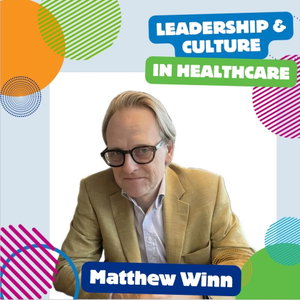
Matthew Winn, podcast host and an experienced leader in healthcare in the UK.