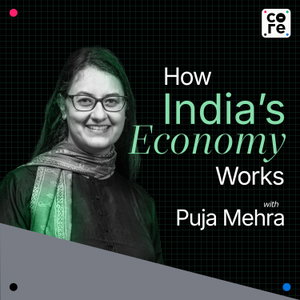
In this episode of How India’s Economy Works, Puja Mehra speaks with political scientist and economic historian Rohit Chandra, Assistant Professor at the School of Public Policy of IIT, Delhi. They talk about what those crises taught India, how the country’s energy system has changed, and what the latest Iran conflict and Strait of Hormuz disruption reveal about India’s continuing vulnerabilities.
Chandra explains why India was better placed to absorb the latest shock than it was in the 1970s, thanks to greater electrification, domestic refining capacity and crude storage. But he argues that the human and economic costs have been underestimated, particularly for poorer households, migrant workers and small businesses. He also discusses India’s dependence on imported energy, the delayed response to LPG shortages, the need for greater strategic petroleum reserves, and why energy efficiency must focus more on industry than households.
The conversation also looks ahead at what India needs to do differently: give public-sector energy companies greater autonomy, allow them to invest and experiment across a changing energy economy, make energy-sector contracts more transparent, and create a more predictable policy environment for investors. Chandra argues that crises often push governments towards ad hoc, statist interventions — making clear rules and predictability essential for long-term energy security.
Tune in for insights on India’s oil shock, energy security, strategic petroleum reserves, LPG shortages, energy efficiency, PSU autonomy and the policy lessons from past crises.
CHAPTERS
(00:00) Introduction to India's Oil Vulnerability
(01:01) History of Indian Energy Shocks
(08:27) Hidden Costs of Recent Disruptions
(15:12) Strategic Petroleum Reserves and Preparedness
(18:56) Industrial Efficiency and PSU Autonomy
(24:42) Global Oil Markets and Supply
(29:54) Big-Picture Energy Sector Reforms
(32:15) Transparency in Energy Market Contracting
(35:48) Predictability and Future Investment Policies
For more of our coverage check out thecore.in
Follow us on:
Twitter | Instagram | Linkedin | Youtube