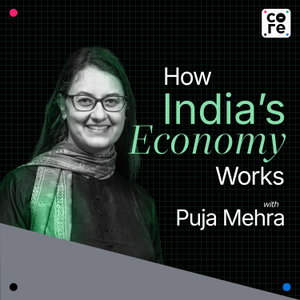
In this episode of How India's Economy Works, host Puja Mehra speaks with trade economist Dr. Nisha Taneja, Professor at Indian Council for Research on International Economic Relations (ICRIER). They unpack what the latest export data really reveals. Why did some sectors thrive while others—diamonds, pharmaceuticals, petroleum products and jewellery—registered sharp declines? Why did exports to China unexpectedly surge? And what does this tell us about India's overdependence on the US market?
The conversation also examines whether India's recent free trade agreements can genuinely help exporters, why earlier FTAs failed to deliver the expected gains, and how non-tariff barriers, product standards and local market knowledge matter as much as tariff cuts. Dr. Taneja explains why the tariff shock has become a catalyst for a new export diversification strategy, prompting the government to launch an ambitious export promotion mission aimed at helping Indian firms enter new markets.
Tune in for insights on how Trump's tariffs reshaped India's export strategy, why diversification has become an economic necessity, and what India must do to build a more resilient export ecosystem.
CHAPTERS
(00:00) Introduction
(00:14) Why US Tariffs Didn't Hurt Exports
(03:27) Which Indian Sectors Lost Most
(05:31) China's Surprising Demand For Indian Goods
(06:52) How Exporters Found New Markets
(08:21) Can Free Trade Agreements Help?
(10:53) Lessons From Trump's Tariffs
(11:32) India's New Export Diversification Strategy
Podden och tillhörande omslagsbild på den här sidan tillhör
The Core. Innehållet i podden är skapat av The Core och inte av,
eller tillsammans med, Poddtoppen.