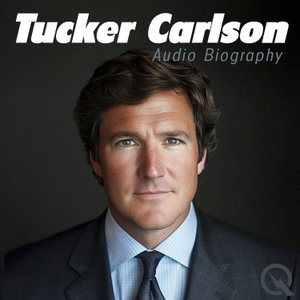
Tucker Carlson has spent the past few days escalating his criticism of U.S. foreign policy, the Republican Party, and the war in Ukraine, while drawing new backlash for his rhetoric on 9/11 and antisemitism. In a newly broadcast interview on RT’s program Going Underground, he warned that the United States is effectively at war with Russia through Ukraine and claimed the current trajectory could end in a nuclear conflict that “kills everyone,” framing the Ukraine and Iran conflicts as a single emerging global war. RT and related Russian outlets highlight him describing Ukraine as a totalitarian state with no real freedom of speech or movement and insisting that the country’s president is not democratically elected, while also praising Moscow as “infinitely better than New York.”
At the same time, Carlson has used his newsletter and online platform to weigh into U.S. politics around the 9/11 anniversary. The National Desk reports that he defended Michigan Democratic Senate candidate Abdul El‑Sayed’s controversial remarks about the attacks, arguing that the U.S. response in Iraq and Afghanistan amounted to “dozens and dozens of 9/11s,” and sharply attacking Trump‑backed Republican Mike Rogers as a “so‑called conservative” who should be kept away from Washington. Conservative commentary at Townhall characterizes this defense as part of Carlson’s increasingly hard‑line anti‑neoconservative stance and effectively treats it as a quasi‑endorsement of El‑Sayed over a Trump‑aligned Republican.
His broader media venture continues to center on his YouTube channel and subscription site, where Politifact notes he has built a large audience for content questioning official narratives about the September 11 attacks, including a multi‑part documentary series “The 9/11 Files” that has drawn millions of views and helped drive subscriber growth. Around this anniversary, he has again used those platforms to push for declassifying more 9/11 records and to promote conspiracy‑tinged discussions about the attacks.
Carlson’s influence is provoking visible strain within the Republican establishment. The Hill reports that Vice President JD Vance is facing pressure from conservatives and Jewish donors over his refusal to distance himself from Carlson, whom he continues to describe as a friend despite acknowledging disagreements and growing criticism of Carlson’s antisemitic rhetoric. Advocacy monitoring of antisemitism has flagged a recent Carlson segment where a guest described algebra as “fake math” for “good little goy slaves,” with Carlson reacting approvingly, feeding accusations that his show normalizes antisemitic tropes.
On social media, Carlson has also attacked Donald Trump’s handling of the Iran war and the coming midterms, posting that Republicans will lose because Trump “chose a foreign country over his own voters,” reinforcing the narrative, echoed in his RT interview, that the Trump administration betrayed its base on foreign policy. Meanwhile, conservative pundits like Victor Davis Hanson argue that Carlson misread his relationship with Trump and overplayed his influence, contributing to their falling‑out.
Across these developments, Carlson remains a central and polarizing figure: amplifying Russian state narratives about Ukraine and Moscow, defending a progressive Senate candidate against 9/11 criticism from the right, stoking conspiratorial views of 9/11 on his platforms, and deepening internal Republican debates over antisemitism, foreign policy, and loyalty to Trump.
Thanks for listening to the Tucker Carlson News Tracker podcast, and please remember to subscribe. This has been a Quiet Please production, for more check out quietplease dot ai.
For more http://www.quietplease.ai
Get the best deals https://amzn.to/3ODvOta