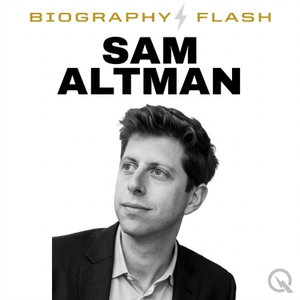
Sam Altman Biography Flash a weekly Biography.
In the past few days, Sam Altman has been on an unmistakable campaign to define what AI power looks like, and who should benefit from it. According to the Financial Times, in an op‑ed and related reporting he has called for a US‑led international forum to set global safety standards for artificial intelligence, arguing that no single country should dominate the technology and that an expert, impartial body should both assess risks and share capabilities with compliant nations and companies. SiliconANGLE, summarizing that FT piece, notes that Altman wants this forum to be the place where accepted standards are set and enforced, signaling a long‑term bid to cast himself not just as a tech CEO but as a kind of AI statesman, shaping the constitutional order of machine intelligence.
That institutional vision is matched by a striking financial proposal. The Financial Times and MIT Sloan Management Review’s Middle East edition report that Altman has floated a plan for the US government to receive a 5 percent ownership stake in OpenAI, framed as part of a broader public investment vehicle in American AI modeled on the Alaska Permanent Fund, with potential equity from other leading developers like Google, Meta, Anthropic, and others. At OpenAI’s reported March valuation of roughly $852 billion, that stake would be worth over $40 billion, meaning this is not a symbolic gesture but a massive transfer of prospective wealth and influence to taxpayers. Commentators in outlets like Barchart have tied this to speculation about an eventual OpenAI IPO aimed less at raising cash than at crystallizing a trillion‑dollar valuation and putting that public vehicle on even firmer footing. Those valuation ambitions remain speculative, but the government‑stake concept is now on the record as a serious Altman initiative.
Politically, the FT report, echoed by MIT Sloan ME, says Altman has discussed this framework directly with President Donald Trump, Commerce Secretary Howard Lutnick, Treasury Secretary Scott Bessent, and Senator Bernie Sanders, a roster that spans populist right and progressive left and underscores his effort to position OpenAI as national infrastructure rather than a mere startup. On social media, Senator Sanders has posted a video on Facebook describing his recent meeting with Altman and warning that powerful AI firms are racing ahead of Washington, reinforcing Altman’s own public message that the industry is at a critical moment and needs oversight, a line Business Insider’s social feeds have amplified.
In parallel, Altman’s vision of AI’s technical trajectory has sharpened. Fortune, as relayed by Outsource Accelerator, reports that he now predicts AI “superintelligence” by around 2030, with systems performing tasks humans cannot, and estimates that AI will soon handle 30 to 40 percent of economic tasks. He has told Fortune that within “another couple of years” AI could make scientific discoveries beyond human reach, a prediction that, if borne out, will define his legacy far more than any valuation, but which critics see as both techno‑optimism and a sales pitch for rapid adoption.
The scrutiny is intensifying. Democracy Now and journalist Karen Hao have devoted a recent segment and interview to what Hao calls OpenAI’s “quasi‑religious” push for artificial intelligence, questioning the social and environmental costs behind Altman’s lofty rhetoric and documenting labor and resource exploitation in the AI supply chain. In other corners of the media ecosystem, viral TikToks and Instagram reels have cast Altman as everything from a behind‑the‑scenes power broker at elite Washington events to a kind of techno‑villain in Hollywood labor debates, though many of these characterizations blend commentary with speculation and should be treated as cultural reaction rather than verified reporting.
Taken together, the last few days show Sam Altman not merely running OpenAI, but auditioning for the role of architect of a new AI world order, where governments own slices of frontier models, citizens draw dividends from machine intelligence, and a US‑anchored council decides how far the technology can go. For a biography, this is a pivot point: the moment he tries to move from startup founder into quasi‑public steward of AI, and the moment critics begin framing that stewardship as ideology as much as engineering.
Thank you for listening, and be sure to subscribe so you never miss an update on Sam Altman, and search the term Biography Flash for more great biographies. Thanks for listening. This has been a Quiet Please production.
Get the best deals https://amzn.to/3ODvOta