Machines can now write, create, diagnose disease, generate art, and carry on a conversation. Which raises a question bigger than technology itself: if machines can increasingly do what humans do, what makes us uniquely human?
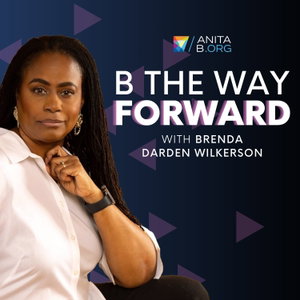
In this episode of B The Way Forward, host Brenda Darden Wilkerson sits down with Dr. Vivienne Ming, a theoretical neuroscientist, serial entrepreneur, and one of the world's leading thinkers on artificial intelligence and human potential. She has built AI that improves healthcare, reduces bias in hiring, predicts mental health crises, and reunites orphaned refugees with their families. But the through line of her career isn't machines. It's people.
Brenda pushes on the hardest part: how any of this reaches policy, education, and the systems that keep flattening people into something simpler than they are. Dr. Ming's answer is characteristically unsentimental and characteristically hopeful: tension is the reality of a healthy world, all real problems are messy human problems, and the one thing you actually control is you.
Because meaningful innovation begins with internal alignment. Before we reshape industries or build remarkable technology, we decide what kind of people we want to become.
Connect with Vivienne on LinkedIn
We Learned About
1. Algorithmic bias is a mirror, and that's what makes it useful.
2. Credentials predict far less than we think
3. There is no such thing as a problem-solving skill.
4. The cyborg finding: our advantage is exploring the unknown.
5. Depth is engineerable, and so is a better AI.
Chapters:
00:00 Welcome Back: What Makes Us Uniquely Human?
01:47 Meet Dr. Vivienne Ming
03:02 Sci-Fi Nerd to Neuroscientist: Where the Philosophy Began
05:18 Real Smiles, Fake Smiles, and the Tip of the Tongue
07:43 Why Algorithmic Bias Tells Us About Ourselves
08:21 Facial Analysis for Hiring: Absolutely Not
08:52 Intelligence Isn't Fixed
09:35 Two Scientists, an EdTech Company, and 2008 Venture Capital
10:33 Ending High-Stakes Testing with AI
12:59 Foundational Skills, Not "Soft" Skills
14:58 People Can Change — And It's Measurable
17:23 Zero-Sum, Positive-Sum, and Peer Role Models
18:08 When Systems Treat the Most Complex Thing as Fixed
19:42 It's an Ecosystem Problem
20:11 Productization, Not Science, Is the Problem
22:38 Why Politicians Are So Vile Online
23:07 The Human Trust and the French Pluralism Project
24:05 You Aren't Your Shallowest Self
25:31 Allostasis: Beware Anyone Selling a Simple Rule
26:31 Finding the Happy Tension
28:58 There Is No Such Thing as a Problem-Solving Skill
30:33 Everyone's a Mashup — And Everyone's Bad at Something
32:34 When Scale Becomes a Flattening Word
33:41 Flattening Produces Divergence, Not Sameness
34:41 Three Levers: Technology, People, and Policy
37:03 From Thirty Parameters to Eight Billion
37:32 When the Worst AI Beats the Best Human
38:28 The World's Slowest Copy-Paste Function
39:26 Meet the Cyborgs
41:24 Our Advantage Is Exploring the Unknown
42:23 Why Don't We Take Courses on Curiosity?
43:21 Socrates: The AI That Refuses to Answer
43:52 Hybrid Intelligence — and Why the Students Hated It
44:12 Getting This Into Education Policy
46:22 Thirty Years of AI and a Thirteenth Company
46:46 Refugee Reunification, Autism, and Repurposed Tech
49:30 Building AI That Leaves You Better
50:56 Don't Wait Until You Have Wrinkles
51:27 The World Gets Better When Old Men Plant Trees
53:52 Diverse Teams, Flat Hierarchies, and Reading People You Disagree With
56:49 Tension Is at the Heart of Everything
57:46 The One Thing You Control Is You
58:48 Character and the Building of a Citizenry
01:00:12 Kuala Lumpur: The Question She Read Completely Wrong
01:02:40 What She Hopes She's Remembered For
01:02:50 Closing Reflections
#BTheWayForward #AnitaB #VivienneMing #RobotProof #HumanPotential #AIandEducation #ResponsibleAI #FutureOfWork