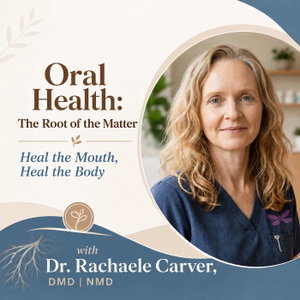
Maybe you just got your DEXA results back and the word osteopenia is still sitting heavy on your chest. Maybe your doctor handed you a prescription for a bisphosphonate, and your dentist said, hold on, let’s talk about that first. Now you’re caught in the middle, and nobody has explained why your bones are changing in the first place. So I finally brought on the bone health expert I’ve been promising you for years.
What You’ll Learn in This Episode:
- Why bone loss isn’t simply a “degenerative disease of aging,” and why Debi says there are 150-plus root causes behind it.
- How the DEXA scan became the gold standard in the 1990s, why women’s smaller bones can push them into the osteoporosis category more often, and why Debi says the scan was never meant to be the single reason for a medication recommendation.
- How estrogen and testosterone help protect bone, why the first five to seven years after menopause can bring up to a 20% loss in bone density, and how lead stored in bone over a lifetime can be released as bone breaks down.
- Why stronger muscles build stronger bones, and how jaw alignment, tongue posture, and a European approach called dentosophy connect your mouth to your posture and your whole frame.
- Why your bones are built from mouth to gut, and how chewing well, eating in a calm state, and actually absorbing your nutrients shape what reaches your skeleton.
About Debi Robinson:
Debi Robinson is a Yoga Therapist, Functional Bone Health Expert, and host of the Stronger Bones Lifestyle podcast. After her own hip replacement at 51, and years of working with thousands of bodies, she made it her mission to change the way we diagnose, manage, and support bone health. Her message is one every woman needs to hear: your bones are living tissue, and your diagnosis does not define your future.
Key Insights:
So here’s the thing. Your bones are alive until your very last breath. They’re building and dissolving all day, every day, and your lifestyle is flipping those switches one way or the other. Debi walks us through the root factors she sees again and again, things like inflammation, acidity, toxicity, hormone shifts, mineral imbalance, and stress. That means you have far more influence than you’ve been told.
One thing I loved about this conversation is how naturally it came back to the mouth. Debi shares that receding gums can be one sign of changing bone density, and in my practice, we can often see changes in the jawbone on regular X-rays and especially on a 3D scan. We also talk about why bisphosphonates are such a concern in dentistry, because they’ve been associated with osteonecrosis of the jaw, and why a scan that looks denser doesn’t always tell the whole story about bone quality.
And then we zoom out. Alignment matters, in the jaw, in the hips, in the knees. Chewing matters. Breathing through your nose matters. And community matters too. As Debi put it, the most subtle form of pain is loneliness, and having support on this journey can make all the difference.
Resources Mentioned:
Connect With Debi Robinson:
Website: https://debirobinson.com/
Instagram: @debirobinsonwellness
Podcast: https://debirobinson.com/stronger-bones-lifestyle-podcast-take-control-of-your-bone-health/
Connect With Dr. Carver on IG 📱 @drrachaelecarver
Still dealing with bleeding gums, bad breath, or gum recession and not sure where to start? Dr. Carver's 6-Week Gum Disease Course walks you through exactly what to do, step by step, from the comfort of your home.
👉 Join the 6-Week Gum Disease Course
Ready to get to the root of your own health issues? If this resonated and you'd like personalized guidance, you can book a consultation with Dr. Carver here:
👉 Book Your Personalized Wellness Consultation
If this episode resonated with you, please share it with someone who needs to hear it.
Subscribe and Leave a Review: If this conversation opened your eyes to a different way of thinking about your health, we'd love for you to subscribe and share it with someone who needs to hear it.
Disclaimer: This podcast is for educational purposes only. Information discussed is not intended for diagnosis, curing, or prevention of any disease and is not intended to replace advice given by a licensed healthcare practitioner. Opinions from guests are their own, and this podcast does not condone or endorse opinions made by guests. This podcast and its guests may have direct or indirect financial interests associated with products mentioned.