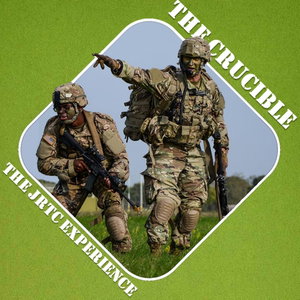
The Joint Readiness Training Center is pleased to present the one-hundredth-and-sixty-seventh episode to air on ‘The Crucible - The JRTC Experience.’ Hosted by the Senior Enlisted Medical Advisor and Role II Observer-Coach-Trainer for the Task Force Sustainment (BSB / CSSB), MSG Timothy Sargent on behalf of the Commander of Ops Group (COG). Today’s guests are four seasoned senior NCOs within one of our infantry task forces. CSM Edwards Cumming is the TF CSM, 1SG Jeremiah Guerra is a CO Team 1SG, 1SG Mark Varley is a CO Team 1SG, and SFC William Deutsch is the Senior Medical Observer – Coach – Trainer within Task Force 3 (IN BN).
This follow-on episode continues the discussion on casualty care within maneuver formations, shifting the focus from point-of-injury treatment to the realities of casualty evacuation, prolonged field care, and integrating the medical and maneuver enterprises during Large Scale Combat Operations. Leaders discuss common observations from JRTC, emphasizing that the greatest contributor to preventable casualties is often delayed evacuation caused by poor planning, ineffective communications, and a lack of understanding of CASEVAC and MEDEVAC capabilities. Topics include casualty collection points (CCPs), ambulance exchange points (AXPs), Role I and Role II care, prolonged field care, casualty triage, evacuation decision-making, and the importance of incorporating medical leaders into the planning process from the outset. A recurring theme is that casualty evacuation is a command-and-control problem as much as a medical one, requiring rehearsed PACE plans, clearly defined responsibilities, and disciplined execution to preserve combat power.
The discussion also explores how units can better bridge the gap between the maneuver and medical communities through integrated training, shared understanding, and realistic repetitions. Leaders emphasize embedding medics within platoons, cross-training infantry Soldiers in lifesaving skills, developing SOPs that are understood at every echelon, and preparing junior leaders to assume greater responsibility when key personnel become casualties. Additional topics include maintaining momentum during casualty evacuation, using evacuation assets for both medical evacuation and logistical backhaul, building trust between medics and maneuver leaders, and exposing combat medics to realistic trauma training before deployment. Ultimately, the episode reinforces that casualty care in LSCO extends far beyond medical treatment—it requires disciplined planning, effective leadership, rigorous rehearsals, and a culture in which medics and maneuver leaders train together long before the first casualty occurs.
Part of S03 “Lightfighter Lessons” series.
For additional information and insights from this episode, please check-out our Instagram page @the_jrtc_crucible_podcast.
Be sure to follow us on social media to keep up with the latest warfighting TTPs learned through the crucible that is the Joint Readiness Training Center.
Follow us by going to: https://linktr.ee/jrtc and then selecting your preferred podcast format.
Again, we’d like to thank our guests for participating. Don’t forget to like, subscribe, and review us wherever you listen or watch your podcasts — and be sure to stay tuned for more in the near future.
“The Crucible – The JRTC Experience” is a product of the Joint Readiness Training Center.