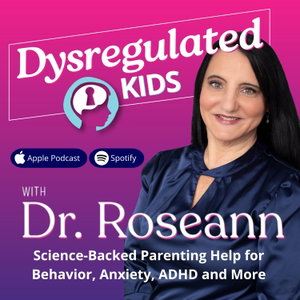
When your child’s behavior feels overwhelming, it may be communicating more than defiance. The reason why behavior is the signal, not the problem, explains what’s beneath big reactions and how regulation changes everything. Dr. Roseann Capanna-Hodge is an expert in Regulation First Parenting™ and childhood dysregulation.
When your child melts down, argues, or refuses, it’s easy to focus on stopping the behavior. But why behavior is the signal, not the problem, helps you look beneath the behavior and understand what your child’s nervous system is communicating.
Instead of chasing every reaction, learn to recognize when your child’s stress cup is full and focus on regulation first. When you calm the brain first, everything else can begin to change.
Why is my child’s behavior getting worse even when I keep correcting it?
If you feel like you’re playing parenting whack-a-mole, you’re not alone. One behavior improves, and another suddenly appears—homework refusal, meltdowns, arguing, crying, or explosive reactions.
Behavior is communication. Instead of asking, “How do I stop this?” start asking, “What is this behavior trying to tell me?”
- Behavior is the signal—not the problem.
- Look for signs that your child’s stress cup is full.
- Stop chasing every behavior and start lowering overall stress.
Parent example: A child may explode before soccer, struggle with homework, and melt down over something tiny like toast being cut “wrong.” These may look like separate problems, but they can all signal an overloaded nervous system.
What is my child’s behavior trying to tell me?
Your child’s nervous system may be communicating that something is agitating, overwhelming, or overloading them. Until you understand what is happening beneath the behavior, you can easily miss the real clue.
Ask yourself:
- What happened before this behavior?
- Was my child tired, hungry, overstimulated, or under-stimulated?
- Did they get enough sleep?
- Have they been holding it together all day at school?
- Could this be after-school restraint collapse?
🗣️ “Behavior really isn't the problem. It's just communication.” — Dr. Roseann
How can I calm my child without constantly correcting or disciplining them?
You can’t discipline out dysregulation. When your child is overwhelmed, the goal is not to scare them into compliance—it’s to support their nervous system.
Start with co-regulation first, especially through small, consistent micro-moments. When stress comes down, behavior can change in intensity, frequency, and duration because you’re supporting regulation—not controlling your child.
Let’s calm the brain first.
Yelling less and staying calm isn’t about being perfect—it’s about having the right tools.
Join the Dysregulation Insider VIP list and get your FREE Regulation Rescue Kit, designed to help you handle oppositional behaviors without losing it.
Download it now at www.drroseann.com/newsletter
Why does my child seem fine sometimes but completely fall apart at other times?
Everyone’s stress cup fills differently. What overwhelms one child may barely affect another, which is why parenting can look different from child to child.
When a child is regulated, their frontal lobes can come back online, making it easier to problem-solve and make better choices.
The goal isn’t perfect compliance. It’s helping your child become regulated enough to figure things out.
How do I become a “dysregulation detective” instead of a disciplinarian?
Get curious before reacting. Look beneath the behavior instead of fighting against it. That shift can reduce parental guilt, frustration, and the exhausting cycle of constantly trying to “fix” your child.
Regulation First Parenting™ approach starts with understanding the nervous system and pulling stress out of the stress cup. That’s the heart of The Dysregulated Kid, which teaches parents how to regulate themselves and become better at spotting what’s happening beneath behavior.
Takeaway & What’s Next
Behavior is communication, not something you simply need to stop. When you look beneath your child’s reactions, understand what’s filling their stress cup, and regulate first, you can respond with more clarity, connection, and confidence.
Learn more through the Regulated Child Summit. And if you’re ready for a simple place to practice regulation, Quick CALM offers practical tools to help you calm the brain first.
You’re not alone. When you stop seeing behavior as something to fix and start seeing it as something to understand, parenting can become less reactive and more connected. It’s gonna be OK.
FAQs
Why is behavior communication?
Behavior can communicate that a child’s nervous system is overwhelmed, stressed, agitated, or overloaded. Looking beneath behavior helps parents understand what their child needs instead of focusing only on stopping the reaction.
How do I know if my child is dysregulated?
Look for meltdowns, irritability, refusal, or emotional outbursts, especially when your child is tired, hungry, or overstimulated.
What should I do when my child melts down?
Instead of immediately trying to stop the behavior, Ask, “What is this behavior trying to tell me?” Then focus on co-regulation and reducing stress.
Can discipline fix dysregulation?
You can’t discipline out dysregulation. Co-regulation helps your child become calm enough to make better choices.
What does Regulation First Parenting mean?
Regulation First Parenting™ means prioritizing regulation before correction. Rather than reacting to behavior, parents learn to understand the nervous system, reduce stress, connect, and then address the behavior.
Not sure where to start?
Take the guesswork out of helping your child. Use our free Solution Matcher to get a personalized plan based on your child’s unique needs—whether it’s ADHD, anxiety, mood issues, or emotional dysregulation.
In just a few minutes, you'll know exactly what support is right for your family.
Start here: www.drroseann.com/help