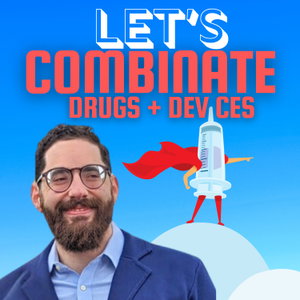
Combination product quality with Ben Locwin: why drug and device quality systems differ, how human factors studies are designed, what to do when a CDMO's clean audit doesn't match its performance, and how ISO 14971 risk management compares with ICH Q9.
This conversation was recorded for Ben Locwin's Life Science Shifts podcast from Reliant Life Sciences, with Subhi Saadeh as the guest. It covers where pharma and medical device thinking diverge, and what that means when one product has to satisfy both.
IN THIS EPISODE
- Why drugs and devices prove safety and effectiveness in different ways
- Drug development (clinical, nonclinical, CMC) vs. device design controls
- Why the same syringe can need new human factors work for a different user
- How human factors studies are built: patient and caregiver arms, trained and untrained users
- CGMPs for combination products: QMSR, ISO 13485, ICH, and PIC/S
- Global harmonization: IMDRF for devices, ICH for drugs, and the gap for combination products
- CDMO oversight when the supplier scorecard and the audit result don't match what you see
- ISO 14971 and ISO/TR 24971 vs. ICH Q9: initial and updated probability
- FMEA as a living document
TIMESTAMPS
0:00 Pharma vs. medical device quality: two philosophies
2:10 Drug development vs. device design controls
4:29 Why device trials rarely use placebo controls
9:52 Platform technology and delivery devices
12:10 Same device, different user: bracketing and generic platforms
14:14 Human factors studies: recruitment, study arms, formative studies
15:40 CGMPs for combination products: QMSR, ISO 13485, ICH, PIC/S
16:58 Harmonization: IMDRF and ICH
19:12 Conway's Law and organizational inertia
22:06 Staying objective as a consultant
25:10 CDMO oversight: when the scorecard doesn't match reality
30:18 Scoring bias in subjective weighting
31:14 ISO 14971 vs. ICH Q9 risk management
32:32 FMEA as a living document
RELATED VIDEOS
Pharma vs. Medical Device Quality Systems: 5 Differences
https://youtu.be/xG0htEu0ph4
Working with a Device CDMO: Common Sponsor Mistakes
https://youtu.be/d2SDwndXuCk
ICH Q9 Explained
https://youtu.be/Is67hbh71RY
Design Controls Explained for Pharma and Combination Product Teams
https://youtu.be/f7esiLpUhfM
Need help with CDMO oversight, supplier audits, or risk management on a combination product?
https://letscombinate.com/services/
ABOUT BEN LOCWIN
Ben Locwin is Vice President at Reliant Life Sciences and host of the Life Science Shifts podcast. His work spans drug therapies, vaccines, and medical devices, and he is a frequent industry speaker and commentator on pharma and medical device quality.
Reliant Life Sciences:
https://www.reliantlifesciences.com/
ABOUT SUBHI SAADEH
Subhi Saadeh is the Founder and Principal of Let's Combinate, a consultant, auditor, and trainer specializing in drug-device combination products, medical devices, and pharmaceutical quality systems. He has held quality and engineering roles at Pfizer, Gilead, and Baxter, with experience spanning quality, R&D, and commercialization and a focus on design controls, supplier quality, inspection readiness, and translating regulatory expectations into practical execution.
Subhi is an ISO 13485 Lead Auditor and an ASQ Certified Quality Auditor and Certified Quality Engineer. He has chaired the Combination Product Working Group for Rx-360, served as International Committee Chair for the Combination Products Coalition (CPC) and as a member of ASTM Committee E55, and served on AAMI's Combination Products Committee.
CONNECT WITH SUBHI
Consulting, audits, and training:
https://letscombinate.com/services/
Discuss a project:
https://calendly.com/letscombinate/quick-chat
LinkedIn:
https://www.linkedin.com/in/subhi-saadeh-1169aa21/
Email:
subhi@letscombinate.com
FOLLOW LET'S COMBINATE
YouTube:
https://www.youtube.com/@LetsCombinate
Spotify:
https://open.spotify.com/show/71wYadhCrfLsdYTVachpD2
#CombinationProducts #HumanFactors #RiskManagement